

India’s startup ecosystem continues to grow rapidly, and the government has introduced several tax incentives to support innovation and entrepreneurship. One of the most valuable benefits available to eligible startups is the 100% tax deduction on profits for three consecutive years under Section 80‑IAC of the Income-tax Act, 1961.
For startup founders and entrepreneurs, this provision can significantly reduce the tax burden during the crucial early years of growth and scaling.
However, while the benefit is attractive, it comes with specific eligibility conditions and timing considerations that founders must carefully plan for.
What is Section 80-IAC Tax Deduction for Startups?
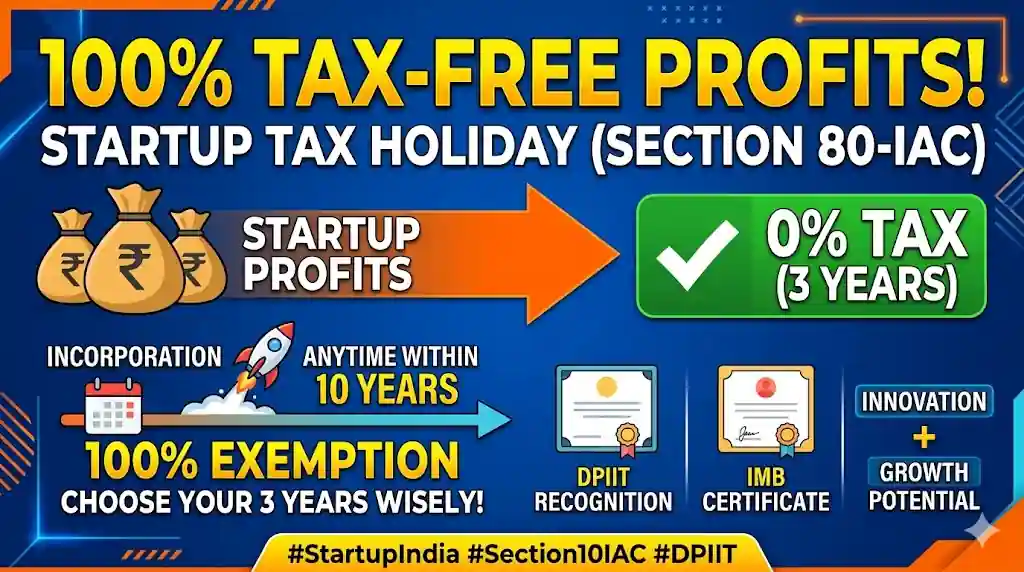
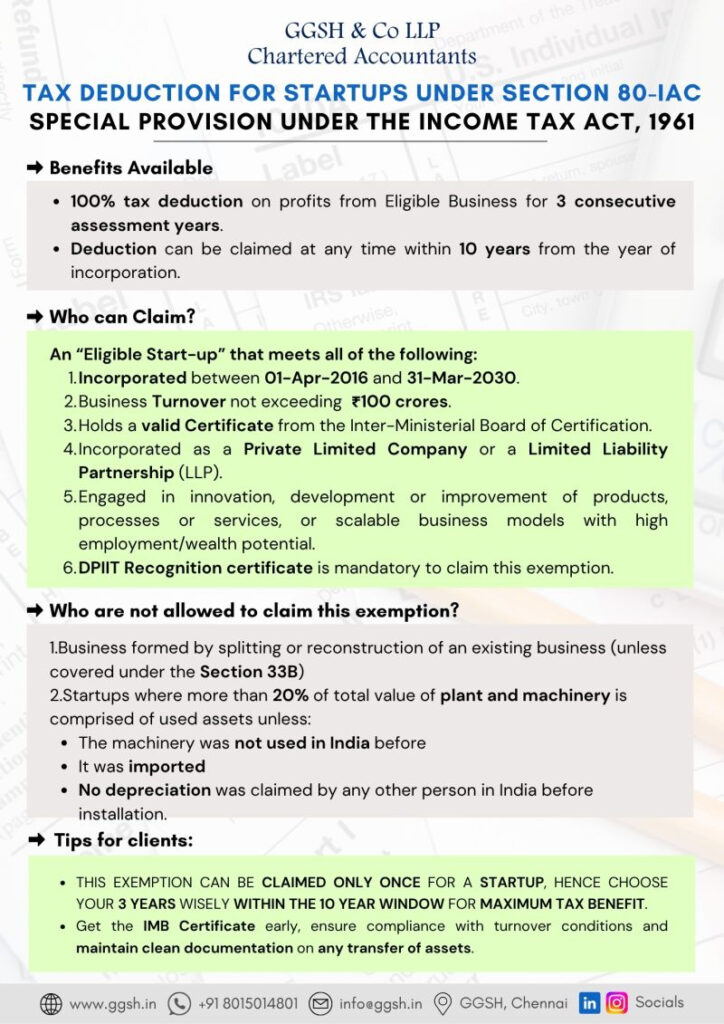
Under Section 80-IAC of the Income-tax Act, eligible startups can claim a 100% deduction on profits for any three consecutive years.
This means that the profits earned during the selected three years can be fully exempt from income tax, provided the startup meets all the prescribed conditions.
The objective of this provision is to encourage innovation, promote entrepreneurship, and support early-stage businesses in India.
Flexibility in Choosing the Deduction Period
One of the most beneficial aspects of the startup tax exemption under Section 80-IAC is the flexibility in timing.
Eligible startups can claim the deduction anytime within 10 years from the date of incorporation.
However, there is an important catch:
The 100% profit deduction can only be claimed once for a block of three consecutive years.
This means founders must carefully choose the three years when the startup is likely to generate meaningful profits in order to maximize the benefit.
Strategic tax planning becomes crucial here, especially during the scale-up phase of the business.
Key Eligibility Requirements for Startup Tax Exemption
To claim the Section 80-IAC tax benefit, startups must satisfy certain regulatory requirements.
1. DPIIT Recognition
The startup must obtain official recognition from the Department for Promotion of Industry and Internal Trade (DPIIT) under the Government of India’s Startup India initiative.
This recognition establishes the entity as an eligible startup under the Startup India framework.
2. IMB Certification
In addition to DPIIT recognition, startups must also obtain approval from the Inter-Ministerial Board (IMB) to claim the tax exemption.
This certification ensures that the startup meets the innovation and scalability criteria prescribed under the law.
3. Proper Documentation and Compliance
Startups must maintain clear documentation and regulatory compliance to support their eligibility for the deduction.
This typically includes:
- Incorporation records
- DPIIT recognition certificate
- IMB approval documentation
- Financial statements and tax filings
Proper documentation is essential to ensure smooth verification during tax assessments.
4. Innovative and Scalable Business Model
The startup must demonstrate that its business model involves innovation, development, or improvement of products, processes, or services, and has potential for scalability and employment generation.
This condition ensures that the benefit is directed toward high-growth and innovation-driven startups.
Why the Timing of the Deduction Matters
Since the Section 80-IAC deduction is available only once, founders should carefully plan when to claim it.
Many startups do not generate significant profits during the early years. Claiming the deduction too early may therefore limit the financial benefit.
A better strategy is often to claim the deduction during the years when the startup reaches profitability or rapid scaling, maximizing the tax savings.
A Valuable Opportunity for Startup Growth
For eligible startups, the 100% tax deduction under Section 80-IAC can significantly ease the financial pressure during the growth phase.
By reducing the tax liability for three years, startups can redirect their resources toward:
- Business expansion
- Product development
- Hiring and talent acquisition
- Market scaling
With proper planning and compliance, this tax incentive can play an important role in supporting the long-term success of startups in India.