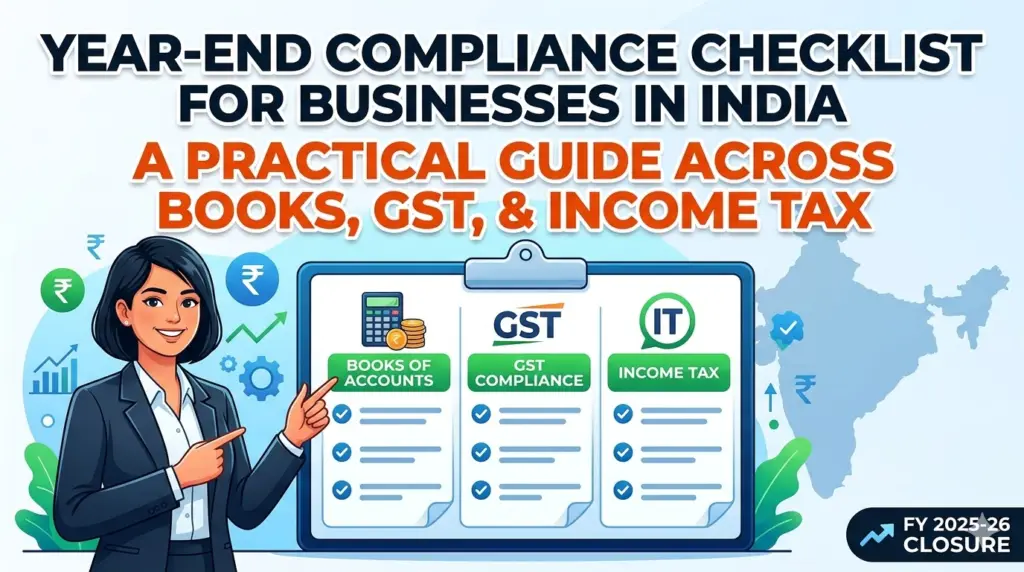
ICAI Releases Updated Technical Guide on GSTR-9C (December 2025): A Practical Reference for GST Reconciliation

The Institute of Chartered Accountants of India (ICAI) has released the updated December 2025 edition of the Technical Guide on GSTR-9C, providing comprehensive guidance for businesses and professionals preparing the GST reconciliation statement.

With the evolving GST framework and the broader transition toward GST 2.0 compliance practices, the updated guide offers clearer direction on reconciliation methodology, reporting requirements, and practical compliance procedures.

For taxpayers and professionals handling annual GST reconciliations, this guide serves as a valuable technical reference to ensure accurate reporting and regulatory compliance.

What Is GSTR-9C Under GST?

GSTR-9C is the GST reconciliation statement that compares the data reported in GST returns with the figures appearing in the taxpayer’s audited financial statements.

It is an important compliance document that helps ensure alignment between:

  • Turnover reported in financial statements
  • Taxable supplies declared in GST returns
  • Input Tax Credit (ITC) claimed during the year
  • Tax liability and tax payments reported

The reconciliation statement helps identify differences, adjustments, and additional disclosures, strengthening transparency in GST reporting.

Key Highlights of the Updated ICAI Technical Guide

The updated guide issued by the Institute of Chartered Accountants of India incorporates amendments and practical clarifications up to December 2025.

It provides professionals with a structured framework for handling GSTR-9C reconciliation under evolving GST rules.

1. Practical Reconciliation Framework

The guide explains how to reconcile turnover, tax liability, and Input Tax Credit between GST returns and audited books of accounts, helping taxpayers maintain consistency across financial records.

2. Updated Reporting Guidance

Clear instructions are provided on reporting requirements for various tables in GSTR-9C, enabling professionals to prepare the reconciliation statement with greater accuracy.

3. Compliance Checklists

One of the most valuable additions in the updated guide is the inclusion of practical compliance checklists, which help businesses and consultants verify:

  • Data accuracy
  • Reconciliation completeness
  • Correct disclosure of adjustments

4. Error Prevention and Best Practices

The guide highlights common errors in annual GST reconciliation and suggests best practices to avoid mismatches between GST returns and financial statements.

Importance for Businesses and GST Professionals

The updated GSTR-9C technical guide is particularly useful for:

  • Chartered accountants and tax consultants
  • Corporate finance and compliance teams
  • Businesses with complex GST reporting structures
  • Professionals responsible for annual GST reconciliation

Using the guide helps improve accuracy in GST annual filings and reduces the risk of scrutiny or notices from tax authorities.

Strengthening GST Compliance Under GST 2.0

As India’s GST system evolves with technology-driven compliance tools and deeper data analytics, annual reconciliation has become more important than ever.

Resources like the ICAI Technical Guide on GSTR-9C help businesses align their financial reporting, GST returns, and compliance documentation, creating a stronger compliance framework.

Final Thoughts

The December 2025 edition of the GSTR-9C Technical Guide released by the Institute of Chartered Accountants of India is a valuable resource for navigating the complexities of annual GST reconciliation.

With practical checklists, updated instructions, and structured reconciliation guidance, the guide helps taxpayers and professionals approach GSTR-9C filing with greater clarity and confidence.Reviewing the updated edition can significantly strengthen your annual GST compliance workflow and reporting accuracy.

GST Registration in Just 3 Hours? India’s Simplified GST Registration Scheme Explained

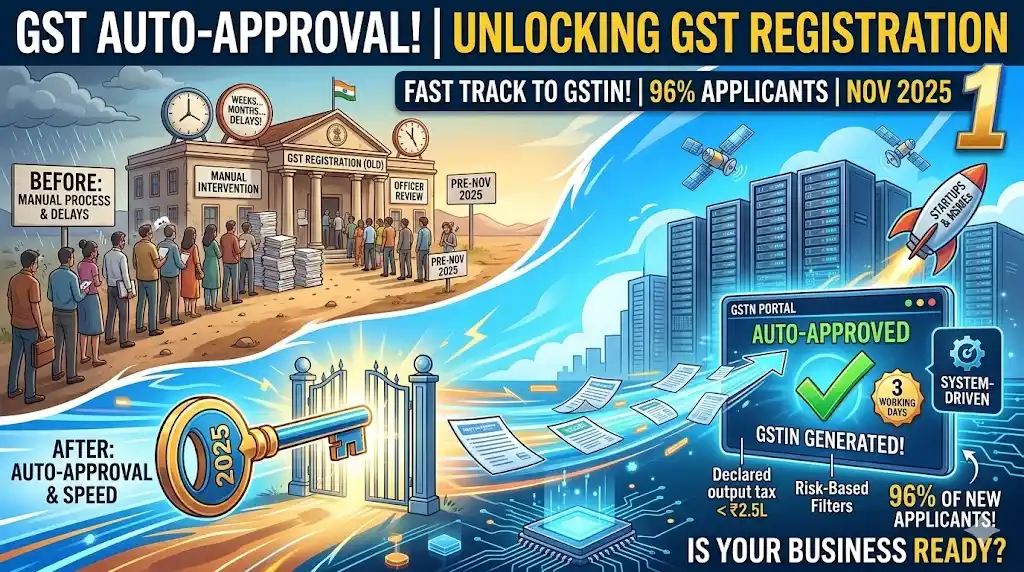
India’s GST ecosystem is witnessing a major shift toward speed, automation, and ease of doing business. In several recent cases, businesses have reported receiving their GST registration and active GSTIN within just 3 hours of application submission.

While GST registration approvals previously took several days or even weeks, the newly introduced Simplified GST Registration Scheme, effective 1 November 2025, is transforming the onboarding experience for businesses.

This reform is part of the broader digital compliance initiatives overseen by the Goods and Services Tax Network and implemented under the policy framework of the GST Council.

The initiative aims to automate GST registration approvals for low-risk applicants, significantly reducing procedural delays.

What Is the Simplified GST Registration Scheme?

The Simplified GST Registration Scheme introduces an auto-approval mechanism for eligible applicants based on Aadhaar authentication and system-based risk assessment.

Under this framework:

  • Applications that pass data validation and risk filters are approved automatically.
  • Manual intervention by tax officers is minimized.
  • GSTIN can be issued within hours or within a few working days, depending on the verification outcome.

This shift represents a major step toward technology-driven tax administration and faster business onboarding.

Eligibility Criteria for Simplified GST Registration

Businesses must meet certain parameters to qualify for the auto-approval registration mechanism.

B2B Supply Threshold

Eligible businesses should have B2B supplies generating GST liability of up to ₹2.5 lakh per month (including CGST, SGST, and IGST).

No Cap on B2C Transactions

The scheme does not impose any limit on B2C transactions, allowing businesses to freely serve retail customers without affecting eligibility.

Aadhaar-Based Authentication

Applicants must successfully complete Aadhaar authentication, which enables system-driven identity verification and reduces the need for physical checks.

Digital Application Process

The entire GST registration workflow remains fully online through the GST portal, ensuring transparency and faster approvals.

Exit Option Under Rule 14A

Businesses that outgrow the eligibility limits under the scheme are not locked into the system.

They can exit the simplified mechanism smoothly through Rule 14A procedures, allowing them to transition into the regular GST compliance framework without disruptions.

This ensures the scheme remains flexible and scalable as businesses grow.

Why This Reform Matters for Small Businesses

The Simplified GST Registration Scheme is designed primarily to support:

  • Startups and new entrepreneurs
  • Micro, Small, and Medium Enterprises (MSMEs)
  • Small-scale manufacturers
  • Service providers entering the formal economy

By reducing approval time and administrative barriers, the reform encourages greater participation in the formal tax system.

It also aligns with India’s broader policy objective of improving the ease of doing business and supporting small enterprise growth.

Benefits of Automated GST Registration

The automation-driven approach offers several advantages.

Faster Business Onboarding

Businesses can start operations and issue GST-compliant invoices almost immediately after registration approval.

Reduced Administrative Delays

The system minimizes manual verification steps that historically caused registration backlogs and approval delays.

Transparent and Data-Driven Compliance

By relying on system-based risk analysis, the GST portal ensures that approvals remain efficient while maintaining compliance oversight.

Improved Startup Ecosystem

Faster GST registrations help entrepreneurs participate in B2B supply chains, e-commerce platforms, and government tenders without unnecessary delays.

Importance of Proper Implementation

While the speed of approval is a welcome development, businesses must ensure that accuracy and compliance standards remain intact.

Incorrect data in the registration application — such as PAN mismatches, incorrect HSN/SAC classification, or inconsistent bank details — could still trigger system alerts or additional verification.

Professional guidance from tax experts can help ensure that applications are submitted correctly and approved without complications.

Final Thoughts

The Simplified GST Registration Scheme effective from 1 November 2025 represents a meaningful structural reform in India’s GST framework.

By enabling auto-approval mechanisms, Aadhaar-based authentication, and digital verification, the system dramatically reduces the time required to obtain a GST registration.

For emerging entrepreneurs and growing businesses, this reform signals a more efficient, technology-driven compliance environment.However, as with any new system, careful implementation and accurate documentation remain essential to ensure smooth approvals and long-term GST compliance.

Union Budget 2026: Key Takeaways for Businesses, Tax Professionals & Compliance Strategy

The Union Budget 2026 does not attempt a dramatic overhaul of India’s tax and compliance ecosystem.

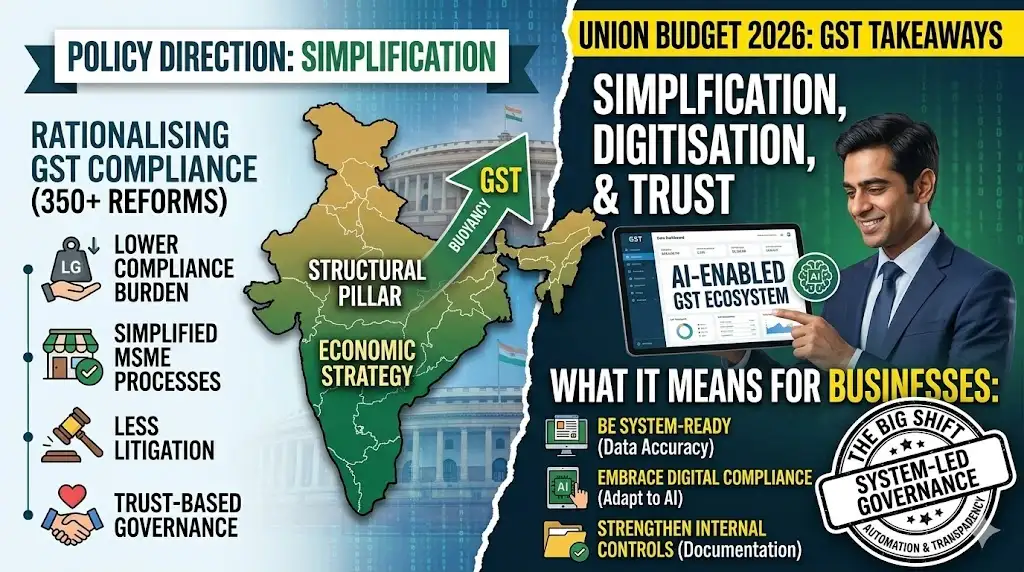
Instead, it continues a clear policy direction that has been developing over the last few years — a gradual shift toward simplified taxation, trust-based compliance, and predictable regulatory frameworks.

For businesses, finance professionals, and tax practitioners, this Budget signals something important: policy stability with structural refinement.

Rather than disruptive reforms, Union Budget 2026 focuses on reducing friction in compliance while maintaining accountability in tax administration.

The Core Policy Direction Behind Union Budget 2026

Across direct taxes, GST, customs, and export policies, the government’s approach appears consistent and strategic.

The Budget framework is built around three central objectives:

  • Reduce compliance friction for businesses and taxpayers
  • Improve predictability in tax administration
  • Strengthen accountability without increasing regulatory burden

This reflects the government’s broader move toward a modern tax ecosystem where transparency, digital monitoring, and simplified processes coexist.

For businesses operating in India’s evolving regulatory environment, this means greater clarity in compliance expectations and fewer interpretational disputes.

TDS and TCS Rationalisation: Simplifying the Direct Tax Landscape

One of the significant focus areas in Union Budget 2026 is the rationalisation of TDS (Tax Deducted at Source) and TCS (Tax Collected at Source) provisions.

These changes aim to address a long-standing concern among businesses and professionals — the complexity of multiple rates, thresholds, and overlapping provisions.

Key objectives behind TDS/TCS reforms

  • Reduce administrative burden for taxpayers
  • Improve ease of compliance for businesses
  • Minimise disputes related to interpretation
  • Streamline tax collection mechanisms

For finance teams, accountants, and tax consultants, these rationalisation measures could significantly improve year-end tax planning and compliance efficiency.

Litigation Relief Measures: Reducing the Compliance Backlog

Another notable policy direction in the Budget is reducing tax litigation pressure.

Over the years, India’s tax ecosystem has faced challenges related to pending disputes and prolonged litigation cycles. The Budget’s approach appears to prioritise:

  • Faster dispute resolution mechanisms
  • Reduction of unnecessary litigation
  • Encouraging voluntary compliance

For businesses, this shift signals a move toward a more collaborative tax administration environment rather than a purely enforcement-driven approach.

GST Policy Adjustments: Incremental but Impactful

The Goods and Services Tax framework continues to evolve through measured policy adjustments rather than sweeping changes.

In Union Budget 2026, the focus appears to be on:

  • Improving GST compliance frameworks
  • Reducing procedural complexities
  • Enhancing clarity in tax administration

For small businesses, startups, and growing enterprises, this incremental refinement could result in more predictable GST compliance processes and fewer operational uncertainties.

Customs and Export Framework: Strengthening Global Trade

The Budget also introduces targeted improvements in customs duty structures and export-oriented policies.

These measures aim to support:

  • Domestic manufacturing growth
  • Export competitiveness
  • Integration of Indian businesses into global supply chains

By rationalising customs frameworks and improving export policies, the government is signalling its continued commitment to making India a stronger participant in global trade.

What Union Budget 2026 Means for Businesses and Finance Professionals

For business owners, CFOs, tax professionals, and compliance teams, the real takeaway from Union Budget 2026 is not about headline announcements.

It is about preparing early and responding strategically.

Businesses should consider:

1. Reviewing tax compliance frameworks

Evaluate whether internal processes align with new simplification initiatives and policy adjustments.

2. Strengthening year-end tax planning

With TDS/TCS rationalisation and litigation relief measures, organisations may need to update their tax risk management strategies.

3. Improving compliance automation

The direction toward predictable and digital compliance systems suggests that businesses should continue investing in technology-driven tax management solutions.

The Bigger Policy Signal

The Union Budget 2026 reinforces a broader shift in India’s tax policy architecture.

Rather than chasing short-term disruption, the government appears focused on building:

  • A predictable tax environment
  • A simplified compliance structure
  • A trust-based regulatory relationship between taxpayers and authorities

For professionals working in taxation, finance, accounting, and compliance, this means less uncertainty and more emphasis on proactive compliance strategy.

Final Thoughts

The Union Budget 2026 may not introduce dramatic policy shifts, but its significance lies in continuity and structural refinement.

By prioritising simplification, predictability, and accountability, the government continues to move India toward a more stable and business-friendly tax ecosystem.For businesses and professionals alike, the key is not just understanding what changed — but interpreting what these policy signals mean for future compliance strategy and operational planning.

Safari Retreats Case: Supreme Court Introduces the “Functionality Test” for ITC on Mall Construction

𝐒𝐚𝐟𝐚𝐫𝐢 𝐑𝐞𝐭𝐫𝐞𝐚𝐭𝐬 – 𝐌𝐨𝐬𝐭 𝐚𝐰𝐚𝐢𝐭𝐞𝐝 𝐒𝐮𝐩𝐫𝐞𝐦𝐞 𝐂𝐨𝐮𝐫𝐭 𝐝𝐞𝐜𝐢𝐬𝐢𝐨𝐧 𝐢𝐧 𝐭𝐡𝐞 𝐜𝐚𝐬𝐞 𝐨𝐟 𝐈𝐓𝐂 𝐞𝐥𝐢𝐠𝐢𝐛𝐢𝐥𝐢𝐭𝐲 𝐨𝐧 𝐜𝐨𝐧𝐬𝐭𝐫𝐮𝐜𝐭𝐢𝐨𝐧 𝐨𝐟 𝐬𝐡𝐨𝐩𝐩𝐢𝐧𝐠 𝐦𝐚𝐥𝐥 (𝐢𝐦𝐦𝐨𝐯𝐚𝐛𝐥𝐞 𝐩𝐫𝐨𝐩𝐞𝐫𝐭𝐲) for the purpose of letting out premises in the malls to different tenants on which GST output liability to be paid.

𝐒𝐮𝐩𝐫𝐞𝐦𝐞 𝐂𝐨𝐮𝐫𝐭𝐬 𝐬𝐞𝐭𝐬 𝐭𝐡𝐞 𝐢𝐧𝐭𝐞𝐫𝐩𝐫𝐞𝐭𝐚𝐭𝐢𝐨𝐧 𝐨𝐟 17(5)(𝐝) 𝐭𝐨 𝐛𝐞 𝐟𝐨𝐥𝐥𝐨𝐰𝐞𝐝 𝐛𝐲 𝐚𝐩𝐩𝐥𝐲𝐢𝐧𝐠 𝐅𝐮𝐧𝐜𝐭𝐢𝐨𝐧𝐚𝐥𝐢𝐭𝐲 𝐭𝐞𝐬𝐭 𝐟𝐨𝐫 𝐝𝐞𝐜𝐢𝐝𝐢𝐧𝐠 𝐰𝐡𝐞𝐭𝐡𝐞𝐫 𝐛𝐮𝐢𝐥𝐝𝐢𝐧𝐠 𝐢𝐬 ‘𝐏𝐥𝐚𝐧𝐭’ 𝐚𝐧𝐝 𝐭𝐡𝐞 𝐢𝐬𝐬𝐮𝐞 𝐦𝐮𝐬𝐭 𝐛𝐞 𝐝𝐞𝐜𝐢𝐝𝐞𝐝 𝐢𝐧 𝐚𝐩𝐩𝐫𝐨𝐩𝐫𝐢𝐚𝐭𝐞 𝐩𝐫𝐨𝐜𝐞𝐞𝐝𝐢𝐧𝐠𝐬 𝐢𝐧 𝐰𝐡𝐢𝐜𝐡 𝐚𝐝𝐣𝐮𝐝𝐢𝐜𝐚𝐭𝐢𝐨𝐧 𝐜𝐚𝐧 𝐛𝐞 𝐦𝐚𝐝𝐞 𝐨𝐧 𝐟𝐚𝐜𝐭𝐬.

Key summary of the verdict:

➡ Constitutional validity of clauses (c) and (d) of Section 17(5) is 𝐔𝐏𝐇𝐄𝐋𝐃

➡ “plant or machinery” used in Section 17(5)(d) cannot be given the same meaning as “plant and machinery” defined by explanation to Sec 17

➡ Whether a mall, warehouse, or building can be classified as a “plant”  is a 𝐟𝐚𝐜𝐭𝐮𝐚𝐥 𝐪𝐮𝐞𝐬𝐭𝐢𝐨𝐧 which has to be determined based on registered person’s business and role that building plays in the said business.

➡ Buildings constructed for services like renting or leasing may qualify as a ‘𝐩𝐥𝐚𝐧𝐭’, 𝐬𝐮𝐛𝐣𝐞𝐜𝐭 𝐭𝐨 𝐚 𝐟𝐮𝐧𝐜𝐭𝐢𝐨𝐧𝐚𝐥𝐢𝐭𝐲 𝐭𝐞𝐬𝐭

➡ Supreme Court 𝐫𝐞𝐦𝐚𝐧𝐝𝐞𝐝 𝐭𝐡𝐞 𝐜𝐚𝐬𝐞 𝐭𝐨 𝐭𝐡𝐞 𝐎𝐫𝐢𝐬𝐬𝐚 𝐇𝐢𝐠𝐡 𝐂𝐨𝐮𝐫𝐭 for limited purposes of deciding whether, in the facts of the case, the shopping mall is a “plant” as per Sec 17(5)(d)

Bottomline:

𝐄𝐚𝐜𝐡 𝐜𝐚𝐬𝐞 𝐰𝐢𝐥𝐥 𝐡𝐚𝐯𝐞 𝐭𝐨 𝐛𝐞 𝐝𝐞𝐜𝐢𝐝𝐞𝐝 𝐨𝐧 𝐢𝐭𝐬 𝐦𝐞𝐫𝐢𝐭 𝐛𝐲 𝐚𝐩𝐩𝐥𝐲𝐢𝐧𝐠 𝐭𝐡𝐞 𝐟𝐮𝐧𝐜𝐭𝐢𝐨𝐧𝐚𝐥𝐢𝐭𝐲 𝐭𝐞𝐬𝐭 𝐢𝐧 𝐭𝐞𝐫𝐦𝐬 𝐨𝐟 𝐭𝐡𝐢𝐬 𝐣𝐮𝐝𝐠𝐦𝐞𝐧𝐭. The issue must be decided in appropriate proceedings in which adjudication can be made on facts. The petitioners are free to adopt appropriate proceedings or raise the issue in appropriate proceedings.

The writ petitions are rejected, subject to the interpretation of 17(5)(d) made in the verdict by Supreme Court.

CCFS-2026: MCA’s Compliance Window to Clear Pending ROC Filings at Reduced Fees

Corporate compliance delays are more common than many companies publicly acknowledge.

Over time, missed ROC filings, accumulating additional fees, and unresolved compliance obligations can create a significant regulatory burden.

Recognizing this challenge, the Ministry of Corporate Affairs (MCA) has introduced the Companies Compliance Facilitation Scheme 2026 (CCFS-2026).

This scheme provides companies with a limited-period opportunity to regularize long-pending filings relating to Annual Returns and Financial Statements under the Companies Act 2013.

For many organizations, CCFS-2026 represents not just a fee reduction initiative, but a strategic opportunity to reset their compliance position with the Registrar of Companies (ROC).

Why ROC Filing Delays Become Expensive

Since July 2018, delayed ROC filings have attracted ₹100 per day in additional fees without any upper cap.

This means that companies with multiple years of pending filings may face extremely high compliance costs.

Typical filings affected include:

  • Annual Return (Form MGT-7 / MGT-7A)
  • Financial Statements (Form AOC-4)
  • Other statutory filings required under the Companies Act

For companies that have missed filings for several financial years, the additional fee component alone can become financially burdensome.

What CCFS-2026 Changes

The Companies Compliance Facilitation Scheme 2026 significantly reduces the cost of clearing pending filings.

Under this scheme:

  • Companies pay normal filing fees
  • Only 10% of the additional fees otherwise payable
  • The remaining additional fees are effectively waived

This structure makes it far easier for companies to clear historical compliance defaults without facing the full financial impact of accumulated penalties.

Scheme Timeline

The CCFS-2026 scheme will be available for a limited period of three months.

📅 Start Date: 15 April 2026
📅 End Date: 15 July 2026

During this window, eligible companies can file pending statutory documents with reduced additional fees.

Because the scheme is time-bound, companies should evaluate their ROC filing backlog well in advance of the closing date.

Filings Covered Under the Scheme

The scheme primarily focuses on delayed filings relating to:

Annual Returns

Filed using Form MGT-7 or MGT-7A, these filings provide a summary of a company’s:

  • Shareholding structure
  • Directors and key managerial personnel
  • Corporate governance details

Financial Statements

Filed through Form AOC-4, these include:

  • Balance sheet
  • Profit and loss account
  • Auditor’s report
  • Board report

Ensuring these filings are up-to-date is critical for maintaining a clean corporate compliance record.

Additional Options Under CCFS-2026

Apart from facilitating delayed filings, the scheme also provides compliance pathways for companies that are no longer operational.

Dormant Company Status

Companies that intend to retain their corporate structure but temporarily suspend operations can apply for Dormant Company status under the Companies Act.

This allows entities to maintain existence while reducing ongoing compliance requirements.

Strike-Off of Inactive Companies

Companies that are no longer conducting business operations may choose to apply for strike-off from the Register of Companies.

This option allows promoters to formally close inactive entities and avoid future compliance obligations.

Potential Relief from Penalty Proceedings

Another important benefit of the scheme is that companies completing their filings within the prescribed timelines may be able to avoid certain penalty proceedings related to delayed filings.

This provides an opportunity to:

  • Resolve historical compliance defaults
  • Reduce regulatory risk
  • Strengthen corporate governance records

Why Companies Should Evaluate the Scheme Early

For many businesses, compliance delays accumulate gradually over time.

However, unresolved ROC filings can create complications such as:

  • Director disqualification risks
  • Difficulty in raising investment or bank funding
  • Issues during due diligence or corporate restructuring
  • Increased regulatory scrutiny

By using the CCFS-2026 window, companies can clean up their compliance records and restore regulatory clarity.

Final Thoughts

The Companies Compliance Facilitation Scheme 2026 provides a rare opportunity for companies to reset their ROC compliance status at significantly reduced cost.

Rather than allowing penalties to continue accumulating, businesses can use this three-month window to clear pending filings, regularize statutory records, and move forward with a stronger compliance foundation.

For many organisations, CCFS-2026 is not just a financial relief mechanism.It is a practical chance to rebuild corporate compliance credibility and eliminate long-standing regulatory exposure.

RoDTEP Annual Return (ARR): Important Compliance for Exporters Before 31 March 2026

Many exporters believe that once RoDTEP benefits are credited, the compliance cycle is complete.

However, there is one additional requirement that often goes unnoticed — the RoDTEP Annual Return (ARR).

For exporters who claimed ₹1 crore or more under the Remission of Duties and Taxes on Exported Products (RoDTEP) during FY 2024–25, filing the ARR is mandatory.

The due date for submitting the ARR is 31 March 2026.

Understanding this requirement early can help exporters avoid compliance risks, delays in future incentives, or scrutiny from authorities.

What is the RoDTEP Annual Return (ARR)?

The RoDTEP Annual Return (ARR) is a compliance requirement designed to verify the accuracy and legitimacy of export incentive claims.

The return is submitted through the Directorate General of Foreign Trade (DGFT) portal and serves as a post-benefit validation mechanism.

In simple terms, ARR helps authorities confirm that:

  • RoDTEP benefits claimed by exporters were accurately calculated
  • The export transactions and documentation match the incentive claimed
  • The remission granted aligns with the applicable scheme rules

This makes ARR a crucial step linking export incentives with final regulatory verification.

Who Needs to File the RoDTEP ARR?

Exporters must file the ARR if they meet the following condition:

Total RoDTEP benefits claimed during FY 2024–25 are ₹1 crore or more.

This threshold applies to exporters across sectors, including:

  • Manufacturing exporters
  • Merchant exporters
  • Large export houses
  • Sector-specific exporters such as textiles, marine products, engineering goods, and pharmaceuticals

If the threshold is crossed, ARR filing becomes mandatory compliance.

Due Date for RoDTEP ARR Filing

For exporters covered under the requirement:

Due Date:
📅 31 March 2026

Missing the deadline may lead to regulatory scrutiny and operational complications in future RoDTEP claims.

Exporters are therefore advised to review their RoDTEP credits well in advance and determine whether the ARR filing requirement applies.

Why ARR Filing is Important for Exporters

Many exporters become aware of ARR only when the deadline is approaching.

However, this return plays a critical role in maintaining export incentive eligibility and compliance integrity.

Key reasons ARR filing matters

1. Validation of RoDTEP benefits
ARR helps DGFT validate whether the incentives claimed were legitimate and properly calculated.

2. Protection of future RoDTEP credits
Failure to file ARR may affect eligibility for future export incentive claims.

3. Risk mitigation for past benefits
Non-compliance could lead to questions on previously claimed RoDTEP credits.

4. Strengthening compliance transparency
ARR filing ensures exporters maintain accurate documentation and reporting alignment with export records.

Common Mistake Many Exporters Make

A frequent issue is that exporters assume RoDTEP compliance ends once the credit is received in the electronic ledger.

In reality, the process includes post-benefit compliance verification through ARR filing.

Because awareness about ARR remains limited, many exporters discover this requirement close to the due date, leaving very little time for preparation.

Steps Exporters Should Take Now

If your business claimed RoDTEP benefits in FY 2024–25, consider the following steps early:

Review total RoDTEP benefits claimed

Check whether the ₹1 crore threshold has been crossed.

Verify export documentation

Ensure that shipping bills, export invoices, and RoDTEP claims align accurately.

Prepare ARR data early

Advance preparation reduces last-minute compliance pressure.

Seek professional guidance if required

Export incentive regulations can be complex, especially when dealing with large benefit amounts and multiple shipments.

Final Thoughts

Export incentives such as RoDTEP play an important role in improving global competitiveness for Indian exporters.

However, these benefits also come with compliance responsibilities.

The RoDTEP Annual Return (ARR) acts as the final checkpoint between incentive claims and regulatory validation.Exporters who stay informed and prepare early can ensure smooth compliance, uninterrupted incentives, and reduced regulatory risk.

COMPANIES COMPLIANCE FACILITATION SCHEME, 2026 (CCFS-2026)

1. Background

The Ministry of Corporate Affairs (MCA) has issued General Circular No. 01/2026 dated 24 February 2026, introducing the Companies Compliance Facilitation Scheme, 2026 (CCFS-2026). The scheme provides a one-time opportunity for companies to regularize delays in filing statutory documents relating to Annual Returns and Financial Statements under the Companies Act, 2013.

Under Section 403 of the Companies Act, 2013, read with the Companies (Registration Offices and Fees) Rules, delayed filings attract additional fees. Since 01st July 2018, such delayed filings attract ₹100 per day as additional fees without any upper cap, resulting in significant financial exposure for companies with long-pending filings.

In response to stakeholder representations and to promote better compliance within the corporate ecosystem, MCA has introduced CCFS-2026 as a compliance facilitation initiative.

2. Objective of the Scheme

The key objectives of the scheme include:

  • Improving compliance levels in the MCA corporate registry
  • Providing relief from heavy additional filing fees
  • Allowing companies to update pending statutory filings
  • Enabling inactive companies to opt for Dormant Status or Strike-off

The scheme is therefore designed as both a compliance correction mechanism and a regulatory clean-up initiative.

3. Scheme Period

The scheme will remain operational for three months.

Commencement: 15th April 2026

Closure: 15th July 2026

Companies must complete their filings or applications within this period to avail the benefits under the scheme.

4. Forms Covered under the Scheme

The scheme applies to various forms relating to financial statements and annual returns, including:

Companies Act, 2013 forms

  • AOC-4
  • AOC-4 XBRL
  • AOC-4 CFS
  • AOC-4 NBFC (Ind AS)
  • AOC-4 CFS NBFC (Ind AS)
  • MGT-7
  • MGT-7A
  • ADT-1
  • FC-3
  • FC-4

Forms under Companies Act, 1956

  • Form 20B
  • Form 21A
  • Form 23AC
  • Form 23ACA
  • Form 23AC-XBRL
  • Form 23ACA-XBRL
  • Form 66
  • Form 23B

These forms relate primarily to financial reporting and annual return compliance.

5. Relief Available under the Scheme

CCFS-2026 provides three key options for companies.

(A) Filing of Pending Annual Returns and Financial Statements

Companies may complete their pending filings by paying:

  • Normal filing fees, and
  • Only 10% of the additional fees otherwise payable

This represents a significant reduction in late filing costs for companies with long-pending filings.

(B) Dormant Company Option

Inactive companies may apply for Dormant Company Status under Section 455 of the Companies Act, 2013.

This requires filing Form MSC-1 and payment of 50% of the normal filing fees applicable under the rules.

Dormant status allows companies to remain on the register while complying with minimal statutory requirements.

(C) Strike-Off Option

Companies that are no longer operational may apply for removal of name from the register of companies by filing Form STK-2.

Under the scheme, only 25% of the applicable filing fees need to be paid for such applications.

This provides a cost-effective exit route for inactive companies.

6. Immunity from Penalty

The scheme also provides relief from penalty proceedings in certain circumstances.

Where the relevant filings are completed:

  • Before issuance of notice by the adjudicating officer, or
  • Within 30 days from the issuance of such notice

then the proceedings relating to delayed filings under Section 92 (Annual Return) and Section 137 (Financial Statements) may be concluded and no penalty may be levied.

However, where:

  • the 30-day period has expired, or
  • a penalty order has already been passed,

the liability to pay such penalties will continue.

7. Companies Not Eligible for the Scheme

The scheme does not apply to:

  • Companies against which final notice for strike-off has already been issued by ROC
  • Companies that have already filed strike-off applications
  • Companies that have already applied for Dormant Status
  • Companies dissolved pursuant to amalgamation
  • Vanishing companies

8. Consequences of Non-Utilization of the Scheme

After the closure of the scheme, the Registrar of Companies may initiate appropriate action against defaulting companies that have not availed the scheme and continue to remain non-compliant.

This may include:

  • Adjudication proceedings
  • Penalty imposition
  • Regulatory action under the Companies Act

9. Practical Considerations for Companies

Companies should evaluate the following before deciding how to utilize the scheme:

  • Number of years of pending filings
  • Additional fee exposure
  • Operational status of the company
  • Future business plans

Based on these factors, companies may choose to:

  • Regularize compliance
  • Convert into a dormant company
  • Apply for strike-off

10. Our Advisory Perspective

CCFS-2026 offers companies a valuable opportunity to reset their compliance position.

Organizations with pending ROC filings should proactively review their compliance records and determine the most appropriate course of action during the scheme period.

Early action will help companies:

  • Reduce financial exposure arising from delayed filings
  • Maintain updated corporate records

Avoid potential regulatory proceedings.

GST Compliance on Purchases from Unregistered Persons (URP): Risks, RCM Obligations & Practical Checklist

Purchasing goods or services from unregistered vendors is common in many businesses.

On paper, these transactions may appear simple. However, under the Goods and Services Tax (GST) framework, procurement from Unregistered Persons (URPs) can quietly introduce significant compliance obligations and tax risks.

What many businesses treat as routine procurement can trigger issues such as:

  • Reverse Charge Mechanism (RCM) exposure
  • E-way bill compliance responsibilities
  • Self-invoicing documentation gaps
  • Return reporting inconsistencies
  • Audit risks during GST scrutiny

As URP transactions increase in volume, these compliance gaps often surface only during GST audits or departmental reviews.

To address this, our team has developed a Practical URP Procurement & GST Compliance Checklist designed to help procurement teams, finance professionals, and compliance officers manage URP transactions systematically.

What is a URP under GST?

A URP (Unregistered Person) refers to a supplier who is not registered under GST.

When a registered business procures goods or services from such vendors, certain transactions may attract the Reverse Charge Mechanism (RCM).

Under RCM, the tax liability shifts from the supplier to the recipient, meaning the buyer must:

  • Pay GST directly to the government
  • Issue self-invoices for the transaction
  • Report the liability in GST returns

This is where compliance complexity begins.

Why URP Purchases Can Become Risky

Many organisations assume URP procurement is administratively easier because the supplier does not charge GST.

However, in practice these transactions introduce hidden compliance layers.

Common risks in URP transactions

1. Reverse Charge liability not identified
Certain categories of URP purchases automatically trigger RCM.

2. Missing self-invoices and payment vouchers
Under GST law, the recipient must generate these documents for URP purchases.

3. E-way bill confusion
When the supplier is unregistered, the responsibility for generating the e-way bill may shift to the recipient.

4. Incorrect GST return reporting
RCM liabilities must be properly reported in GSTR-3B and annual returns.

5. Documentation gaps during audit
Poor record management can create issues during GST assessments and departmental audits.

Practical URP Procurement & GST Compliance Checklist

To help businesses manage URP transactions properly, we recommend implementing a structured compliance workflow covering the following steps.

1. Vendor Due Diligence (KYV – Know Your Vendor)

Before onboarding any unregistered supplier, businesses should perform basic vendor verification.

Recommended checks include:

  • Identity verification of the supplier
  • Address validation
  • Nature of business activity
  • Transaction history and credibility

A KYV framework helps reduce compliance risk and strengthens procurement governance.

2. PAN and GST Registration Status Verification

Always verify whether the supplier is actually unregistered.

Important checks include:

  • PAN verification
  • GST registration status on the GST portal
  • Confirming whether the supplier falls under mandatory registration thresholds

Sometimes suppliers claim URP status even when they are legally required to register under GST.

3. Inter-State vs Intra-State Transaction Analysis

URP transactions must be evaluated for location-based tax implications.

Businesses should determine:

  • Whether the transaction is inter-state or intra-state
  • Whether the supply triggers IGST or CGST/SGST liability
  • Whether additional compliance obligations arise

Correct classification is critical for accurate GST return reporting.

4. E-Way Bill Responsibility

When the supplier is unregistered, the responsibility for generating an e-way bill may fall on the recipient.

Businesses must verify:

  • Whether the consignment value exceeds the e-way bill threshold
  • Who is responsible for generating the e-way bill
  • Whether transporter details are properly documented

Failure to comply can result in movement-related penalties under GST law.

5. Self-Invoice and Payment Voucher Requirements

For URP purchases subject to RCM, businesses must generate:

  • Self-invoice for the supply
  • Payment voucher at the time of payment

These documents must be issued within the timelines prescribed under GST law.

Failure to maintain these records is a common audit observation.

6. GST Return Reporting

URP transactions subject to RCM must be properly disclosed in GST returns, including:

  • GSTR-3B
  • Annual Return (GSTR-9)
  • GST Reconciliation Statement (GSTR-9C)

Incorrect classification or omission can create mismatches during GST reconciliation.

7. Record Retention and Audit Readiness

Businesses should maintain structured documentation for URP transactions, including:

  • Vendor verification records
  • Self-invoices and payment vouchers
  • Transport documents and e-way bills
  • GST return reporting support documents

Proper documentation ensures smooth GST audits and departmental inspections.

Why Procurement and Finance Teams Must Work Together

URP transactions often originate from procurement teams, while GST compliance is handled by finance departments.

Without coordination, gaps can easily arise.

A structured checklist ensures:

  • Procurement teams ask the right questions upfront
  • Finance teams receive complete documentation
  • Compliance risks are identified before audits begin

The Goal: Compliance Without Slowing Business

The purpose of a URP procurement checklist is not to create additional bureaucracy.

Instead, it helps businesses:

  • Identify RCM exposure early
  • Avoid downstream GST disputes
  • Ensure accurate return reporting
  • Stay compliant without disrupting procurement operations

When implemented properly, a structured workflow protects businesses from avoidable GST risks while maintaining operational efficiency.

Final Thoughts

Purchases from Unregistered Persons (URPs) are a regular part of business operations across industries.

But under GST, these transactions carry hidden compliance responsibilities.

With proper vendor verification, documentation discipline, and return reporting controls, businesses can manage URP procurement efficiently while remaining fully compliant.A practical compliance checklist ensures that URP transactions remain routine procurement — not a future audit risk.

Annual RoDTEP Return- ARR FAQs – Your Ultimate Guide

Exporters of Goods, don’t let your RoDTEP scrips slip through the cracks!

You forget to switch on the motor, until you find air gush through the water tap! But remember it takes time to fill the tank and get the water again.. how do you manage the interim cash flow?

RoDTEP is not just a scrip but a real profit element and important feed to cash flow for every exporter. Exporters have already faced a steep reduction in the rate of scrip benefits over these years; and now its time to secure at least what is left with! It has been more than a month since the actual due date 30th June 2025 has crossed. Yet many exporters ask these questions: What? Is there one such return to be filed?

> We are keeping it pending not knowing how to go about..
> Busy with Financials & Audit closure
> Somebody said I can still file with nominal late fees
> Oh, but I keep getting RoDTEP scrips without any issues as of now

But remember all these are only until 30th September 2025 and then your scrip inflow stops there, if you haven’t filed ARR!

Imagine the amount of efforts your organisation takes to make export and gain that “1 Crore+ of RoDTEP scripts”. Now you can’t afford to lose that simply due to non filing of a return – ARR!

If you’re sending goods out of India, there’s this “not-so-talked-about filing” that needs your attention – the 𝗔𝗻𝗻𝘂𝗮𝗹 𝗥𝗼𝗗𝗧𝗘𝗣 𝗥𝗲𝘁𝘂𝗿𝗻 for FY 2023-24.

Due date extended to 30th June 2025 & Late fee window open till 30th September 2025.

Miss this, and you might end up losing script credits you actually deserve!

And it’s not a straight forward one to file something on the last date…. This one pulls out real business costs – like diesel usage, logistics, electricity bills, factory overheads, and even those tiny embedded taxes most people forget to track.

Plus, it’s not just about filing and forgetting. DGFT will review what you submit. So if numbers don’t match up or seem off, it could cause issues later. So, to help you out, we’ve prepared one-stop-solution: “Annual RoDTEP Return – ARR FAQs – Your Ultimate Guide”

Annual RoDTEP Return

MADE FOR EXPORTERS of GOODS

EXPORT Industry Associations Trade & Commerce Chambers Freight Forwarders & Logisticians Customs & FTP Professionals Tax & Finance Professionals Government & Policy Analysts

1. WHAT is RoDTEP

The Scheme provides a mechanism for re-imbursement of taxes/ duties/ levies, (eg. Electricity Duty/VAT or Excise Duty on fuel etc,.) which are currently not being refunded under any other mechanism, at the central, state and local level, but which are incurred in the process of manufacture and distribution of exported products, to the exporting industries in India. Exporters of eligible items under the Scheme are being issued e-scrips. The e-scrips are transferable and are used for payment of basic customs duty.

2. WHAT is ARR

All the exporters claiming RoDTEP benefit shall file Annual RoDTEP Return (ARR), to assess the nature of inputs used in production for the export and the amount of actual taxes & duties incurred, as permissible under Para 4.54 of FTP (Operational framework of Remission of Duties and taxes on Exported products).

3. For WHOM ARR is applicable

If the total RoDTEP claim for a given IEC exceeds Rs. 1 crore in a financial year, filing the Annual RoDTEP Return (ARR) is mandatory Separate return applications are required to be filed for DTA and for AA/EoU/SEZ Exports.

4. WHY RoDTEP return- What will the Government do with ARR

ARR filings undergo periodic assessment for due diligence and may be reviewed by the RoDTEP Committee for necessary rate revisions, including consideration of higher rates if justified.

Thus, ARR submitted by exporters in every industry becomes the basis for determining the rate of RoDTEP.

5. WHAT is the BENEFIT of filing this ARR for an EXPORTER

i. Promotes transparency by requiring detailed cost, duty, and tax data.
ii. Standardized filing process reduces errors and inconsistencies in claims.
iii.Enhance the exporter’s credibility by aligning with global trade documentation standards
iv. Dynamic scheme allows rate adjustments based on real data,ensuring fair export cost reflection.
v. Ensures only actual duties, taxes, and levies are claimed, preventing inflated claims.

6. WHEN – Is there any time limit to file

ARR for RoDTEP claims filed in a particular financial year shall be filed on DGFT portal by 31st March of the next financial year i.e. RoDTEP claims information for Financial Year 2023-24 shall be required to be filed by 31.03.2025.

However for FY 23-24,  this date was extended to 30.06.2025.

7. What are the CONSEQUENCES of non-filing

Non-reporting of the ARR shall lead to denial of benefits under the RoDTEP scheme and No further scroll out of RoDTEP claims for the SBs will be permitted at the Customs Port of Export after the grace period of three (3) months i.e. after 30th June.

For FY 23-24,  this  grace period is extended to 30 September 2025

8. Whether DELAYED FILING is permissible

A composition fee of Rs. 10,000/- will need to be paid for delayed filing of each ARR up to 30th sep 2025. thereafter a composition fees of Rs. 20,000/- will need to be paid for filing of each ARR after 30th sep 2025.

Subsequent to the payment of the applicable composition fee, the RoDTEP scrolls will be resumed within 45 days, till an online API based message exchange is established between DGFT and Customs.

The resumption of scroll out shall also cover the Shipping Bills that were not scrolled out earlier on account of non-compliance of ARR.

9. HOW to REPORT – HSN code wise 

The exporter must file an ARR for the ITC-HS code with the highest claim. If any individual ITC-HS code surpasses Rs. 50 lakhs, an ARR must be filed for each of those codes.

Refer below table for clear understanding –

S.noScenarioRODTEP Claim DistributionARR Filing Requirement
1Case 1 : Highest Claim Rule (Total claim > Rs.1 crore)ITC – HSI : Rs. 15 lakh ITC – HS2 : Rs. 20 lakh ITC – HS3 : Rs. 40 lakh ITC – HS4 : Rs. 30 lakhARR required only for ITC- HS3 (highest claim)
2Case 2 : 50 Lakh Threshhold Rule (Total claim > Rs.1 Highest Claim > Rs.1 crore and any code > Rs.50 lakhs)ITC – HSI : Rs. 60 lakh ITC – HS2 : Rs. 51 lakh ITC – HS3 : Rs. 10 lakh ITC – HS4 : Rs. 20 lakhSeparate ARR required for ITC-HS1 and ITC -HS2 (both exceed Rs.50 lakh)

10. What DATA is primarily required to file the ARR

i. VAT & Excise paid on:

A. Fuel for transportation
B. Fuel for Power generation.

ii. Electricity Duty paid for export product manufacturing

iii. Stamp Duty on relevant export documents.

iv. GST paid under RCM for purchases from unregistered persons.

v. Taxes/duties on raw materials & inputs used in export product manufacturing.

11. Caution – NEED for ACCURACY

A. Record Maintenance: Data must be retained for five years and may be reviewed for ARR assessment, with some cases undergoing IT-based scrutiny (Para 4.54 of FTP).

B. Over-Reporting Risks:Excess RoDTEP claims require refund or surrender; non-compliance may lead to benefit suspension.

C. Under-Reporting Risks:May result in lower RoDTEP rates, affecting the entire industry, as the committee reviews data for necessary rate revisions.

D. Ensuring Seamless Benefits: Accurate reporting is essential for maintaining fair and justified RoDTEP benefits.

12. POINTERS on reporting data

> Tax/Duties/Levies need to be provided in the fields on pro-rata basis.

Wherever approximation is used for calculation, the same should be justified and substantiated at the time of scrutiny in case the return is picked up for scrutiny on the Risk Management System.

The return should be complete to the extent possible. Minor items with low value may be omitted if they don’t significantly alter the amount of remission claimed. The details of the taxes/levies should be limited to those not currently being rebated/refunded through any other mechanism such as GST refunds or exemptions by state/central government.

13. ACTION points Need to ACT NOW

>Gather Essential Data: Track exported goods, VAT & Excise on fuel, and manufacturing inputs, gather the data required from most accurate source.
>Benchmark with Industry Peers: Compare reporting with peers to identify probable discrepancies and minimize inaccuracy.
> Engage with Industry Associations: Collaborate on best practices and uniform approaches.
> Consult Tax Professional: Considering the unique requirement, direct consequences and accuracy required, it would be ideal to seek professional assistance in finalizing and filing, since

14. ARR should be filed online accessible via the DGFT Portal (www.dgft.gov.in) under the Regulations > RoDTEP’ section.

Union Budget 2026: Customs & Excise Reforms Driving Trade, Manufacturing, and Export Growth

The Union Budget 2026 introduces significant reforms in Customs and Excise policy, signalling a strategic shift toward simplified duty structures, export competitiveness, and stronger domestic manufacturing ecosystems.

These changes aim to modernise India’s trade framework by reducing procedural complexity, integrating digital systems, and supporting the government’s long-term Make-in-India and global supply chain ambitions.

The policy direction reflects the broader economic strategy of the Ministry of Finance under the Government of India.

Policy Direction: Simplifying Customs Duty Structures

One of the most important objectives of the Union Budget 2026 customs reforms is the simplification of duty structures.

Historically, India’s customs framework has included multiple exemptions, layered notifications, and complex classification rules, often leading to interpretational disputes and compliance challenges.

The latest reforms aim to:

  • Streamline customs duty structures
  • Reduce dependence on legacy exemptions
  • Embed effective duty rates directly in notifications
  • Improve clarity for importers and exporters

This structural shift is expected to minimise classification disputes and enhance predictability in cross-border trade compliance.

Structural Shift: Phasing Out Legacy Exemptions

Another important change is the gradual phasing out of outdated customs exemptions that have accumulated over time.

Instead of relying on multiple exemption notifications, the government plans to incorporate effective duty rates directly into customs tariff notifications.

This approach offers several benefits:

  • Simplified tariff interpretation
  • Reduced litigation in customs classification disputes
  • Easier compliance for businesses
  • Greater transparency in import duty structures

By simplifying tariff schedules, authorities aim to create a cleaner and more predictable customs framework.

Compliance Simplification: Fewer Classifications, Clearer Rates

The reforms also aim to simplify customs classification and duty rate determination.

Businesses often face challenges due to:

  • Multiple tariff classifications
  • Differing exemption interpretations
  • Complex duty calculations

The updated framework seeks to reduce these complexities by introducing clearer duty structures and fewer interpretational ambiguities.

These improvements are administered through India’s customs authority, the Central Board of Indirect Taxes and Customs.

Export Enablement: Supporting Export-Oriented Industries

A key highlight of the Union Budget 2026 customs reforms is the focus on strengthening India’s export ecosystem.

Several initiatives are designed to support export-oriented industries and improve supply chain efficiency.

Higher Duty-Free Input Limits for Marine Exports

Exporters in the marine products sector will benefit from higher duty-free input allowances, improving competitiveness in international markets.

Extended Export Timelines

The government has also extended export timelines for leather, textile, and footwear sectors, providing additional flexibility for manufacturers to meet global demand cycles.

SEZ–DTA Integration

Another important development is the integration between Special Economic Zones (SEZs) and the Domestic Tariff Area (DTA).

Improved coordination between these zones will help:

  • Optimise asset utilisation
  • Improve production efficiency
  • Strengthen export supply chains

These changes aim to make India’s export ecosystem more flexible and competitive globally.

Make-in-India Push: Strengthening Strategic Industries

The budget also reinforces the Make-in-India strategy by providing duty support for critical sectors.

Key industries receiving customs duty relief include:

  • Clean energy technologies
  • Critical minerals and strategic resources
  • Electronics manufacturing
  • Aerospace and defence supply chains

The reforms also provide long-term policy certainty for nuclear and renewable energy supply chains, encouraging private sector investment and technological development.

These measures aim to strengthen domestic manufacturing capacity and reduce import dependency in strategic sectors.

Trust and Technology: Modernising Customs Administration

Another major transformation in customs governance is the increasing reliance on digital systems and risk-based monitoring.

AEO Programme Enhancements

The Authorised Economic Operator (AEO) programme will see further relaxations, offering trusted businesses simplified customs procedures and faster clearances.

Longer Advance Ruling Validity

Businesses seeking advance rulings on customs classification or valuation will benefit from extended validity periods, improving regulatory certainty.

Digital Trade Infrastructure

Technology-driven reforms include:

  • Single digital window for trade documentation
  • AI-powered cargo scanning systems
  • Fully paperless customs clearances

These initiatives aim to reduce clearance times at ports and improve border efficiency.

Impact on Individuals: Personal Imports and Healthcare

The reforms also bring benefits to individuals and consumers.

Reduced Duty on Personal Imports

Certain personal imports may now attract lower customs duties, making cross-border purchases more affordable.

Expanded Exemptions for Critical Drugs

The budget also expands customs duty exemptions for life-saving drugs and treatments for rare diseases, improving access to critical healthcare products.

These measures highlight the government’s intent to balance trade efficiency with social welfare considerations.

Why These Customs Reforms Matter for Businesses

For importers, exporters, and manufacturers, the Union Budget 2026 customs reforms introduce several advantages:

  • Reduced compliance complexity
  • Faster border clearances
  • Improved tariff clarity
  • Better export incentives
  • Greater investment certainty in manufacturing

Businesses engaged in international trade, supply chain management, and manufacturing will benefit significantly from these reforms.

Bottom Line

The Union Budget 2026 customs and excise reforms mark an important transition in India’s trade policy framework.

Customs administration is gradually moving:

From control-based regulation → to catalyst-driven trade facilitation.With simpler duty structures, digital governance systems, and stronger support for exports and domestic manufacturing, India’s customs ecosystem is evolving toward faster borders, cleaner rules, and stronger global competitiveness.