

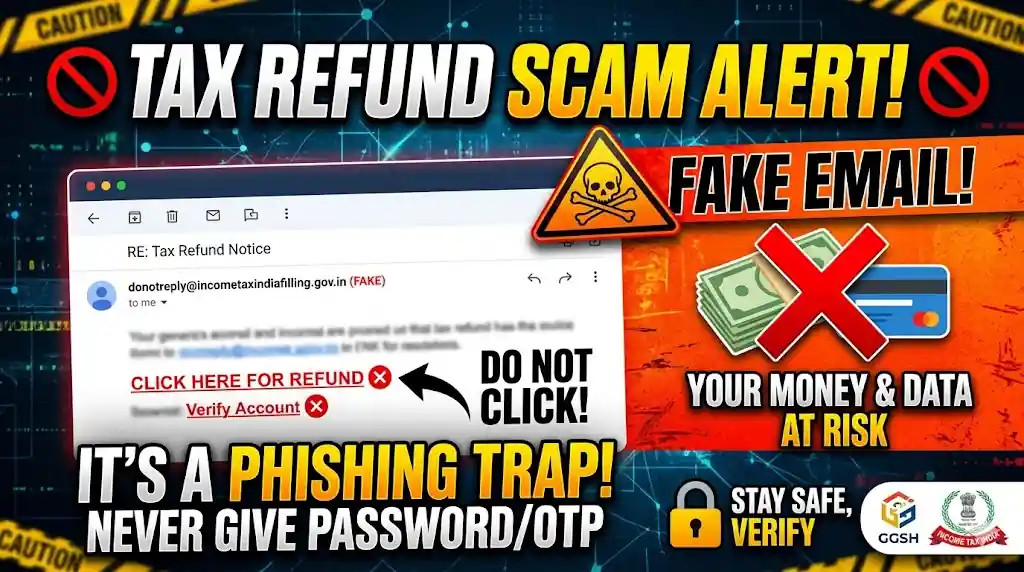
A new Income Tax refund phishing scam in India is circulating through fraudulent emails that appear to come from the Income Tax Department. Many taxpayers who recently filed their Income Tax Return (ITR) are receiving emails claiming there was an error in tax calculation and a refund needs to be processed.
However, these emails are not legitimate.
They are part of a phishing scam designed to steal sensitive financial information such as bank credentials, OTPs, and login details.
Understanding how this scam works is crucial to protect your taxpayer data, financial identity, and income tax account.
What Is the Fake Income Tax Refund Email Scam?
Cybercriminals are sending fraudulent emails impersonating the Income Tax Department of India.
These emails typically claim:
- There was an error in calculating your tax
- You are eligible for an income tax refund
- You must click a link to process the refund
Once you click the link, you may be redirected to a fake Income Tax portal look-alike website where attackers attempt to collect your:
- Income Tax login credentials
- Bank account details
- PAN information
- OTPs and verification codes
This type of attack is known as phishing, where scammers attempt to trick users into sharing confidential information.
Fake Email Sender Used in the Scam
One commonly reported sender in this phishing attempt is:
donotreply@incometaxindiafilling.gov.in
⚠ This email address is fake.
Scammers often create domains that look similar to official government domains to deceive taxpayers.
Official Income Tax Department Email Domain
The Income Tax Department of India only communicates through official domains such as:
@incometax.gov.in
Any email sent from a different domain should be treated with caution.
Always verify before clicking links or downloading attachments.
Important Safety Guidelines for Taxpayers
To protect yourself from Income Tax phishing scams, follow these cybersecurity best practices:
1. Do Not Click Suspicious Links
If an email asks you to click a link to claim a tax refund, avoid interacting with it unless you have verified the sender.
2. Verify the Email Domain
Always check if the email originates from the official domain:
@incometax.gov.in
Fake domains often include small spelling changes such as:
- incometaxindiafiling
- incometaxrefundservice
- incometaxverification
3. Never Share Confidential Information
The Income Tax Department never asks for sensitive information through:
- Phone calls
- Emails
- SMS messages
This includes:
- Passwords
- OTPs
- Bank account details
- Debit/credit card details
4. Access the Portal Directly
Instead of clicking email links, always visit the official Income Tax e-filing portal by typing the website address manually in your browser.
How to Report Income Tax Phishing Emails
If you receive a suspicious email pretending to be from the Income Tax Department, you should immediately report it.
Send the phishing email to:
webmanager@incometax.gov.in
Reporting such emails helps authorities track cybercriminals and prevent further fraud attempts.
Why Income Tax Phishing Scams Are Increasing
With millions of taxpayers filing returns online each year, cybercriminals are increasingly targeting the Income Tax e-filing ecosystem.
The period after ITR filing and refund processing is particularly vulnerable because taxpayers expect communication regarding:
- Income tax refunds
- tax calculation corrections
- verification requests
Scammers exploit this expectation to trick taxpayers into clicking malicious links.
Final Advice for Taxpayers
Always stay cautious when dealing with Income Tax communications, refund emails, and tax-related notifications.
Remember:
✔ The Income Tax Department does not ask for confidential information via email or phone.
✔ Always verify emails from official domains only.
✔ Never click suspicious refund links.
Staying alert is the best way to protect your PAN, bank account, and tax records from cyber fraud.
Stay Alert. Stay Safe.