

Recent headlines highlight that the Supreme Court of India has dismissed the SLP filed by Revenue in the case of Brij Systems Limited v. Union of India, effectively upholding the order of the Bombay High Court.
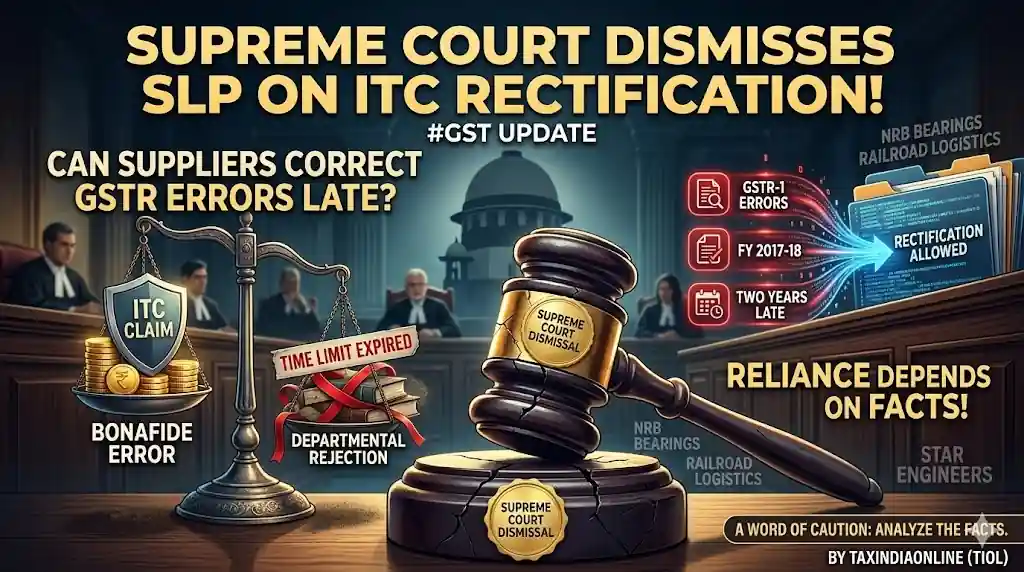
The case deals with an important question:
Can a supplier correct return errors beyond the statutory time limit if the mistake results in denial of ITC to the purchaser?
Key Facts of the Case
📌 The supplier had made a bonafide error in the GST return.
📌 There was no revenue loss to the exchequer, which was accepted by the department.
📌 The dispute was not about tax payment or Section 16(2)(c) compliance, but about rectification beyond the statutory time limit.
📌 The supplier sought to rectify GSTR-1 for FY 2017-18 after two years, which the department initially rejected.
Court’s View
The Bombay High Court allowed rectification even beyond the time limit, ensuring that ITC is not denied to the buyer merely due to the supplier’s genuine error.
The Supreme Court of India later dismissed the SLP filed by Revenue, thereby letting the High Court decision stand.
Other Cases Referenced
• NRB Bearings Ltd v. Union of India
• Railroad Logistics (India) Pvt. Ltd v. Union of India
• Star Engineers (I) Pvt. Ltd v. Union of India
Important Takeaway
While the dismissal of the SLP by the Supreme Court is making headlines, the facts of the case are crucial.
This ruling cannot be blindly applied to all ITC disputes. Its applicability depends heavily on factors such as:
✔ Existence of bonafide error
✔ No loss of revenue to the government
✔ Specific factual background of the dispute
A Word of Caution
Taxpayers, professionals, and litigators should carefully examine the factual matrix of their cases before relying on this judgment.
A difference in facts between the cited case and the actual dispute can render the reliance on such precedents invalid.
📌 Lesson: Always analyze the facts behind the headline before using a judgment as precedent.
#GST #ITC #SupremeCourt #GSTLitigation #TaxLaw #GSTUpdates