

The GST registration process in India has long been a challenge for businesses — often described as complex, time-consuming, and unpredictable. From small businesses and startups to large-scale industrial expansions, many genuine applicants have faced unnecessary hurdles while applying for GST registration.
But now, there’s finally some good news.
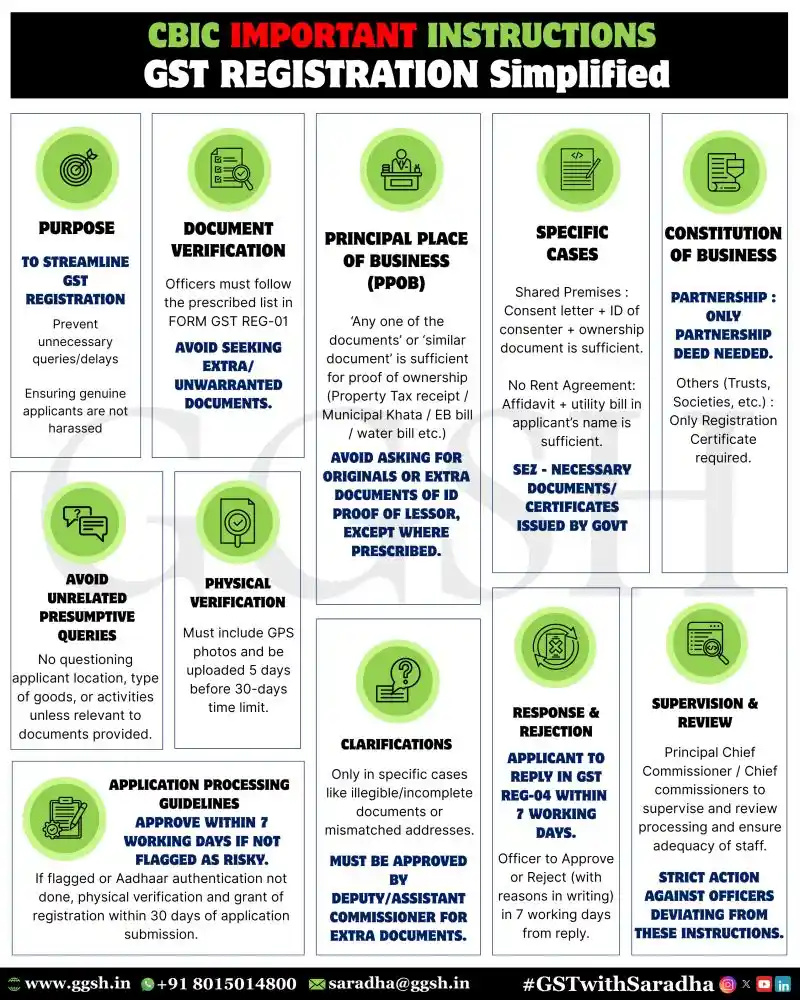
The Central Board of Indirect Taxes and Customs (CBIC) has introduced a significant reform through Instruction No. 03/2025-GST dated 17th April 2025, aiming to make the GST registration process simple, transparent, and predictable.
Why GST Registration Was Difficult Earlier
Before this update, applicants often encountered several issues, such as:
- Lack of clarity on required documents
- Repeated queries and clarifications from officers
- Requests for unnecessary or irrelevant documents
- Delays in approval timelines
- Inconsistent practices across jurisdictions
These challenges affected not just compliance but also delayed business setup and expansion plans.
CBIC’s New GST Registration Instruction – What Has Changed?
The latest CBIC instruction is a major step toward improving the ease of doing business in India. It introduces a structured and standardized approach to GST registration.
1. Defined List of Acceptable Documents
One of the most important changes is the introduction of a clear and indicative list of documents required for GST registration.
- Eliminates guesswork for applicants
- Ensures uniformity across officers
- Reduces application rejections and delays
2. Clear Guidance on “What Not to Ask”
A standout feature of this instruction is that it explicitly mentions what officers should NOT ask for.
- Prevents unnecessary document demands
- Reduces harassment of genuine taxpayers
- Builds trust in the GST registration system
3. More Predictable and Transparent Process
With defined rules and restrictions on discretionary queries:
- The process becomes more predictable
- Applicants can prepare documents in advance
- Less back-and-forth communication
4. Relief for Startups and Expanding Businesses
This reform is particularly beneficial for:
- New startups registering under GST
- Small businesses entering the formal economy
- Companies expanding operations across states
Impact on Businesses and GST Compliance
The new guidelines are expected to significantly improve:
- Speed of GST registration approvals
- Reduction in compliance burden
- Consistency in application processing
- Confidence among entrepreneurs and investors
Overall, this is a positive step toward creating a more business-friendly tax environment in India.
Conclusion: A Step Towards Ease of Doing Business
The introduction of CBIC Instruction No. 03/2025-GST reflects the government’s intent to simplify GST compliance and reduce friction for businesses.
A simple, straightforward, and predictable GST registration process is no longer just an expectation — it is gradually becoming a reality.
Final Thoughts
If implemented effectively, this reform can transform the experience of obtaining GST registration in India, especially for startups and growing businesses.
Do you think this move will truly reduce the challenges in GST registration?