

For years, businesses have often joked that when it comes to GST refunds in India, patience doesn’t pay — it delays.
But now, that narrative is finally changing.
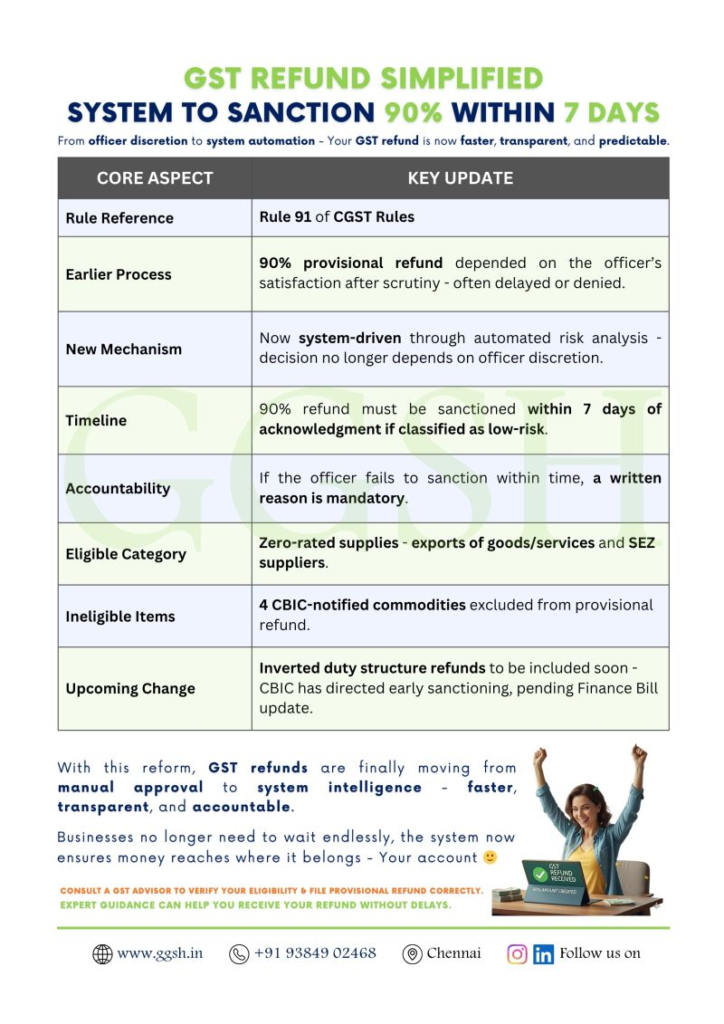
With increasing automation in the GST system, nearly 90% of GST refunds are expected to be processed within just 7 days, marking a significant shift toward a faster, system-driven refund mechanism.
The Problem with GST Refund Delays
Traditionally, taxpayers faced multiple challenges in claiming GST refunds:
- Heavy reliance on manual officer verification
- Frequent follow-ups with tax authorities
- Delays in processing timelines
- Lack of transparency in application status
This created cash flow issues, especially for:
- Exporters
- Small and medium businesses
- Service providers
The Big Shift: Automated GST Refund Processing
The transformation is being driven by technology upgrades led by the Goods and Services Tax Network (GSTN).
Key Highlights of the New System:
- Up to 90% of GST refunds to be processed automatically
- Refund timelines reduced to around 7 days
- Minimal or no officer intervention
- End-to-end system-driven verification and approval
How the New GST Refund System Works
The automated refund system relies on:
- Data matching across GST returns
- Pre-validated information from filings
- Risk-based processing for exception cases
Only cases flagged as high-risk or mismatched may require manual scrutiny.
Benefits of Faster GST Refunds
1. Improved Cash Flow
Businesses receive refunds quicker, improving working capital management.
2. Reduced Compliance Burden
- No repeated follow-ups
- Less dependency on officers
3. Greater Transparency
- Clear tracking of refund status
- Reduced uncertainty in timelines
4. Boost for Exporters
Exporters benefit significantly as input tax credit (ITC) refunds are processed faster.
Who Will Benefit the Most?
This reform is especially beneficial for:
- Exporters claiming GST refunds
- MSMEs and small businesses
- Tax professionals and consultants
- Companies with regular refund claims
Challenges to Keep in Mind
While automation brings efficiency, businesses must ensure:
- Accurate GST return filings
- Proper reconciliation of data
- Timely submission of refund applications
👉 Any mismatch or error may still lead to delays or manual intervention.
A Step Toward Digital GST Ecosystem
This move reflects the government’s continued focus on:
- Digital transformation in taxation
- Reducing human intervention
- Improving ease of doing business in India
The shift from an officer-driven system to a technology-driven process is a major milestone in GST reforms.
Conclusion
The move toward automated GST refunds with 7-day processing timelines is a game-changer for businesses across India.
By reducing delays and improving efficiency, the GST system is becoming more predictable, transparent, and business-friendly.
Final Thoughts 💬
From “patience delays” to “automation delivers” — GST refunds are finally evolving.Are you ready to benefit from the new fast-track GST refund system?