

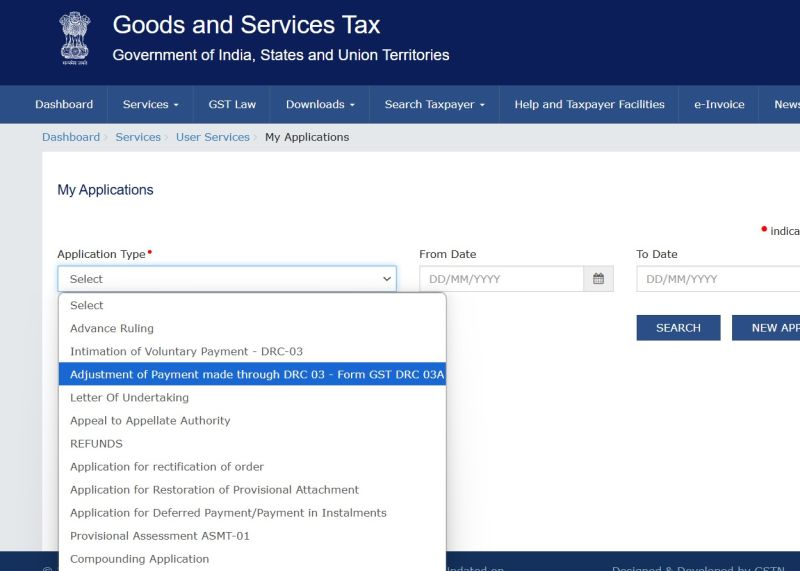
The Goods and Services Tax (GST) portal has introduced a new and important compliance feature – Form DRC-03A. This form plays a critical role in adjusting tax liabilities against payments already made through DRC-03.
For taxpayers who have voluntarily paid tax through DRC-03, the availability of DRC-03A on the GST portal is a major step toward ensuring proper liability adjustment and avoiding unnecessary recovery actions.
Understanding how DRC-03A works in GST compliance is essential for businesses, accountants, and tax professionals.
What is Form DRC-03 under GST?
Before understanding DRC-03A, it is important to know about DRC-03.
Form DRC-03 is used by taxpayers to make voluntary payment of GST, including:
- Tax liability
- Interest
- Penalty
Such payments may arise during:
- GST audit
- GST investigation
- Departmental notices
- Self-detected tax liability
Many taxpayers use DRC-03 to voluntarily settle tax dues before formal recovery proceedings begin.
What is Form DRC-03A?
Form DRC-03A is introduced to link or offset the payment made through DRC-03 against an existing tax liability on the GST portal.
In simple terms:
- DRC-03 = Payment of tax liability
- DRC-03A = Adjustment of that payment against the correct demand or liability
This ensures that the payment made through DRC-03 is properly reflected and adjusted in the taxpayer’s liability register.
Why DRC-03A is Important
The introduction of DRC-03A on the GST portal is crucial for several reasons.
1. Avoid Recovery Proceedings
If tax payments made through DRC-03 are not properly adjusted against liabilities, the system may still show pending tax dues.
Using DRC-03A ensures that the payment is correctly mapped, helping taxpayers avoid recovery proceedings and unnecessary notices from tax authorities.
2. Required for Amnesty Scheme Benefits
DRC-03A also plays an important role in GST Amnesty Schemes.
In many cases, taxpayers are required to:
- Pay the tax using DRC-03, and
- Offset that payment using DRC-03A
Only after completing this process can taxpayers claim benefits under the GST Amnesty scheme, such as waiver or reduction of penalties and interest.
3. Proper Liability Adjustment
DRC-03A ensures that the tax paid voluntarily is correctly reflected in the GST system, helping maintain accurate records in:
- Electronic Liability Register
- Demand and Recovery records
- GST compliance history
Who Should Use Form DRC-03A?
The form is particularly relevant for:
- Businesses that made voluntary GST payments through DRC-03
- Taxpayers who settled tax dues during GST audits or investigations
- Entities applying for GST Amnesty Scheme benefits
- Taxpayers looking to avoid recovery actions or outstanding demand notices
Action Required from Taxpayers
Now that DRC-03A is live on the GST portal, taxpayers should take immediate action if they have previously paid tax through DRC-03.
Recommended steps:
✔ Review past DRC-03 payments
✔ Check pending liabilities on the GST portal
✔ Use DRC-03A to offset payments against liabilities
✔ Ensure proper compliance before responding to notices or applying for amnesty benefits
Timely action can help businesses avoid future disputes, recovery proceedings, and compliance complications.
Conclusion
The launch of Form DRC-03A on the GST portal is a significant development in GST compliance and demand management. It allows taxpayers to properly adjust voluntary tax payments made through DRC-03, ensuring accurate reflection of liabilities and preventing unnecessary recovery actions.
Businesses and tax professionals should review their GST records immediately and utilize DRC-03A where applicable to maintain clean compliance and benefit from available schemes.Act now to ensure your GST liability records remain accurate and up to date.