

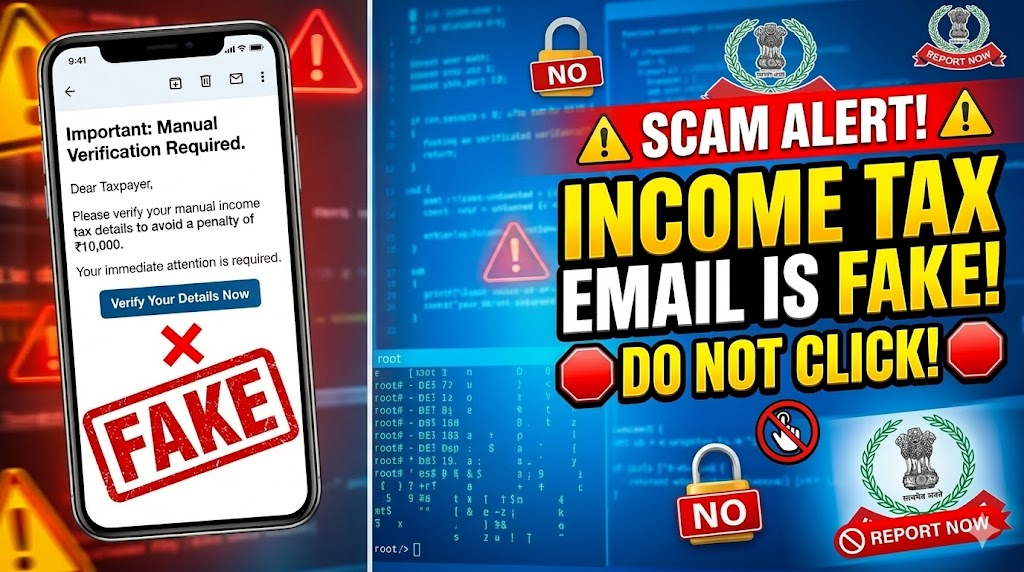
Indian taxpayers are once again being targeted by fraudulent emails impersonating the Income Tax Department. If you recently received an email asking for manual verification of your income tax details, it is important to pause before taking any action.
According to Press Information Bureau through its initiative PIB Fact Check, a viral email claiming to be from the Income Tax Department requesting manual verification is completely fake and part of an ongoing phishing scam targeting taxpayers in India.
Cybercriminals are attempting to trick individuals into clicking malicious links and sharing sensitive information such as financial data, login credentials, or personal identification details.
Understanding how these scams operate can help taxpayers protect their financial identity and prevent online tax fraud.
What Is the Fake Income Tax Manual Verification Email?
Fraudsters are circulating emails that appear to come from the Income Tax Department, claiming that taxpayers must complete a manual verification process.
The email typically:
- Requests immediate action for verification
- Contains suspicious links
- Attempts to create urgency so users click without verifying authenticity
Once the link is clicked, victims may be redirected to fake websites designed to steal sensitive information.
This is a common form of phishing attack, where scammers impersonate government authorities to gain access to personal or financial data.
PIB Fact Check Confirms the Email Is Fake
PIB Fact Check has officially confirmed that the email circulating online claiming to require manual verification from taxpayers is not issued by the Income Tax Department.
Taxpayers are strongly advised not to click any links included in such emails.
Government departments rarely ask for sensitive information through email communications.
Why Income Tax Phishing Emails Are Dangerous
Income tax phishing scams are designed to capture confidential information such as:
- PAN details
- Bank account information
- Income Tax portal login credentials
- OTP verification codes
- Personal identification details
Once criminals gain access to this data, they may attempt financial fraud, identity theft, or unauthorized tax filings.
Because millions of Indians file their Income Tax Returns (ITR) online every year, scammers frequently exploit this system to conduct large-scale cyber fraud campaigns.
What Taxpayers Should Do If They Receive Such Emails
If you receive a suspicious email claiming to be from the Income Tax Department, follow these important cybersecurity steps:
1. Never Click Suspicious Links
Avoid clicking on links embedded in emails claiming tax refunds, verification, or account updates unless they are verified from official sources.
2. Do Not Share Sensitive Information
Never disclose personal or financial information such as:
- OTPs
- Passwords
- PAN numbers
- Bank account details
Government authorities do not request such information through email, SMS, or phone calls.
3. Always Verify Official Communications
Before acting on any tax-related email, confirm its authenticity through official government portals or announcements.
How to Report Fake Income Tax Emails
If you receive a suspicious email related to Income Tax verification or refund processing, report it immediately through the official reporting platform provided by the government.
You can report the fraudulent email here:
Reporting phishing attempts helps authorities track cybercriminal networks and prevent further scams.
Protect Yourself From Income Tax Scams
As digital tax filing becomes more common, cybersecurity awareness among taxpayers is critical.
Always remember:
✔ Do not click unknown or suspicious links
✔ Never share confidential financial information online
✔ Verify tax communications from official government sources
By staying cautious and informed, taxpayers can help create a safer and more secure digital tax ecosystem in India.
Final Thought
Every careful action online helps strengthen cybersecurity.
Let’s build a safer digital space — one cautious click at a time.