

“Every new institution speaks through its first order.”
On 11th February 2026, the Goods and Services Tax Appellate Tribunal (GSTAT), Principal Bench, Delhi delivered its first-ever second appeal decision in:
M/s Sterling & Wilson Pvt. Ltd. vs Commissioner, Odisha CT GST & Ors.
At first glance, the issue may seem routine—a GSTR-1 vs GSTR-3B mismatch for FY 2018–19.
But that is precisely why this order matters.
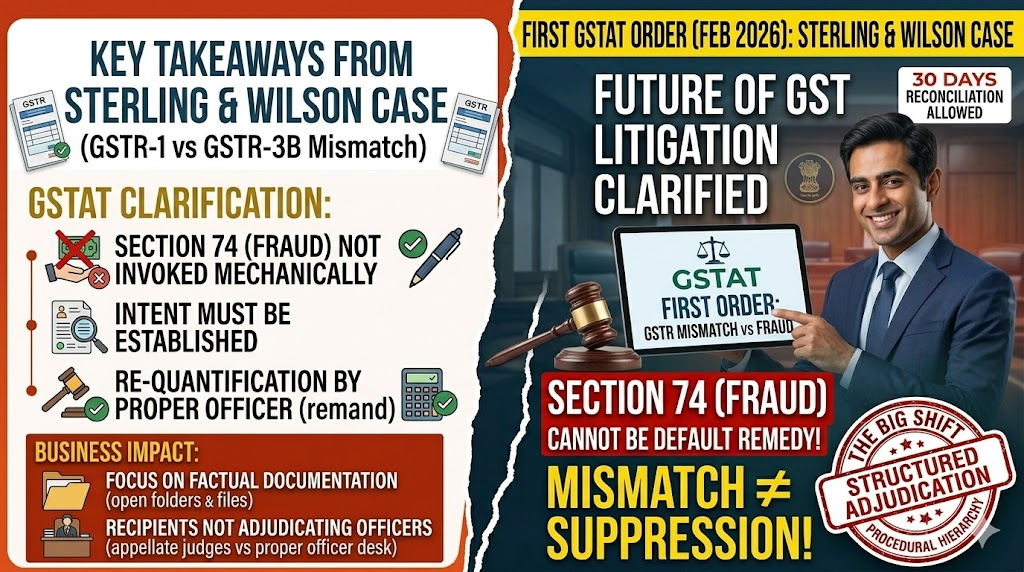
Case Background: A Common Issue, A Crucial Clarification
The dispute involved:
- Mismatch between GSTR-1 and GSTR-3B
- Proceedings initiated under Section 74 (fraud/suppression)
However:
- At the appellate stage, fraud allegations were not sustained
Key Ruling by GSTAT
The Goods and Services Tax Appellate Tribunal made a critical clarification:
👉 If fraud or suppression is not established, the case must be re-determined under Section 73
And importantly:
👉 The matter must go back to the Proper Officer for fresh adjudication
Why This Matters
1. Clear Separation Between Section 73 & 74
- Section 74 → Requires intent (fraud/suppression)
- Section 73 → Applies to non-fraud cases
👉 The ruling reinforces that Section 74 cannot be invoked mechanically.
2. Appellate Forums Have Defined Limits
The Tribunal emphasized:
👉 Appellate authorities cannot step into the shoes of adjudicating officers to re-quantify tax demands
Instead:
- They must remand the matter for proper determination
3. Recognition of Early GST Challenges
A notable aspect of the order is its practical approach:
- Acknowledgement of:
- Initial GST implementation issues
- Portal limitations
- Manual filings
- COVID-19 disruptions
- Initial GST implementation issues
👉 The Tribunal allowed the taxpayer:
- 30 days to reconcile and amend records
Key Takeaways for Businesses & Professionals
✔️ Section 74 Cannot Be Used by Default
- Fraud must be:
- Clearly alleged
- Properly established
- Clearly alleged
✔️ Mismatch ≠ Suppression
- Differences between returns do not automatically imply intent to evade
✔️ Right Forum, Right Process Matters
- Adjudication → Appeal → Tribunal
- Each stage has a defined role
✔️ Remand Is Not a Setback
- It provides:
- Opportunity to correct errors
- Chance for proper reconciliation
- Opportunity to correct errors
What This First GSTAT Order Signals
This decision sets the tone for how GSTAT may function going forward:
🔹 Fact + Law Driven Approach
- Not just legal interpretation, but factual examination
🔹 Balanced View on Compliance Gaps
- Distinguishing genuine errors from deliberate non-compliance
🔹 Structured Adjudication
- Preference for proper re-determination over penalties
Impact on GST Litigation Strategy
For taxpayers and professionals, this order is an early indicator:
👉 Litigation strategy must focus on:
- Correct classification (Section 73 vs 74)
- Strong factual documentation
- Proper sequencing of appeals
Conclusion
The first order of the Goods and Services Tax Appellate Tribunal is not just about a GSTR mismatch.
It is about:
👉 Discipline in invoking provisions
👉 Respect for procedural hierarchy
👉 Fair treatment of genuine compliance gaps
Final Thought 💬
In GST litigation, the real question is not just:
“Is there a mismatch?”
But:
“Does it justify intent?”