

India’s indirect tax litigation landscape is entering a new phase with the introduction of the Goods and Services Tax Appellate Tribunal (GSTAT).
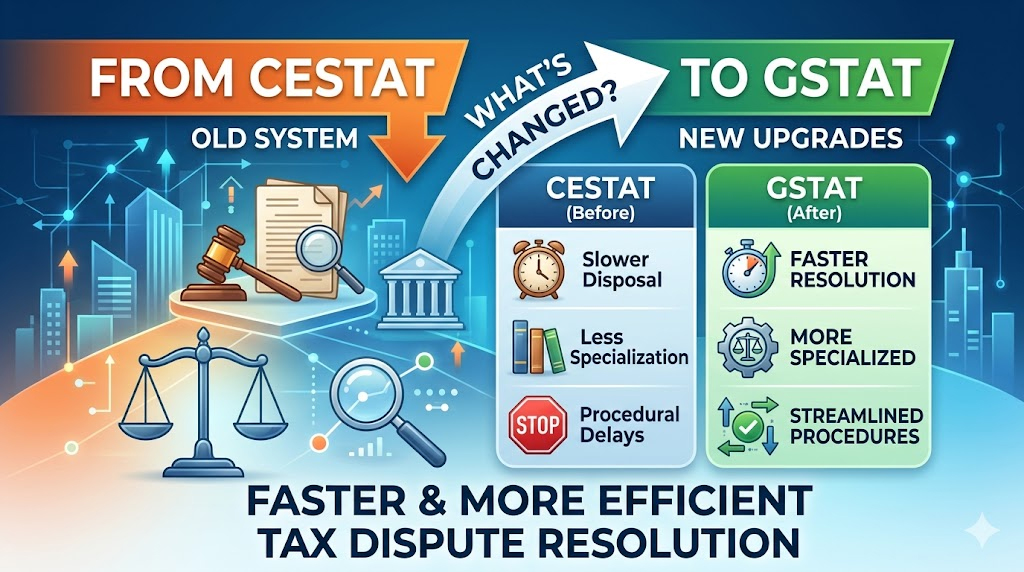
For decades, appeals relating to indirect taxes such as excise and service tax were handled by the Customs, Excise and Service Tax Appellate Tribunal (CESTAT). However, with the introduction of GST and the need for a specialized dispute resolution mechanism, the GSTAT has been designed to bring greater efficiency, digitalization, and procedural clarity to GST litigation in India.
This transition marks an important shift toward modernizing tax dispute resolution, making the system more accessible and structured for taxpayers.
Legal Framework – A Different Statutory Foundation
The legal basis of both tribunals comes from different tax regimes.
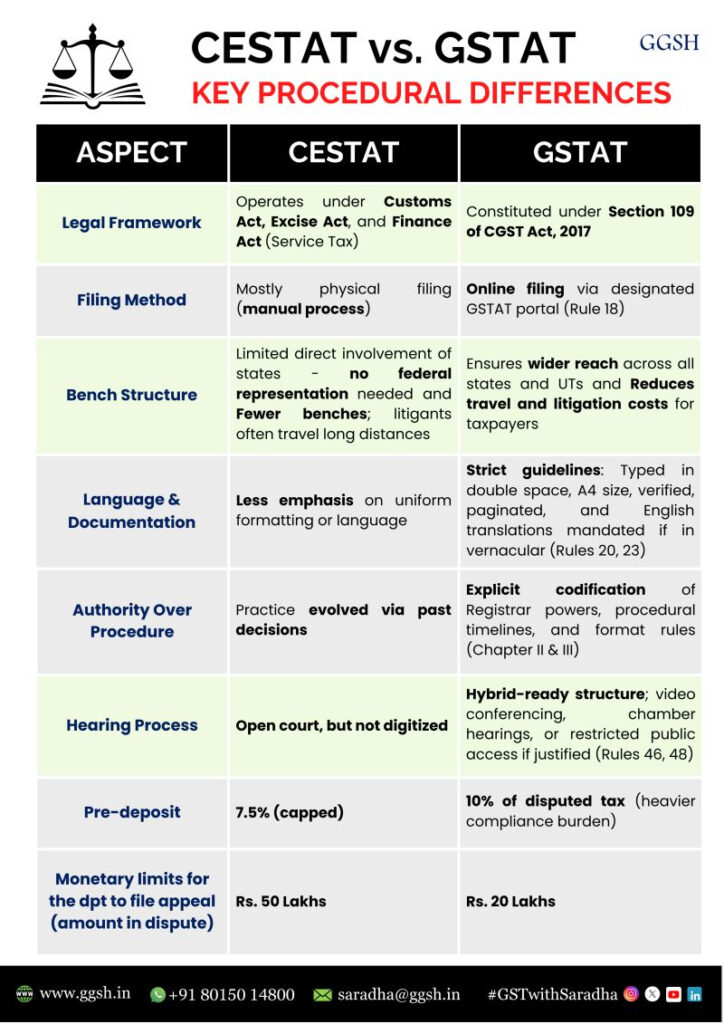
The CESTAT operates under the Customs Act, 1962, Central Excise Act, 1944, and Finance Act, 1994 (Service Tax provisions). It evolved as the principal appellate forum for disputes arising under the earlier indirect tax laws.
In contrast, the GSTAT is constituted under Section 109 of the Central Goods and Services Tax Act, 2017, specifically designed to address disputes under the GST regime.
This dedicated statutory foundation ensures that GST-related appeals are handled within a specialized tribunal framework aligned with GST law.
Filing of Appeals – Moving Toward Digital Processes
One of the major procedural upgrades introduced with GSTAT is the shift toward online filing.
Under CESTAT, the filing of appeals has largely been physical and manual, involving submission of printed documents and paperwork.
With GSTAT, the appeal filing process will be digital and portal-based, allowing taxpayers and professionals to file appeals through the designated GSTAT online portal.
This change is expected to:
- Reduce administrative delays
- Improve document management
- Enable easier tracking of appeal status
- Support faster processing of GST disputes
Bench Structure – Wider Representation
The bench structure also reflects a significant evolution.
In the CESTAT system, benches primarily functioned without formal state representation, and in many instances litigants had to travel long distances to attend hearings due to limited bench locations.
The GSTAT framework introduces wider representation across states and union territories, which helps improve accessibility for taxpayers across the country.
This decentralized approach is expected to reduce litigation costs and logistical challenges for businesses involved in GST disputes.
Language and Documentation Standards
Another area of procedural improvement lies in documentation standards.
Under CESTAT practice, there has traditionally been less emphasis on uniform formatting or language requirements for filings.
The GSTAT framework introduces strict procedural guidelines, including:
- Typed submissions in double-space formatting
- A4 size documentation
- Verified and properly paginated filings
- Mandatory English translations where documents are in regional languages
These standardized filing rules aim to bring greater consistency and clarity in appellate documentation.
Authority Over Procedure – Greater Codification
In the earlier tribunal system, procedural practices under CESTAT largely evolved through judicial precedents and tribunal practices over time.
The GSTAT framework, however, includes explicit codification of procedural powers, covering:
- Filing timelines
- Procedural formats
- Administrative powers of the registrar
- Case management processes
This codification provides greater predictability for taxpayers and professionals handling GST litigation.
Hearing Process – Toward Hybrid and Digital Hearings
The hearing model also reflects modernization.
CESTAT hearings traditionally occur in open courts with physical appearances, with limited digitization of proceedings.
The GSTAT structure introduces a hybrid-ready hearing system, allowing for:
- Video conferencing hearings
- Chamber hearings for specific matters
- Restricted public access in justified circumstances
This flexibility aligns with broader trends toward digital dispute resolution and remote legal proceedings.
Pre-deposit Requirement for Filing Appeals
The financial requirement for filing appeals also differs between the two systems.
Under CESTAT, the pre-deposit requirement is 7.5% of the disputed tax amount, subject to a cap.
Under GSTAT, the pre-deposit requirement is 10% of the disputed tax, which may increase the compliance burden for taxpayers but also helps discourage frivolous appeals.
Monetary Limits for Departmental Appeals
Another important distinction lies in the threshold for departmental appeals.
Under the earlier CESTAT framework, the department typically filed appeals where the disputed amount exceeded ₹50 lakhs.
Under the GSTAT regime, this threshold has been reduced to ₹20 lakhs, meaning the department may pursue appeals in a wider range of cases.
This change could potentially lead to greater litigation activity under GST.
A More Structured Future for GST Litigation
The transition from CESTAT to GSTAT reflects the government’s broader objective of building a more efficient, technology-driven indirect tax dispute resolution system.
With improvements in digital filing, standardized procedures, wider bench representation, and hybrid hearings, the GSTAT framework aims to make the appellate process more accessible and streamlined for taxpayers.
For businesses involved in GST disputes, understanding these procedural changes is essential to navigate the evolving landscape of GST litigation in India.