

India’s indirect tax landscape is evolving rapidly, and one of the most significant developments is the transition from CESTAT to GSTAT. This shift marks a major step toward modernizing and streamlining tax litigation in India, especially under the Goods and Services Tax (GST) regime.
The move aims to bring speed, efficiency, and specialization into the tax dispute resolution process.
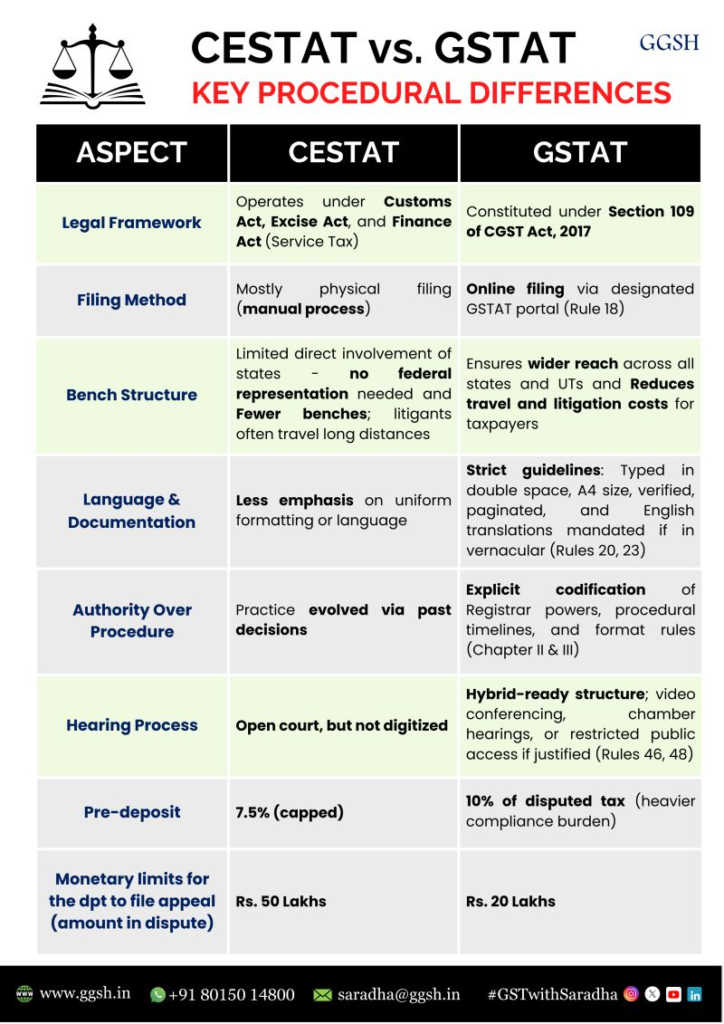
What is CESTAT and GSTAT?
- Customs, Excise and Service Tax Appellate Tribunal (CESTAT): Previously handled disputes related to customs, excise, and service tax laws before GST implementation.
- Goods and Services Tax Appellate Tribunal (GSTAT): A dedicated tribunal introduced under GST to handle GST-related disputes, ensuring a more focused and structured litigation process.
Why the Shift from CESTAT to GSTAT?
With the introduction of GST, India needed a specialized appellate authority to handle the complexities of the unified tax system. GSTAT has been designed to:
- Reduce litigation backlog
- Ensure faster dispute resolution
- Provide subject-matter specialization in GST laws
- Improve consistency in judgments
Key Differences Between CESTAT and GSTAT
1. Specialized Focus on GST Laws
Unlike CESTAT, which handled multiple indirect taxes, GSTAT focuses exclusively on GST disputes, ensuring better expertise and clarity in decisions.
2. Faster and Streamlined Procedures
GSTAT introduces simplified procedures and structured timelines, aiming to reduce delays that were common in traditional tax litigation.
3. Improved Accessibility
GSTAT benches are expected to be more accessible across India, making it easier for taxpayers to approach the tribunal without excessive travel or cost.
4. Technology-Driven Approach
The new system is designed to incorporate digital processes and e-filing, improving efficiency and transparency in handling cases.
5. Consistency in Judgments
With a unified framework under GST, GSTAT is expected to deliver more consistent and predictable rulings, reducing ambiguity in tax interpretations.
Impact on Businesses and Tax Professionals
The transition to GSTAT is a major development for:
- Businesses involved in GST disputes
- Tax consultants and chartered accountants
- Legal professionals handling indirect tax litigation
- Corporates managing compliance and litigation risks
Key benefits include:
- Faster resolution of disputes
- Reduced litigation costs
- Greater clarity in GST law interpretation
- Improved ease of doing business
GSTAT: Setting a New Tone for Tax Dispute Resolution
The introduction of GSTAT signals a shift toward a more efficient, transparent, and taxpayer-friendly litigation system in India. By addressing long-standing issues in dispute resolution, the government is taking a step forward in strengthening the GST framework.
Conclusion
The move from CESTAT to GSTAT is more than just a structural change — it represents a transformation in how tax disputes are handled in India.
With better procedures, specialized focus, and a modern approach, GSTAT is set to redefine GST litigation and dispute resolution for the future.
What Do You Think?
Do you believe GSTAT will improve the efficiency of tax litigation in India?
Share your thoughts and join the conversation! 💬