

A major shift is coming in the GST return filing system in India. With the implementation of GSTR-1A, the government is moving toward hard locking of GSTR-3B, making tax compliance more structured and error-sensitive.
As per the latest advisory issued by the Goods and Services Tax Network (GSTN) dated 7th June 2025, this change will significantly impact how businesses report and correct their GST liabilities.
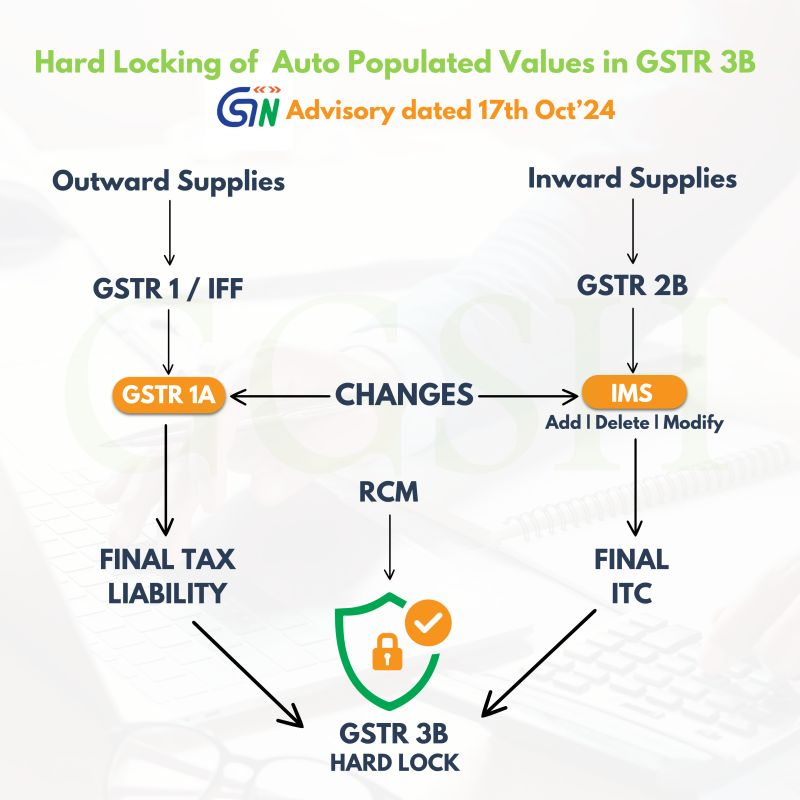
What is GSTR-3B Hard Locking?
Starting from July 2025 tax period (returns filed in August 2025):
- Tax liability auto-populated from GSTR-1 into GSTR-3B will become non-editable
- Taxpayers will not be able to manually modify liability in GSTR-3B
This marks a transition toward a more system-driven GST compliance framework.
Role of GSTR-1A in the New System
With GSTR-1A now effectively in place, it becomes the only window for making corrections before filing GSTR-3B.
Key Function of GSTR-1A:
- Amend errors in outward supplies reported in GSTR-1
- Correct tax liability before it flows into GSTR-3B
- Ensure accuracy before final return filing
👉 Once GSTR-3B is filed, no edits can be made to the auto-populated tax liability
Key Changes in GST Return Filing Process
1. Auto-Population Becomes Final
- Data from GSTR-1 → flows into GSTR-3B
- No manual override allowed
2. Mandatory Use of GSTR-1A for Corrections
- Errors must be corrected before filing GSTR-3B
- Post-filing corrections will become more complex
3. Increased Importance of Data Accuracy
- Even minor mistakes can lead to:
- Incorrect tax payments
- Compliance issues
- Reconciliation challenges
- Incorrect tax payments
Impact on Businesses and Tax Professionals
This update will significantly affect:
- Businesses filing monthly GST returns
- Accountants and GST practitioners
- CFOs managing compliance and reporting
- Organizations with high transaction volumes
Key Implications:
- Greater reliance on accurate GSTR-1 filing
- Reduced flexibility in GSTR-3B
- Need for stronger internal review systems
Compliance Challenges to Watch Out For
With GSTR-3B hard locking, businesses may face:
- Difficulty in correcting errors after filing
- Increased reconciliation between books and returns
- Risk of interest and penalties due to incorrect reporting
Best Practices to Stay Compliant
To adapt to this new system, businesses should implement:
1. Strong Internal Controls
- Multi-level review of GST data before filing
- Validation of invoices and tax amounts
2. Timely Reconciliation
- Match GSTR-1 with:
- Books of accounts
- E-invoices
- ERP data
- Books of accounts
3. Early Error Detection
- Identify discrepancies before filing GSTR-1A
- Avoid last-minute corrections
4. Regular GST Portal Monitoring
- Track auto-populated data in GSTR-3B
- Ensure alignment with filed returns
Why This Change Matters
The move toward hard locking of GSTR-3B reflects the government’s intention to:
- Improve data consistency across GST returns
- Reduce manual intervention and errors
- Strengthen the GST compliance ecosystem
It is also a step toward greater automation and transparency in tax reporting.
Conclusion
The introduction of GSTR-3B hard locking from July 2025 is a significant development in India’s GST framework. While it enhances accuracy and system control, it also places greater responsibility on taxpayers to ensure error-free reporting at the initial stage.
Businesses must now shift from a correction-based approach to a prevention-based compliance strategy.
Final Thought 💬
Are you prepared for a non-editable GSTR-3B system?Now is the time to strengthen your processes and ensure accurate GST return filing from day one.