

Businesses across India must take note of important GST compliance changes related to the Reverse Charge Mechanism (RCM) that became effective from 10 October 2024. These updates affect multiple transactions, including immovable property rentals, metal scrap purchases, and transportation expenses under GTA.
Understanding these changes is essential for proper GST compliance, accurate tax reporting, and timely filing of GST returns such as GSTR-3B. Failure to comply with the new rules may result in tax liabilities, penalties, and input tax credit (ITC) complications.
This article explains the key GST RCM updates applicable from October 2024 and what businesses should do before filing their returns.
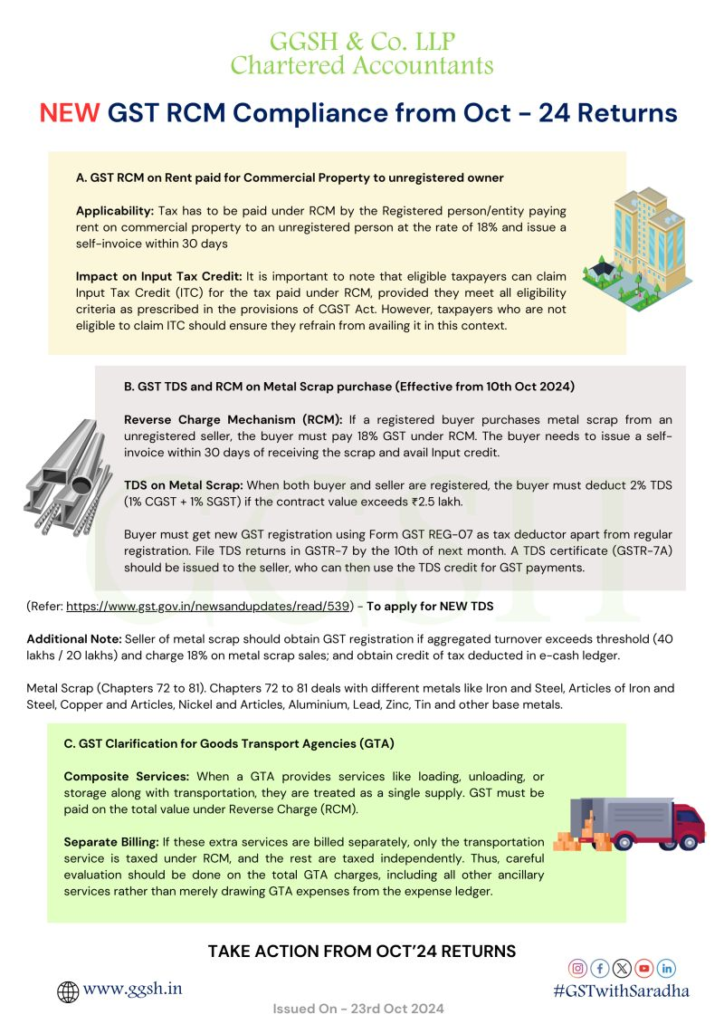
Reverse Charge Mechanism (RCM) under GST
The Reverse Charge Mechanism in GST is a system where the recipient of goods or services is liable to pay GST instead of the supplier.
Normally, the supplier collects and pays GST to the government. However, under RCM:
- The recipient pays the tax directly to the government
- The recipient may claim Input Tax Credit (ITC) if eligible
- Additional documentation and compliance requirements apply
RCM is commonly applied in sectors where tax leakage risks are higher or where suppliers may not be registered under GST.
Key GST RCM Changes Effective from 10 October 2024
1. RCM on Immovable Property Rental – 18% GST
A major update concerns rental expenses for immovable property.
Under the new compliance rule:
- GST at 18% under Reverse Charge Mechanism may be payable on immovable property rental expenses
- This applies to both residential and commercial property rentals in applicable cases
Businesses must carefully review their rental agreements, lease payments, and GST applicability to ensure proper compliance.
2. GST Compliance Changes for Metal Scrap Transactions
Another important update relates to metal scrap purchases and sales.
The GST treatment may involve:
- RCM at 18% on metal scrap purchases, or
- GST TDS at 2%, depending on the transaction and applicable provisions.
These changes affect businesses involved in:
- Scrap trading
- Manufacturing industries
- Recycling businesses
- Metal processing units
Companies dealing with scrap transactions must ensure that correct tax treatment, documentation, and reporting are followed.
3. RCM on GTA Transportation Including Ancillary Services
Under the updated compliance approach, Reverse Charge Mechanism for Goods Transport Agency (GTA) services must now include ancillary charges.
This means businesses must calculate RCM on the total transportation value, which may include:
- Freight charges
- Loading and unloading
- Packing charges
- Other related transportation services
This update ensures accurate tax calculation on the full value of transportation services.
Self-Invoicing Requirement for Reverse Charge Transactions
An important compliance requirement for RCM transactions is the self-invoice rule.
Under GST regulations:
- The recipient must generate a self-invoice when the supplier is not liable to charge GST
- The self-invoice must be issued within 30 days of receiving the goods or services
- This documentation is necessary to claim Input Tax Credit (ITC) on RCM payments
Proper documentation is critical to avoid ITC rejection during GST scrutiny or audits.
What Businesses Should Do Before Filing October GST Returns
Before filing the October GST return in November 2024, businesses should take the following steps:
✔ Review rental expenses and property agreements for RCM applicability
✔ Check metal scrap purchases and ensure correct GST treatment
✔ Verify GTA transportation invoices including ancillary services
✔ Generate self-invoices for RCM transactions within the required timeframe
✔ Ensure proper reporting in GSTR-3B and other GST returns
Taking proactive steps now can prevent compliance issues, penalties, and mismatches in GST filings.
Conclusion
The new GST Reverse Charge Mechanism (RCM) compliance changes effective from 10 October 2024 introduce important responsibilities for businesses dealing with property rentals, metal scrap transactions, and transportation services.
With stricter documentation requirements and expanded RCM applicability, businesses must ensure accurate GST calculation, timely self-invoicing, and proper reporting in GST returns.Staying updated with GST law changes and reviewing transactions carefully will help businesses maintain smooth compliance and avoid unnecessary tax disputes.