

Starting a new business in India or planning a business expansion always begins with one crucial step — GST registration. Whether you’re an entrepreneur, startup founder, or expanding enterprise, obtaining a new GST registration has often been one of the most challenging and frustrating parts of the journey.
However, a recent update from the Central Board of Indirect Taxes and Customs (CBIC) is set to change that experience significantly.
Why GST Registration Has Been a Pain Point for Businesses
For years, businesses across India have faced multiple hurdles while applying for GST registration, such as:
- Excessive document requirements
- Unclear guidelines from officers
- Frequent back-and-forth queries
- Delays in approval timelines
- Inconsistent verification processes
This created unnecessary stress, especially for startups and small businesses, impacting the overall ease of doing business in India.
CBIC’s New GST Registration Guidelines – A Welcome Change
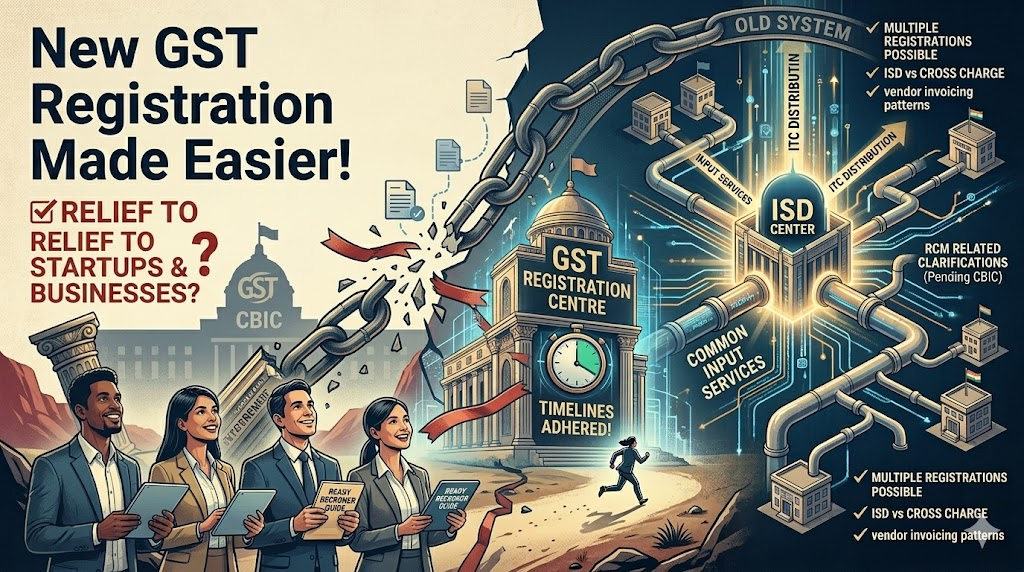
In a major relief to taxpayers, CBIC has issued Instruction No. 03/2025-GST (dated 17 April 2025) to streamline the GST registration process.
Key Highlights of the New GST Registration Instructions
1. Standardized Document Requirements
Officers are now required to follow a defined and limited list of documents for GST registration.
- No more unnecessary demands
- Reduced ambiguity in document submission
- Faster processing of applications
2. Clarity on Business Premises Documentation
The new guidelines clearly specify acceptable documents for different types of business premises:
- Owned properties
- Rented spaces (with or without rental agreements)
- Shared or co-working spaces
This ensures that applicants are not subjected to unreasonable document requests.
3. Reduced Harassment & Improved Transparency
CBIC has acknowledged concerns regarding taxpayer harassment and has instructed officers to:
- Avoid unnecessary clarifications
- Follow a structured verification process
- Ensure transparency in approvals
4. Strict Timelines for Approval
The instructions emphasize adherence to defined timelines, ensuring quicker GST registration approvals and reducing delays.
What This Means for Entrepreneurs, Startups & Businesses
This update is a major step toward improving ease of doing business in India, especially for:
- Entrepreneurs starting new ventures
- Startups applying for GST registration
- Businesses expanding to new locations
- CFOs, accountants, and GST consultants handling compliance
With simplified procedures and reduced compliance burden, businesses can now focus more on growth and operations rather than paperwork.
Ready Reckoner for GST Registration Documents
To make things even easier, a concise and practical guide has been created by simplifying the detailed 8-page CBIC instruction into a 3-page ready reckoner.
This guide includes:
- Complete list of required documents
- Clear explanation of acceptable proofs
- Easy-to-follow GST registration checklist
It’s highly useful for:
- Entrepreneurs
- CEOs & CFOs
- Directors
- Accountants
- GST consultants
Conclusion: A Step Towards Ease of Doing Business in India
The latest CBIC instructions mark a positive shift in India’s GST compliance ecosystem. By reducing ambiguity, limiting documentation, and improving transparency, the government is clearly moving toward a more business-friendly environment.
If implemented effectively, these changes can significantly reduce the friction involved in new GST registration and encourage more businesses to formalize and grow.
What Do You Think?
Do you believe these new GST registration guidelines will truly improve the ease of doing business in India?
Share your thoughts and experiences in the comments!