

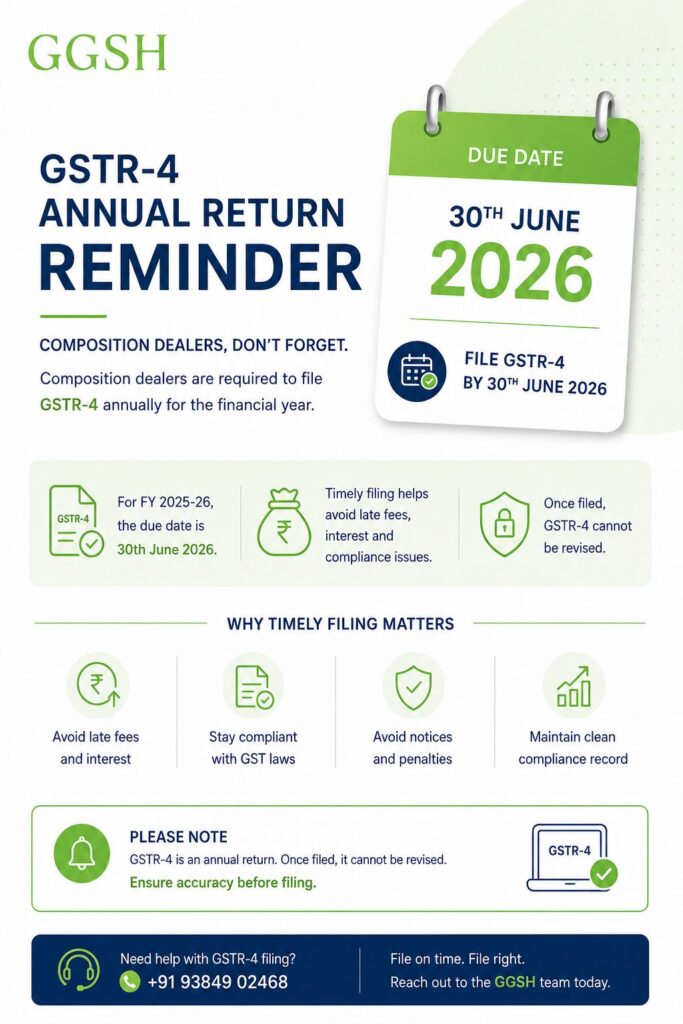
For businesses registered under the Composition Scheme, GST compliance may appear relatively simple compared with regular taxpayers.
But simplicity does not mean that compliance deadlines can be ignored.
One important annual compliance requirement for eligible composition taxpayers is the filing of GSTR-4, the annual return applicable to composition taxpayers, subject to the provisions and applicability for the relevant financial year.
For FY 2025-26, the due date highlighted for filing GSTR-4 is:
30 June 2026
With the deadline approaching, composition dealers should ensure that their records are reviewed and the return is filed within the prescribed time.
Why Is Timely Filing Important?
Timely filing of GSTR-4 is not merely about meeting a statutory deadline.
It also helps a taxpayer maintain a consistent GST compliance record and avoid unnecessary complications arising from delayed filing.
A timely and accurate filing can help:
- Avoid applicable late fees and other consequences of delayed compliance
- Maintain compliance with GST requirements
- Reduce the possibility of future notices arising from filing-related issues
- Keep GST records up to date
- Maintain a cleaner overall compliance history
For a small business, an annual return may appear to be a routine task.
However, a missed deadline can turn a simple compliance exercise into an avoidable problem.
Accuracy Matters Because GSTR-4 Cannot Simply Be Revised
One important aspect that composition taxpayers should keep in mind is that GSTR-4, once filed, cannot be revised.
This makes the verification stage particularly important.
Before submitting the return, taxpayers should carefully review the relevant details and ensure that the information being reported is accurate and properly supported by their records.
A rushed filing simply to meet the deadline can create its own set of complications.
Therefore, the process should ideally be:
Review → Reconcile → Verify → File
rather than:
Deadline arrives → File immediately
What Should Composition Dealers Review?
Before filing GSTR-4, taxpayers should consider reviewing the relevant books and GST records for the financial year.
Particular attention should be given to:
- Outward supplies
- Inward supplies
- Purchases and expenses
- Tax liability
- Payments already made
- Details reported in relevant GST returns
- Any differences between books and GST records
- Supporting invoices and documents
The exact reporting requirements should be checked based on the taxpayer’s circumstances and the applicable GST provisions for the relevant year.
Don’t Wait Until the Last Few Days
Deadlines often create unnecessary pressure when compliance work is postponed.
Reviewing the data early gives taxpayers an opportunity to identify discrepancies, obtain missing information and resolve issues before the return is submitted.
This becomes even more important because the return cannot simply be revised after filing.
A few minutes of additional verification today can potentially prevent hours of correction and clarification later.
A Small Compliance Task With a Bigger Impact
GST compliance is often built around several small recurring responsibilities.
GSTR-4 may be just one annual filing, but completing it accurately and on time contributes to maintaining a disciplined compliance process.
For composition dealers, the key message is simple:
Don’t wait for the deadline to arrive.
Review your records.
Verify the figures.
Check the applicable requirements.
And file GSTR-4 within the prescribed due date.
Due Date: 30 June 2026
A small compliance task today can help prevent bigger complications tomorrow.
Need assistance with your GSTR-4 compliance?
+91 93849 02468
