Hard Locking of Auto-Populated Values in GSTR-3B – What Taxpayers Need to Know

The Goods and Services Tax Network (GSTN) is planning a major compliance change in the GSTR-3B return filing process. According to recent discussions and advisories, auto-populated values in GSTR-3B may become hard-locked and uneditable, tentatively starting from January 2025.

This move has triggered significant discussions among tax professionals, accountants, and businesses across India. The shift from “auto-population” to what appears to be “auto-finalisation” could fundamentally change how GST returns are filed and corrected.

In this blog, we explore what the hard locking of auto-populated values in GSTR-3B means, its potential impact on taxpayers, and the concerns raised by professionals in the GST ecosystem.
Understanding Auto-Population in GSTR-3B

Currently, several values in GSTR-3B are auto-populated from related GST returns, especially from:

  • GSTR-1 (outward supplies statement)
  • GSTR-2B (auto-generated Input Tax Credit statement)

These values act as reference figures to help taxpayers prepare their returns more easily. However, taxpayers are still allowed to edit or adjust the figures if required before filing the return.

The purpose of auto-population was originally to simplify GST compliance, reduce errors, and ensure consistency between different GST returns.

Proposed Hard Locking of Auto-Populated Data

Under the proposed system, the auto-populated values in GSTR-3B may become non-editable, meaning taxpayers will not be able to modify those values directly in the return.

This effectively converts auto-population into auto-finalisation, where the system determines the final numbers based on earlier filings or system-generated data.

If implemented fully, taxpayers would need to make corrections only through prescribed mechanisms, such as:

  • GSTR-1A amendments
  • Invoice Management System (IMS) adjustments
  • Amendments in subsequent returns

Key Concerns Raised by Tax Professionals

1. Impact on the Self-Assessment System

The GST framework in India operates on a self-assessment basis. Taxpayers are responsible for determining their tax liability and filing accurate returns.

However, if auto-populated values in GSTR-3B are locked, taxpayers may lose the flexibility to perform bona fide self-assessment adjustments at the time of filing the return.

It is important to remember:

  • GSTR-1 is only a statement of outward supplies
  • GSTR-3B is the actual tax return

Restricting editing in the return raises questions about whether the taxpayer’s right to self-assessment is being diluted.

2. Legal Validity of Auto-Finalisation

Another major question relates to the legal validity of auto-finalising values in a statutory return.

Professionals have raised concerns about whether system-generated values can override taxpayer-declared values, especially when discrepancies arise due to timing differences, clerical errors, or reconciliation issues.

3. Optional Systems Affecting Mandatory Returns

The proposed mechanism relies heavily on tools such as:

  • GSTR-1A
  • Invoice Management System (IMS)

However, both mechanisms are currently optional.

This raises an important question:

If GSTR-1A and IMS are optional, how can the GSTR-3B return become automatically finalised based on them?

Many experts believe that making GSTR-3B dependent on optional systems may create practical challenges for taxpayers.

GSTN’s Clarification and Updated Advisory

Following strong feedback from industry and tax professionals, the GSTN updated its advisory and clarified an important point.

The advisory now states that:

Hard locking of auto-populated Input Tax Credit (ITC) values in GSTR-3B will be implemented only after the Invoice Management System (IMS) is fully rolled out and issues raised by the trade are addressed.

This means the implementation of ITC locking has been postponed for now, and a separate advisory will be issued in the future once operational issues are resolved.

Possible Impact on Businesses and GST Compliance

If the hard-locking mechanism is implemented, businesses may need to significantly change their GST compliance workflow.

Some expected impacts include:

1. Stronger Reconciliation Requirements

Businesses will need to ensure accurate reconciliation between GSTR-1, GSTR-2B, and GSTR-3B before filing returns.

2. Increased Dependence on Invoice-Level Accuracy

Since corrections may not be allowed directly in GSTR-3B, errors will have to be corrected at the invoice reporting level.

3. More Reliance on GST Technology Systems

Systems like IMS and GSTR-1A amendments may become essential for handling mismatches.

Is This Really “Ease of Doing Business”?

The GST framework has always emphasised ease of doing business and simplified compliance.

However, critics argue that locking auto-populated values in GSTR-3B could make return filing more rigid, especially for small businesses and startups that rely on flexibility during reconciliation.

The coming months will likely see further consultations, advisories, and possible changes before the final rollout.

Conclusion

The proposed hard locking of auto-populated values in GSTR-3B from January 2025 marks a significant potential shift in the GST compliance landscape.

While the objective may be to improve data consistency and prevent tax leakage, the move also raises important questions about:

  • Taxpayer self-assessment rights
  • Legal validity of system-driven finalisation
  • Operational readiness of IMS and amendment systems

For now, taxpayers and professionals should closely monitor GSTN advisories and updates, while ensuring strong reconciliation practices between GSTR-1, GSTR-2B, and GSTR-3B.As the GST ecosystem continues to evolve, staying informed will be the key to maintaining accurate GST compliance and avoiding disputes with tax authorities.
GSTR-9 & GSTR-9C Changes for FY 2024–25: Key Updates Businesses Must Know

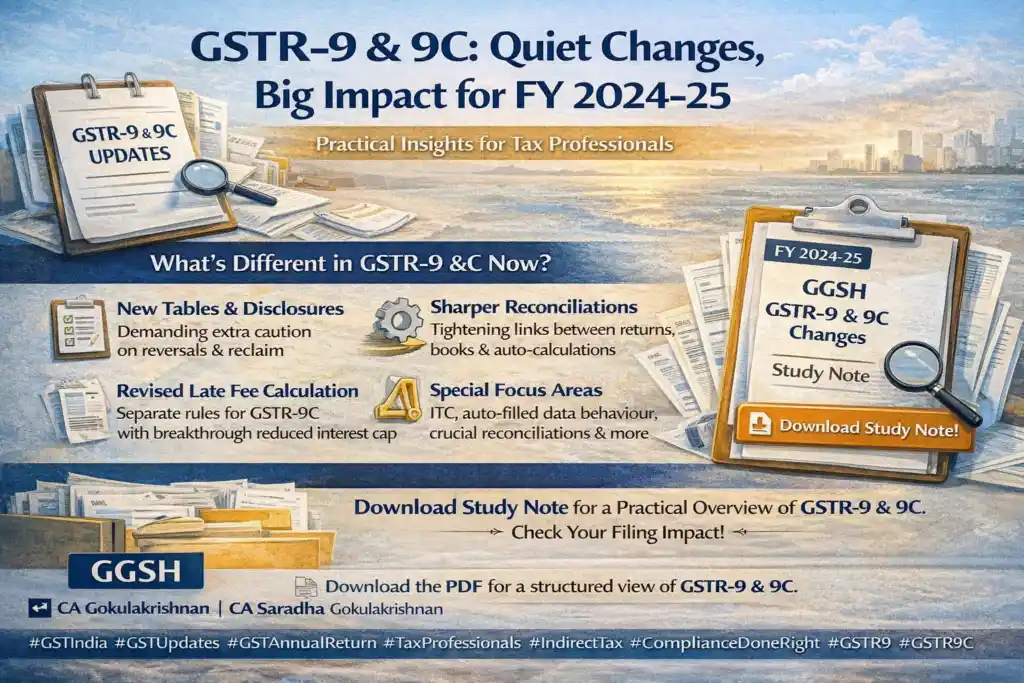
Many taxpayers assume that GSTR-9 and GSTR-9C are simply routine annual compliance forms under GST. However, the Financial Year 2024–25 annual return cycle introduces several structural reporting changes, additional disclosures, and tighter reconciliation requirements.

While these updates may not appear dramatic at first glance, the underlying reporting framework for annual GST compliance has become more detailed, requiring businesses and tax professionals to pay closer attention during filing.

Understanding these changes early can help avoid last-minute confusion, reconciliation mismatches, and compliance risks.

Why FY 2024–25 Annual Returns Require Extra Attention

The GST annual return process has gradually evolved with improvements in technology, analytics, and data reconciliation.

The returns are processed through the GST portal managed by the Goods and Services Tax Network, where auto-population, cross-form matching, and analytics-based validations are increasingly used to detect discrepancies.

As a result, GSTR-9 and GSTR-9C filings now require deeper reconciliation between GST returns and financial records.

Key Areas That Need Extra Care in FY 2024–25

1. Reporting of ITC Reversals and Reclaims

One of the most sensitive areas in GST annual return filing is the reporting of Input Tax Credit (ITC) reversals and subsequent reclaims.

Businesses must carefully ensure that:

  • ITC reversals reported in GSTR-3B are correctly reflected in GSTR-9 tables
  • Any reclaimed ITC is disclosed accurately
  • Differences between books of accounts and GST returns are properly explained in GSTR-9C reconciliation tables

Improper reporting of ITC adjustments can lead to scrutiny or demand notices.

2. Behaviour of Auto-Populated Data

In recent years, the GST portal has introduced auto-population of certain tables in GSTR-9 based on previously filed returns.

However, taxpayers must remember that:

  • Auto-populated values are system-generated references
  • They may not always reflect adjustments made during the year
  • Businesses remain responsible for verifying and reconciling the data before submission

Blindly relying on system values without reconciliation can lead to incorrect disclosures in annual returns.

3. Importance of Reconciliation Explanations

In GSTR-9C, reconciliation tables compare data reported in GST returns with figures in the audited financial statements.

For FY 2024–25, the importance of clear explanations for differences has increased.

Businesses must ensure that any mismatch is supported by:

  • Proper documentation
  • Reconciliation workings
  • Logical explanations in the reconciliation statement

This helps ensure that differences are understood as reporting adjustments rather than compliance issues.

4. Separate Late Fee Mechanism for GSTR-9C

Another development taxpayers should note is that late fees related to GSTR-9C may now operate independently from GSTR-9 compliance.

This means delays or errors in the reconciliation statement filing could result in separate compliance consequences, reinforcing the need for timely and accurate submission.

Why Early Preparation Is Important

Given the additional reporting depth in FY 2024–25, businesses should start preparing their annual return data well in advance.

Early preparation helps in:

  • Reconciling GSTR-1, GSTR-3B, and financial statements
  • Identifying ITC mismatches
  • Validating auto-populated data
  • Preparing explanations for reconciliation differences

This proactive approach reduces the risk of last-minute errors and filing pressure.

Practical Support for GSTR-9 & GSTR-9C Filing

To simplify the process, the Indirect Tax team at GGSH has analysed the latest developments table-by-table, FAQ-by-FAQ, and notification-by-notification.

The analysis highlights practical aspects such as:

  • ITC reporting and adjustments
  • Behaviour of system-generated values
  • Reconciliation documentation requirements
  • Compliance considerations during annual filing

The findings have been compiled into a structured and easy-to-reference study note designed for practical use during the actual filing process.

Final Thoughts

Although GSTR-9 and GSTR-9C remain annual compliance requirements, the reporting framework for FY 2024–25 has become more detailed and reconciliation-focused.

Businesses and tax professionals should approach these filings with careful review, proper documentation, and accurate data mapping across GST returns and financial statements.Preparing early and understanding the latest reporting expectations will help ensure smooth, compliant, and error-free annual GST filings.

Input Tax Credit Reporting in GSTR-9 & GSTR-9C: A Practical Flowchart for GST Compliance

Under the GST framework, Input Tax Credit (ITC) is one of the most valuable yet complex areas of compliance. Between claims, reversals, reclaims, annual adjustments, and cross-form reconciliations, ITC reporting often becomes a technical maze for businesses and tax professionals.

In practice, the journey of ITC under GST has become more intricate than the credit itself. Accurate reporting now depends not only on understanding the GST law, but also on correctly interpreting how different GST returns capture and reconcile ITC data.

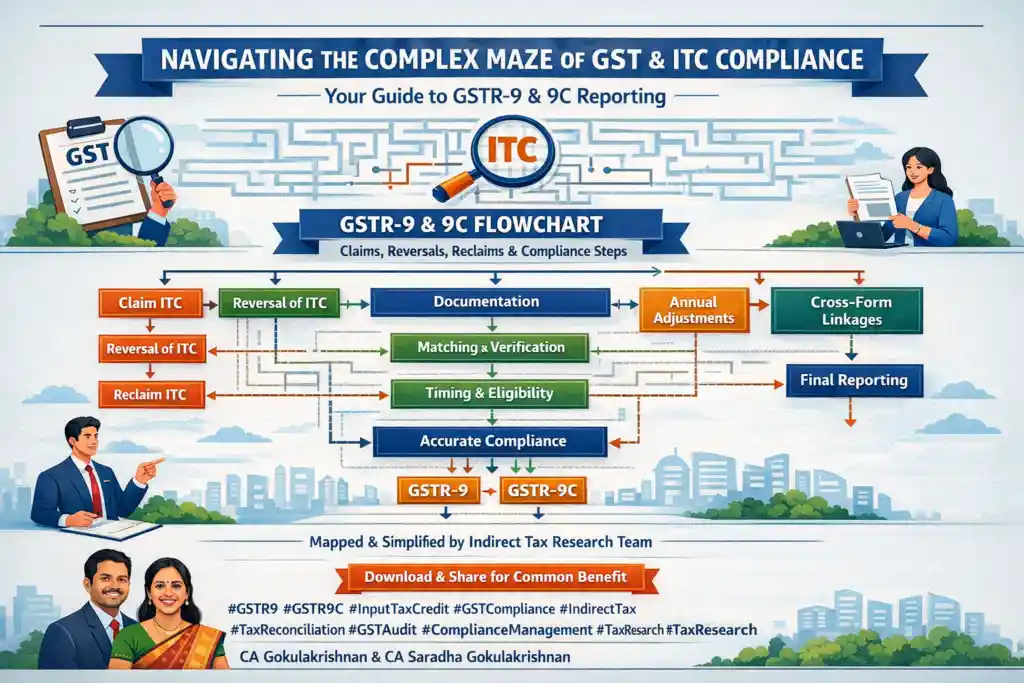
To address this challenge, the Indirect Tax Research team at GGSH has prepared a structured flowchart explaining the entire lifecycle of ITC reporting in GSTR-9 and GSTR-9C.

Why ITC Reporting Has Become Complex

Under India’s GST ecosystem, ITC reporting involves multiple stages of verification and reconciliation. Each stage requires careful attention to documentation, timing, and compliance rules.

Businesses must track ITC across:

  • Purchase invoices and vendor documentation
  • Auto-populated data in GSTR-2B
  • Monthly return filings in GSTR-3B
  • Annual consolidation in GSTR-9
  • Reconciliation with financial statements in GSTR-9C

These cross-form linkages make ITC compliance highly dependent on accurate data mapping and reconciliation.

Key Challenges in ITC Compliance

1. ITC Claims and Eligibility

Businesses must verify whether input tax credit claimed in returns meets the eligibility criteria prescribed under GST law.

This includes ensuring that:

  • The supplier has uploaded the invoice correctly
  • The tax has been paid to the government
  • The recipient holds valid documentation

2. ITC Reversals

Certain transactions require reversal of ITC, such as:

  • Ineligible credits
  • Non-business usage
  • Blocked credits under GST provisions
  • Vendor non-compliance

Tracking these reversals correctly is essential to avoid tax demand or compliance notices.

3. ITC Reclaim

In some cases, previously reversed ITC may become eligible for reclaim when conditions are fulfilled later.

Proper reporting of such reclaims is necessary to ensure that ITC balances remain accurate across GST returns.

4. Annual Adjustments and Reconciliation

At the end of the financial year, businesses must reconcile ITC reported in:

  • Monthly GST returns
  • Financial books of accounts
  • Annual returns and reconciliation statements

This reconciliation ensures that disclosures in GSTR-9 and GSTR-9C remain consistent with audited financial data.

Importance of Correct Table Mapping in GSTR-9 & GSTR-9C

One of the most common errors in annual GST compliance is incorrect table mapping of ITC transactions.

Different tables in the annual return and reconciliation statement capture:

  • ITC availed during the year
  • ITC reversed during the year
  • ITC reclaimed later
  • ITC differences between books and GST returns

Understanding where each adjustment should be reported is crucial for accurate annual GST filings.

These returns are filed through the GST system administered by the Goods and Services Tax Network.

A Flowchart Approach to Simplify ITC Reporting

To simplify this complex compliance area, the Indirect Tax Research team at GGSH has created a structured flowchart covering the entire lifecycle of ITC reporting.

The flowchart visually explains:

  • ITC eligibility verification
  • Claim and reversal scenarios
  • Reclaim procedures
  • Table-wise reporting in GSTR-9 and GSTR-9C
  • Cross-linkages between GST returns and financial statements

By presenting the process in a step-by-step visual format, the flowchart helps professionals quickly understand how each ITC event should be reported.

Who Should Use This Resource

This flowchart is especially useful for:

  • Chartered accountants and tax consultants
  • GST compliance professionals
  • Corporate finance and accounting teams
  • Businesses preparing GSTR-9 and GSTR-9C annual filings

It helps ensure accurate ITC reconciliation and consistent GST reporting.

Final Thoughts

The complexity of Input Tax Credit reporting under GST continues to evolve as compliance requirements become more detailed and technology-driven.

With multiple transactions, reversals, reclaims, and reporting tables involved, ITC compliance requires both technical understanding and careful documentation.

Resources such as structured ITC reporting flowcharts can significantly simplify this process by offering a clear, visual roadmap for annual GST compliance.By improving clarity and reducing reporting errors, businesses can strengthen their GST compliance framework and avoid unnecessary disputes or notices.

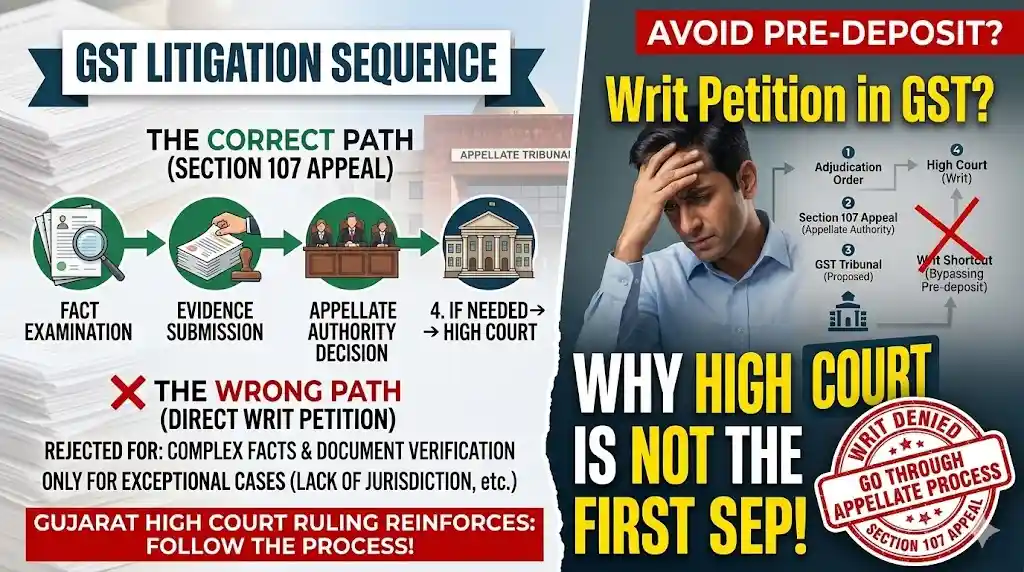
Writ Petition in GST: Why High Court Is Not the First Step in Every Dispute

“Can we go directly to High Court?”
“Can we avoid pre-deposit through a writ petition?”

These are among the most common questions in GST litigation strategy.

But here’s the reality:
👉 A writ petition is an exception—not the default remedy.

A recent ruling by the Gujarat High Court reinforces this principle with clarity, especially in cases involving Input Tax Credit (ITC) disputes.

Case Background: ITC Denial & Direct Writ Approach

In this case:

  • ITC was denied under Section 16(2)(c) of GST law
  • The taxpayer approached the High Court directly
  • Grounds raised included:
    • Constitutional validity
    • Alleged violation of natural justice

At first glance, these seem like strong reasons to invoke writ jurisdiction.

But the Court chose a different approach.

Court’s Stand: Process Before Protest

Instead of examining the merits of ITC eligibility, the Gujarat High Court focused on a more fundamental question:

👉 Was the correct legal process followed?

The Court observed:

  • The dispute involved:
    • Examination of facts
    • Verification of documents
    • Assessment of supplier conduct

👉 These are matters best handled through the statutory appellate mechanism, not writ jurisdiction.

Section 107 Appeal: Not Just a Formality

Under GST law:

  • Section 107 provides the right to appeal against orders
  • It includes:
    • Detailed fact examination
    • Opportunity for evidence submission
    • Structured adjudication

The Court emphasized:

👉 This appellate route is not optional—it is the correct first step in most cases.

When Can a Writ Petition Be Filed?

Writ jurisdiction is meant for exceptional situations, such as:

✔️ Lack of Jurisdiction

  • Authority acted beyond legal powers

✔️ Violation of Natural Justice

  • No hearing given
  • Bias or procedural unfairness

✔️ Constitutional Challenges

  • Validity of law itself is questioned

✔️ Patent Legal Errors

  • Clear, undisputed legal mistakes

👉 Even in such cases, courts exercise caution.

Why Courts Discourage Direct Writs in GST Matters

The reasoning is practical:

  • GST disputes often involve complex facts
  • Require document verification
  • Need technical analysis

High Courts are not designed to function as fact-finding authorities in the first instance.

Key Takeaways for GST Litigation Strategy

1. Two Critical Decisions in Every Dispute

Every GST case involves:

👉 WHAT to challenge (legal issue)
👉 HOW to challenge (correct forum & process)

Both are equally important.

2. Avoid Using Writ as a Shortcut

  • Filing a writ to bypass:
    • Pre-deposit
    • Appellate procedures

…may backfire.

👉 Courts may simply redirect you to the proper forum.

3. Respect the Litigation Sequence

  • Adjudication → Appeal → Higher forums

👉 Skipping steps weakens your position.

4. Build Your Case at the Right Stage

  • Appellate authorities allow:
    • Evidence submission
    • Detailed arguments
    • Fact-based defense

👉 This foundation is crucial for future litigation.

Practical Advice for Businesses & Professionals

✔️ Before Filing a Writ

  • Ask:
    • Is this truly an exceptional case?
    • Are facts disputed?
    • Is evidence evaluation required?

✔️ Prefer Appeal Route When:

  • ITC eligibility is in question
  • Supplier compliance is involved
  • Documentation needs scrutiny

✔️ Use Writ Strategically

  • Only when:
    • Legal error is clear
    • Process is fundamentally flawed

Conclusion

The ruling by the Gujarat High Court serves as an important reminder:

👉 Writ jurisdiction is not a shortcut—it is a safeguard.

In GST litigation, success is not just about legal strength, but also about:

  • Proper sequencing
  • Forum selection
  • Strategic restraint

Final Thought 💬

In every GST dispute, the real question is not just:

“Can we go to High Court?”

But:

“Should we go there now—or later?”

PAN–Aadhaar Linking Deadline 2026: Why Taxpayers Must Act Before 1 January

A critical compliance deadline is approaching for taxpayers across India. If your Permanent Account Number (PAN) is not linked with Aadhaar, it may soon become inactive, potentially disrupting several financial and regulatory activities.

According to Notification No. 26/2025 issued by the Central Board of Direct Taxes, taxpayers must ensure their PAN is linked with Aadhaar before the upcoming deadline to avoid operational restrictions.

📅 Effective Date: 1 January 2026

Failure to complete this linking process could result in PAN becoming inoperative, affecting a wide range of financial transactions.

Why PAN–Aadhaar Linking Is Important

The PAN issued by the Income Tax Department of India is one of the most critical identification numbers used in India’s financial ecosystem.

It is required for:

  • Banking transactions
  • Filing income tax returns
  • Opening bank and demat accounts
  • High-value financial transactions
  • Property purchases and investments
  • Loan applications
  • Regulatory and compliance filings

When PAN becomes inactive, many of these processes can slow down or become temporarily unavailable.

Consequences of an Inactive PAN

If PAN is not linked with Aadhaar before the notified deadline, it may be marked “inoperative” under the Income-tax framework.

An inactive PAN can lead to several practical difficulties:

Banking and Financial Transactions

Opening new bank accounts, demat accounts, or investment accounts may become difficult without an active PAN.

Investment and Market Activities

Many financial platforms require PAN verification for equity investments, mutual funds, and securities transactions.

Loan and Credit Applications

Financial institutions often require PAN validation while processing loan or credit applications.

High-Value Transactions

Depositing large amounts of money, purchasing property, or executing other high-value financial transactions may require an active PAN.

Compliance and Tax Filings

PAN plays a central role in income tax return filing, tax reporting, and regulatory documentation.

An inoperative PAN may therefore affect multiple compliance activities.

Legal Basis for PAN–Aadhaar Linking

The requirement to link PAN with Aadhaar has been mandated through notifications issued by the Central Board of Direct Taxes under the provisions of the Income-tax Act, 1961.

The objective of this initiative is to:

  • Eliminate duplicate PAN records
  • Strengthen taxpayer identification systems
  • Improve tax compliance and transparency

How to Link PAN with Aadhaar

The process for linking PAN with Aadhaar is simple and completely digital.

Taxpayers can complete the linking process through the e-filing portal of the Income Tax Department of India.

Basic Steps

  1. Visit the official Income Tax e-Filing portal.
  2. Navigate to the PAN–Aadhaar linking section.
  3. Enter your PAN number, Aadhaar number, and required details.
  4. Verify the information and submit the request.

In most cases, the entire process can be completed within a few minutes online.

Why You Should Act Early

Although the deadline is still some time away, waiting until the final weeks may create unnecessary pressure.

Completing the PAN–Aadhaar linking early helps taxpayers:

  • Avoid last-minute portal congestion
  • Prevent disruptions in financial activities
  • Maintain uninterrupted compliance status

Proactive action ensures that all banking, investment, and regulatory transactions continue smoothly.

Final Thoughts

The upcoming PAN–Aadhaar linking deadline of 1 January 2026 is an important compliance requirement for taxpayers across India.

Since PAN acts as the central identifier for financial transactions and tax reporting, ensuring its active status is essential for both individuals and businesses.

By completing the linking process early through the Income Tax e-Filing portal, taxpayers can avoid compliance issues and maintain uninterrupted access to the country’s financial ecosystem.Staying proactive and compliant today helps prevent unnecessary disruptions tomorrow.

DGFT Revises eBRC Format from Jan 2026: GST Invoice Details Now Mandatory – What Exporters Must Know

A quiet but impactful change has been introduced by the Directorate General of Foreign Trade (DGFT).

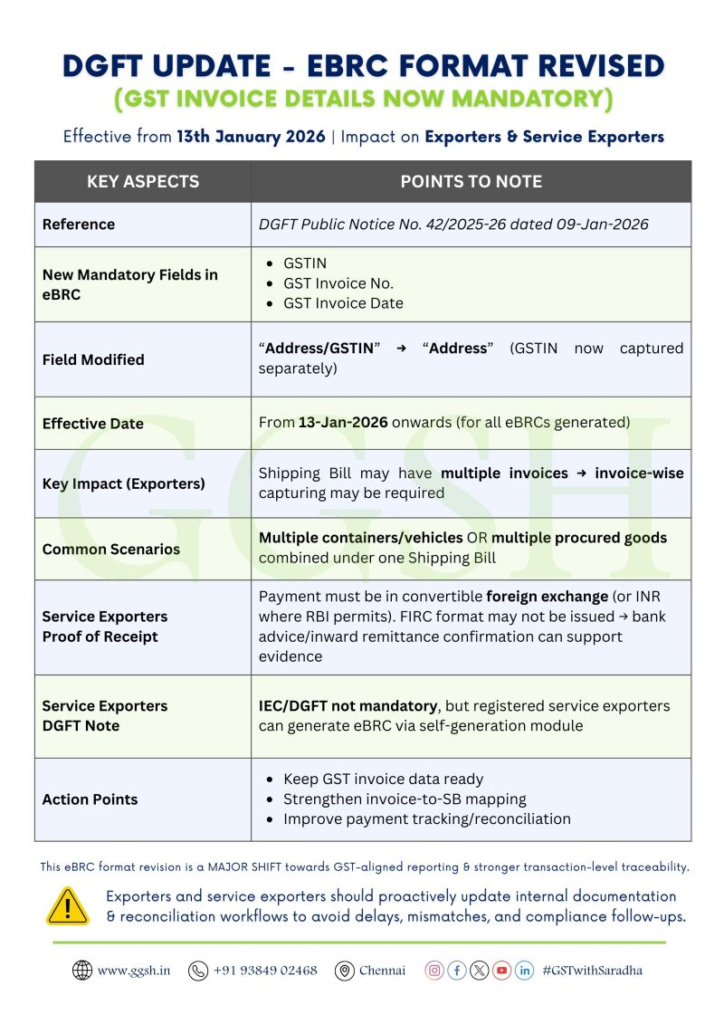
Effective 13th January 2026, the eBRC (Electronic Bank Realisation Certificate) format has been revised—bringing GST into sharper focus by mandating invoice-level reporting.

This move signals a clear shift toward GST-aligned export reporting and enhanced transaction traceability.

What Is eBRC and Why It Matters?

An eBRC is issued by banks to confirm that:

  • Export proceeds have been realized in foreign exchange
  • The transaction qualifies for export benefits under DGFT schemes

👉 It plays a crucial role in:

  • Claiming export incentives
  • Proving realization of export proceeds
  • Ensuring regulatory compliance

What’s New in the Revised eBRC Format?

From January 2026 onwards, the following details are mandatory in eBRC:

📌 Newly Required Fields:

  • GSTIN
  • GST Invoice Number
  • GST Invoice Date

👉 This transforms eBRC from a summary-level document to a more granular, invoice-linked record.

The Big Shift: Invoice-Level Traceability

The revised format introduces a fundamental change:

👉 One Shipping Bill ≠ One Invoice anymore (for reporting purposes)

Instead:

  • A single shipping bill may include multiple invoices
  • Each invoice must now be:
    • Identified
    • Tracked
    • Reported accurately

Practical Challenges Exporters Will Face

1. Complex Invoice-to-Shipping Bill Mapping

Situations where complexity increases:

  • Multiple invoices under one shipping bill
  • Multiple containers or transport modes
  • Clubbing of goods from different procurements

👉 Manual tracking systems may no longer be sufficient.

2. Payment Tracking & Reconciliation

Export proceeds may be:

  • Received in parts
  • Adjusted across invoices
  • Linked to multiple shipments

👉 Matching payments with specific GST invoices becomes critical.

3. Service Exporters – Documentation Pressure

For service exporters:

  • FIRC (Foreign Inward Remittance Certificate) may not always be issued
  • Alternative bank documents are used

👉 Now, linking such receipts with GST invoices becomes even more important.

Why This Change Matters

This update is not just procedural—it reflects a broader regulatory intent:

🔍 Stronger Data Integration

  • Alignment between GST filings and DGFT records

🔍 Improved Traceability

  • Invoice-level audit trail

🔍 Reduced Misreporting

  • Better validation of export transactions

Action Points for Exporters

Before generating your next eBRC, ensure the following:

✔️ Keep GST Invoice Data Ready

  • GSTIN
  • Invoice number & date
  • Accurate invoice classification

✔️ Strengthen Invoice-to-Shipping Bill Mapping

  • Maintain clear linkage between:
    • Invoices
    • Shipping bills
    • Export documentation

✔️ Improve Payment Tracking Systems

  • Track receipts invoice-wise
  • Reconcile bank realization with GST data

✔️ Upgrade Internal Processes

  • Move from summary-level tracking to transaction-level control
  • Use ERP or structured reconciliation tools where possible

Impact on Compliance & Risk

Failure to adapt may lead to:

  • Delays in eBRC generation
  • Issues in claiming export benefits
  • Mismatches during audits
  • Increased compliance scrutiny

Conclusion

The revised eBRC format introduced by the Directorate General of Foreign Trade marks a significant step toward data-driven export compliance.

While the change may appear minor, its impact on documentation, reconciliation, and reporting discipline is substantial.

Final Thought 💬

In the new compliance landscape, it’s no longer enough to prove that exports happened.👉 You must now prove it invoice by invoice, transaction by transaction.

Less than 5 days left for exporters to complete their Annual RoDTEP Return (ARR) filing for FY 2023–24.

If you’re claiming benefits under the Remission of Duties and Taxes on Exported Products (RoDTEP) scheme, this is an important compliance milestone.

Here’s what exporters should know:

Who needs to file?
Exporters whose RoDTEP claims exceed ₹1 crore in a financial year across all HS codes.

Due Date
📅 30 June 2025
A grace period is available till 30 September 2025, but it will attract penalties.

Non-Filing Impact
Failure to file the ARR can result in denial of RoDTEP benefits, and no claim scrolls will be processed beyond the grace period.

Penalty Structure

  • ₹10,000 – if filed by 30 September 2025
  • ₹20,000 – if filed after the grace period

Data Accuracy Matters
Ensure that the information reported is accurate and consistent with shipping bills and export documentation to avoid scrutiny, excess claim adjustments, or delays in incentives.Remember:
Better late than never — but timely and accurate filing ensures your export incentives remain secured.

GSTR-9 & GSTR-9C for FY 2024-25: GSTN Releases FAQ as Annual Return Filing Begins

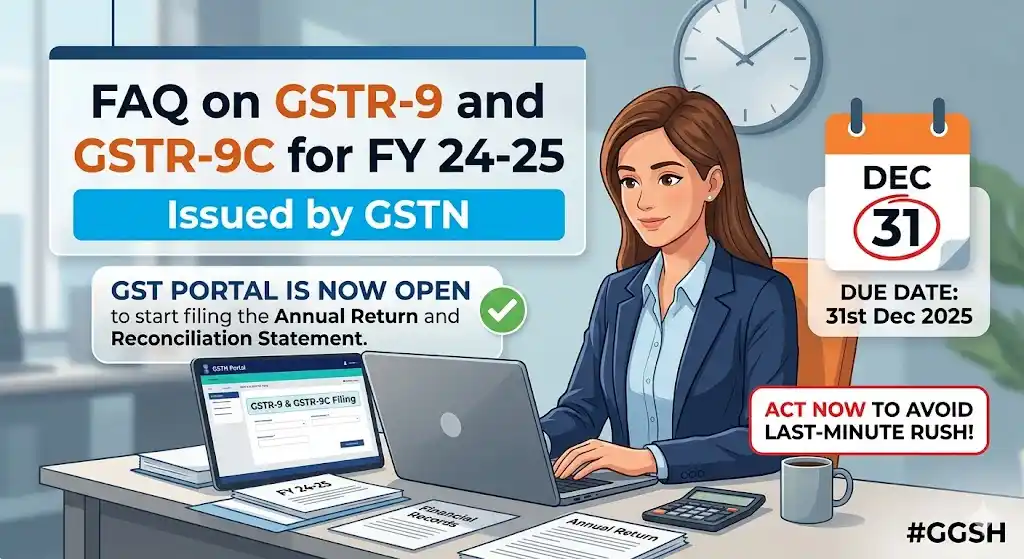
The annual GST compliance cycle has officially begun. The Goods and Services Tax Network (GSTN) has released a detailed FAQ on GSTR-9 and GSTR-9C for FY 2024-25, while simultaneously enabling the filing functionality on the GST portal.

Taxpayers and professionals can now start filing the Annual Return (GSTR-9) and Reconciliation Statement (GSTR-9C) well before the deadline.

📅 Due Date for Filing: 31 December 2025

Early preparation can help businesses avoid last-minute filing pressure, reconciliation errors, and compliance risks.

What Is GSTR-9 Under GST?

GSTR-9 is the annual return required under the GST law, consolidating all monthly or quarterly returns filed during the financial year.

Registered taxpayers must report a comprehensive summary of their transactions, including:

  • Outward supplies (taxable and exempt)
  • Input Tax Credit (ITC) availed and reversed
  • Tax payments made during the year
  • Amendments and adjustments made through GST returns

The return essentially acts as a year-end consolidation of GST data reported in GSTR-1, GSTR-3B, and other periodic returns.

What Is GSTR-9C (GST Reconciliation Statement)?

GSTR-9C is a reconciliation statement between the taxpayer’s audited financial statements and GST returns filed during the year.

It ensures that the turnover, tax liability, and ITC reported under GST align with the financial records of the business.

Taxpayers must reconcile:

  • Gross turnover in financial statements vs GST returns
  • Input Tax Credit claimed vs eligible ITC
  • Tax payable vs tax actually paid

This reconciliation helps identify discrepancies, omissions, or adjustments that may require correction or disclosure.

Who Needs to File GSTR-9?

The following categories of taxpayers are generally required to file GSTR-9 annual return:

  • Regular taxpayers registered under GST
  • Businesses filing monthly or quarterly GST returns

However, certain categories such as composition taxpayers, input service distributors, non-resident taxable persons, and TDS/TCS deductors are required to file different forms instead.

Who Must File GSTR-9C?

Businesses whose aggregate turnover exceeds the prescribed threshold must file GSTR-9C along with the annual return.

This reconciliation statement provides greater transparency and ensures consistency between financial records and GST filings.

Key Highlights of the GSTN FAQ on GSTR-9 & GSTR-9C

The recently released FAQ by the Goods and Services Tax Network provides guidance on several practical aspects of annual return filing, including:

  • Step-by-step filing process on the GST portal
  • Clarifications on reporting turnover and adjustments
  • Guidance on ITC reconciliation and reversals
  • Instructions on handling amendments and corrections
  • Technical guidance on filing GSTR-9C reconciliation statement

The FAQ is intended to help taxpayers reduce errors and improve the accuracy of annual GST filings.

Why Businesses Should Start Filing Early

Although the deadline for filing GSTR-9 and GSTR-9C for FY 2024-25 is 31 December 2025, experts recommend starting the process early.

1. Avoid Last-Minute Filing Rush

Closer to the deadline, the GST portal often experiences heavy traffic, which can delay filings.

2. Allow Time for Reconciliation

Annual returns require detailed reconciliation of GST returns with financial statements, which may take considerable time.

3. Identify and Correct Errors

Early review allows businesses to detect mismatches in turnover, ITC claims, and tax payments before filing.

4. Reduce Risk of Notices

Accurate and well-reconciled annual returns help minimize the risk of GST scrutiny or departmental notices.

Best Practices for GSTR-9 & GSTR-9C Filing

Businesses preparing for GST annual return filing should follow these best practices:

✔ Reconcile GSTR-1, GSTR-3B, and books of accounts
✔ Validate Input Tax Credit with GSTR-2B statements
✔ Review HSN-wise summary reporting
✔ Cross-check turnover reported in financial statements
✔ Verify tax payments and adjustments

These steps help ensure accurate GST compliance and smooth filing of annual returns.

Final Thoughts

With the GST portal now open for filing GSTR-9 and GSTR-9C for FY 2024-25, businesses should begin their annual GST reconciliation and compliance review immediately.

The FAQ released by the Goods and Services Tax Network provides valuable clarity to taxpayers and professionals navigating the annual filing process.

📌 Due Date Reminder: 31 December 2025Starting early can help businesses avoid last-minute stress, ensure accurate reporting, and maintain strong GST compliance records.

ICAI Releases Updated Technical Guide on GSTR-9: Key Insights for GST Annual Return Filing

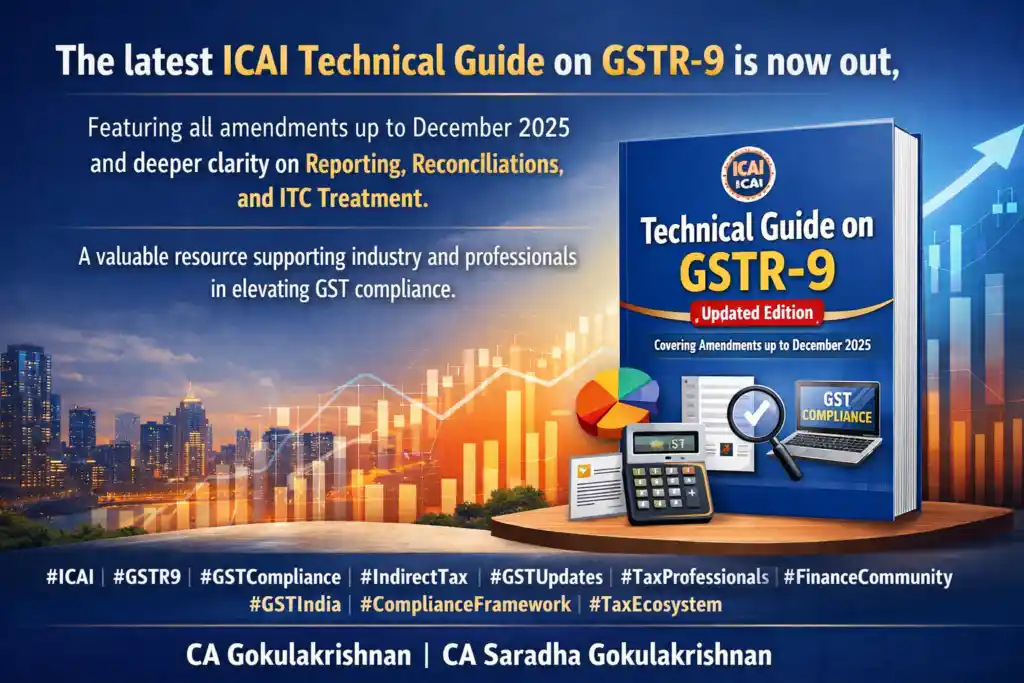
The latest technical guide on GSTR-9 has been released by the Institute of Chartered Accountants of India (ICAI), providing comprehensive guidance for taxpayers and professionals preparing the GST Annual Return.

This updated publication incorporates all amendments and regulatory updates up to December 2025, offering greater clarity on reporting requirements, reconciliation processes, and Input Tax Credit (ITC) treatment under the GST framework.

For businesses, tax consultants, and finance teams, the guide serves as a valuable reference for accurate and compliant filing of GSTR-9.

What Is GSTR-9 Under GST?

GSTR-9 is the annual return that consolidates all GST transactions reported during a financial year. It compiles information from monthly or quarterly returns such as GSTR-1 and GSTR-3B, presenting a consolidated view of:

  • Outward taxable supplies
  • Inward supplies and Input Tax Credit (ITC)
  • Tax payments and adjustments
  • Amendments made during the year

The annual return plays an important role in ensuring consistency between GST returns and financial records.

Why the Updated ICAI Technical Guide Matters

The updated technical guide issued by the Institute of Chartered Accountants of India provides detailed interpretation and practical insights on several aspects of GST annual return compliance.

The guide helps professionals understand:

  • Latest statutory amendments affecting GSTR-9
  • Reporting methodology for different tables
  • Reconciliation between GST returns and financial statements
  • Treatment and disclosure of Input Tax Credit
  • Common errors and best practices in annual return filing

By offering practical examples and explanatory notes, the guide simplifies complex compliance requirements.

Key Areas Covered in the Technical Guide

1. Detailed Reporting Guidance

The guide explains the correct approach to filling each table in GSTR-9, ensuring that taxpayers report their data accurately and consistently.

2. Reconciliation of GST Returns and Books

One of the most critical parts of annual return preparation is reconciling:

  • Turnover reported in financial statements
  • Taxable supplies reported in GSTR-1
  • Tax liability reported in GSTR-3B

The technical guide provides structured guidance for performing these reconciliations.

3. Input Tax Credit (ITC) Treatment

Proper reporting of ITC claimed, reversed, or ineligible is essential in GSTR-9.

The ICAI guide offers clarity on:

  • ITC reconciliation
  • Reversal of ineligible credits
  • Adjustments across different GST returns

4. Practical Compliance Insights

The publication also highlights common mistakes made during GSTR-9 filing and provides suggestions to avoid compliance risks.

This helps businesses improve the accuracy and reliability of their GST reporting.

Importance for Businesses and Tax Professionals

The updated technical guide is particularly useful for:

  • Chartered accountants and tax consultants
  • Corporate finance teams
  • GST compliance managers
  • Businesses preparing annual returns

Using the guide as a reference can significantly improve GST compliance quality and reduce the risk of mismatches or notices from tax authorities.

Final Thoughts

The updated GSTR-9 Technical Guide released by the Institute of Chartered Accountants of India is an important resource for the GST community.

By incorporating all amendments up to December 2025, the guide provides clarity on complex reporting requirements and strengthens the overall GST annual return filing process.For businesses and professionals aiming to maintain accurate GST compliance, referring to this technical guide can help ensure better reporting, stronger reconciliations, and improved ITC management.

GST Time Limits for Show Cause Notices: Impact of Section 74A from FY 2024–25

Time limits under the GST law play a critical role in determining whether a tax demand raised by the department is legally valid or time-barred. Over the years, one of the most debated aspects of GST litigation has been the statutory period available to the tax department for issuing a Show Cause Notice (SCN) and passing the final adjudication order.

With the introduction of Section 74A under the Central Goods and Services Tax Act, 2017, the timelines for initiating and completing proceedings are set to change significantly from Financial Year 2024–25 onwards.

Understanding these revised timelines is essential for businesses, tax professionals, and compliance teams dealing with GST disputes, demand notices, and litigation risk management.

Why GST Time Limits Matter in Litigation

In GST proceedings, time limitation is a decisive legal factor. If the tax department fails to issue an SCN or pass an order within the statutory time limits, the demand may become legally unenforceable.

These limitation periods determine whether:

  • A tax demand is valid or time-barred
  • The department has jurisdiction to proceed with the case
  • Taxpayers can challenge the validity of notices in litigation

Therefore, reviewing the timeline of a Show Cause Notice is often the first step when responding to a GST demand.

Existing Framework: Sections 73 and 74 (Up to FY 2023–24)

For tax periods up to FY 2023–24, GST demand proceedings continue to follow the existing provisions under:

  • Section 73 of the Central Goods and Services Tax Act – cases involving non-fraud or bona fide errors
  • Section 74 of the Central Goods and Services Tax Act – cases involving fraud, wilful misstatement, or suppression of facts

Section 73 – Non-Fraud Cases

In cases where the department alleges tax short payment without fraud, the time limits are relatively shorter.

Typically, the department must:

  • Issue the Show Cause Notice before the prescribed limitation period, and
  • Pass the final order within the statutory timeline.

These cases generally involve clerical errors, interpretation issues, or reconciliation mismatches.

Section 74 – Fraud or Suppression Cases

Where the department alleges fraud, wilful misstatement, or suppression of facts, the limitation period is longer.

This extended timeline allows the department additional time to investigate and pursue serious tax evasion cases.

However, even in such cases, proceedings must still comply with statutory time limits to remain legally valid.

New Provision from FY 2024–25: Section 74A

A new provision, **Section 74A of the Central Goods and Services Tax Act, applies to tax periods starting from FY 2024–25.

This section introduces a restructured timeline for issuing SCNs and passing final orders.

Key Timeline Under Section 74A

Under the new framework:

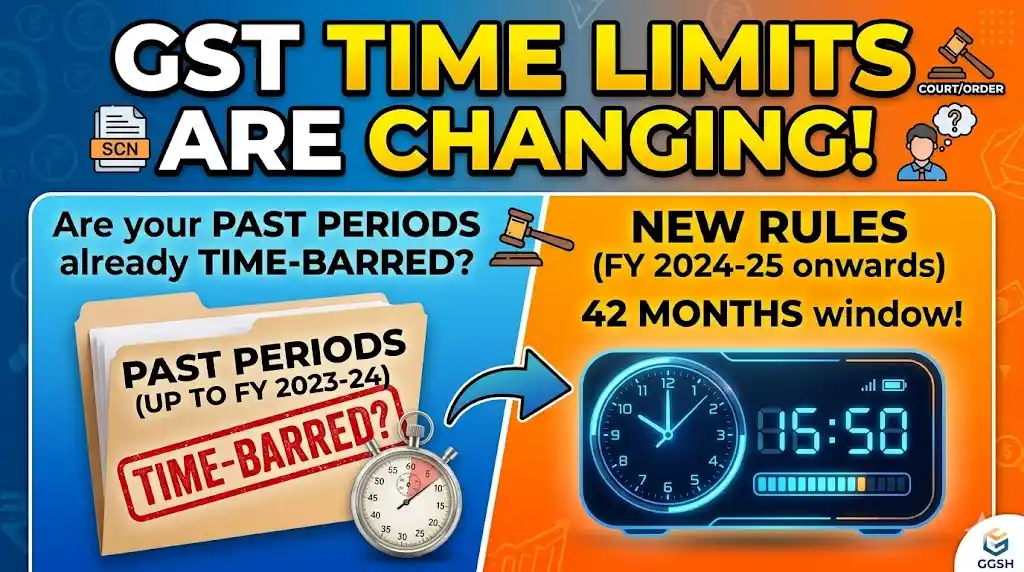
  • Show Cause Notice (SCN) must be issued within 42 months from the due date of filing the annual return for the relevant financial year.
  • After issuing the SCN, the department has 12 months to pass the final adjudication order.
  • An additional extension of up to 6 months may be granted in certain cases.

This effectively creates a new statutory litigation timeline structure under GST.

How the New Timeline Works

The revised structure ensures that GST demand proceedings are tied directly to the annual return filing timeline.

For example:

  1. The due date for the annual return (GSTR-9) becomes the reference point.
  2. From this date, the department gets 42 months to issue an SCN.
  3. Once the SCN is issued, the department must complete adjudication within the next 12 months.

This framework introduces greater clarity and predictability for both taxpayers and tax authorities.

Practical Implications for Businesses

The revised timelines under Section 74A have several practical implications for businesses.

1. Litigation Strategy

Businesses involved in GST disputes must carefully verify whether an SCN has been issued within the statutory limitation period.

If the notice is issued after the permissible period, the demand may be challenged as time-barred.

2. Closure of Historical Exposure

Once the limitation period expires, the department typically loses the legal authority to initiate proceedings for that tax period.

This allows taxpayers to close their exposure for those financial years with greater certainty.

3. Better Risk Management

Understanding statutory timelines helps finance and tax teams track potential litigation risks and maintain proper documentation for relevant years.

4. Importance of Annual Return Timelines

Since the due date of the annual return becomes the reference point for calculating limitation, accurate and timely filing of GSTR-9 becomes even more significant.

Key Compliance Tip for Taxpayers

Whenever a Show Cause Notice under GST is received, taxpayers should immediately verify:

  • The tax period involved
  • The date of SCN issuance
  • The applicable limitation provision (Section 73, 74, or 74A)
  • Whether the notice falls within the permissible statutory window

This preliminary check can significantly impact the defense strategy in GST litigation.

Final Thoughts

The introduction of Section 74A under the GST law marks an important shift in how limitation periods for GST demand proceedings will operate from FY 2024–25 onwards.

While earlier tax periods continue to follow the frameworks under Sections 73 and 74, the new structure introduces clearer timelines linked to the annual return filing cycle.

For businesses, this means that tracking statutory timelines has become more critical than ever.

Before responding to any GST demand notice, it is always advisable to review the issuance timeline carefully, as a notice issued beyond the permissible period may not sustain in legal proceedings.Understanding these timelines can help taxpayers avoid unnecessary litigation, challenge invalid demands, and manage GST compliance risks more effectively.