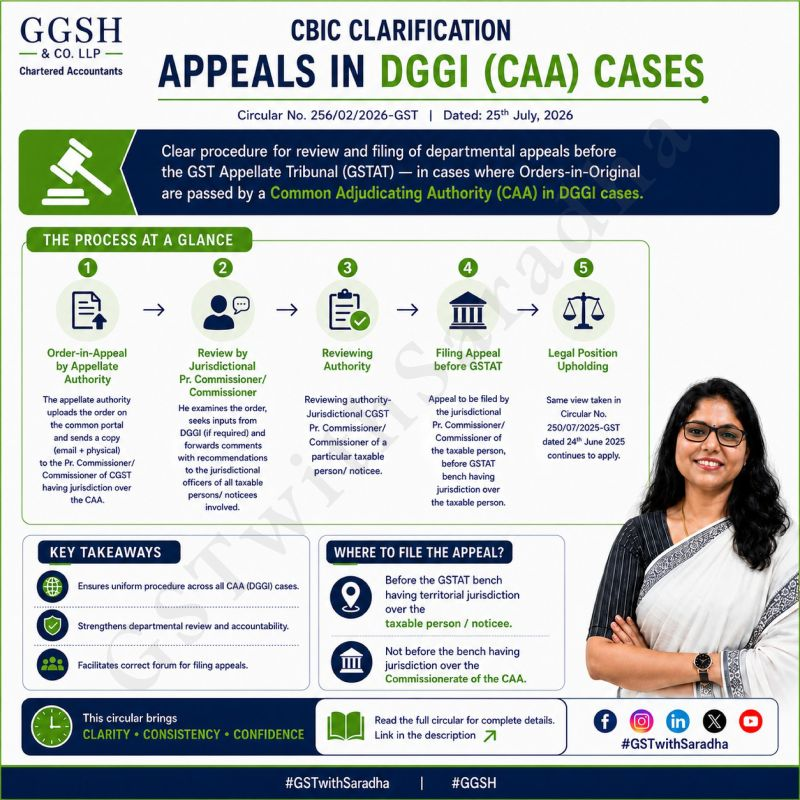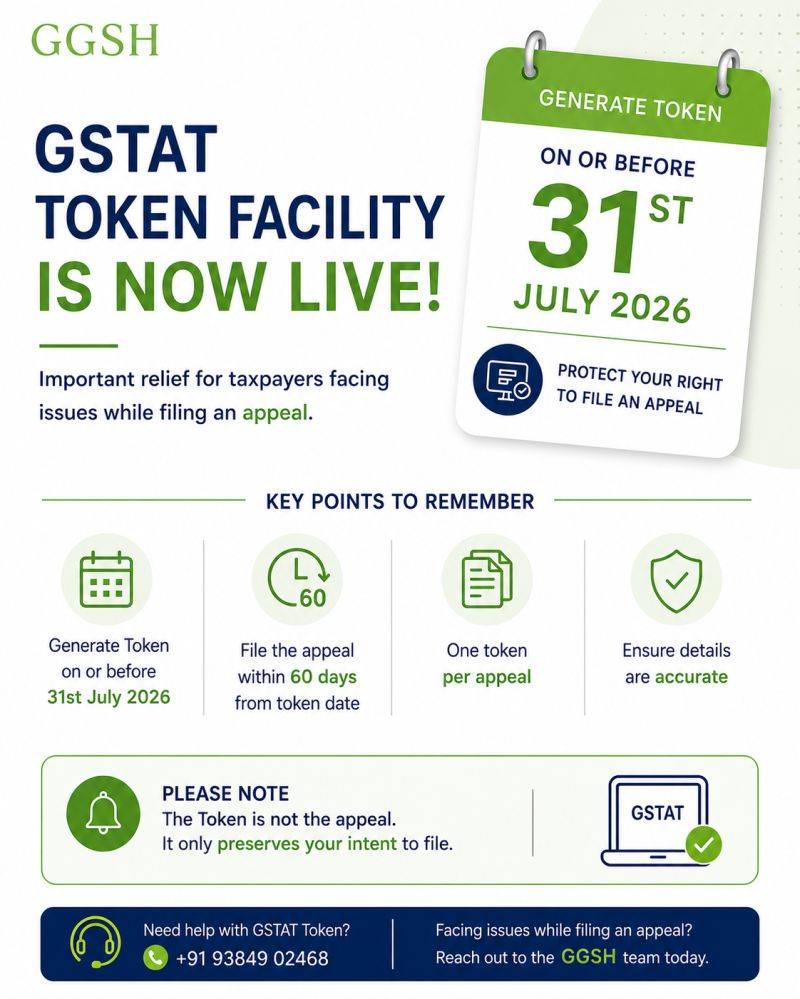
When filing an appeal before the GST Appellate Tribunal (GSTAT), identifying the correct Bench is an important first step.
But what happens when the Benches themselves are reconstituted?
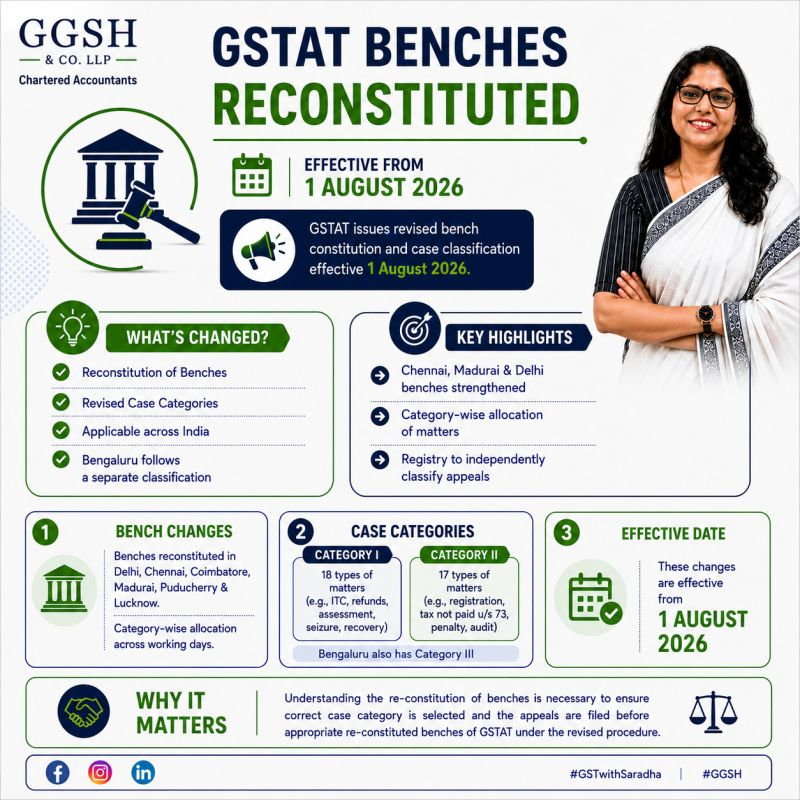
With effect from 1 August 2026, the GSTAT has reconstituted certain Benches and introduced a revised framework for classification and allocation of cases. As a result, the Bench that appeared appropriate under the earlier arrangement may not necessarily be the Bench applicable under the revised framework.
What Has Changed?
The reconstitution is aimed at improving administrative efficiency by distributing appeals according to defined categories and strengthening the functioning of selected Benches.
Some of the key changes include:
- Reconstitution of Benches across multiple locations, including Chennai, Madurai, Delhi, Coimbatore, Puducherry and Lucknow.
- Category-wise allocation of appeals to different Benches.
- Bengaluru continuing under a separate classification structure with an additional category.
- Registries being entrusted with classifying appeals based on the revised framework.
Why Does Bench Classification Matter?
At first glance, Bench reconstitution may appear to be purely an administrative exercise.
However, for a taxpayer preparing to file an appeal, it has a practical consequence.
The correct Bench and case category need to be identified before the appeal is instituted. Filing based on an earlier Bench arrangement without checking the revised classification could result in unnecessary procedural issues or delays.
In other words, the question is no longer simply:
“Where was this type of appeal filed earlier?”
It is also:
“Under the revised framework, which Bench and category does this appeal now fall under?”
What Should Taxpayers and Professionals Do?
For appeals proposed to be filed on or after 1 August 2026, it would be prudent to:
- Check the latest GSTAT Bench constitution.
- Identify the applicable case category.
- Verify the appropriate Bench before preparing the filing.
- Ensure that the appeal is submitted through the correct Registry/process.
- Recheck the classification where the matter involves multiple issues or could fall under more than one category.
An Administrative Change With Practical Consequences
Bench allocation may be administrative in nature, but it directly affects the institution of an appeal.
A well-prepared appeal is not only about the grounds of challenge, supporting documents and legal arguments. Correctly identifying the forum and following the applicable filing framework is equally important.
In litigation, the first procedural step can influence everything that follows.
Sometimes, the success of litigation begins before the first hearing — with filing the appeal before the appropriate Bench.
Key Takeaway
For appeals being filed under the GSTAT framework after 1 August 2026, do not rely solely on the earlier Bench structure.
Check the revised Bench constitution.
Check the case classification.
Then file before the appropriate Bench.
Source: GSTAT Office Order No. 4/GSTAT/PB/2026 dated 29 July 2026.