Rule 96(10) Declared Ultra Vires: Major Relief for Exporters under GST

In a significant development for exporters in India, the Kerala High Court has delivered a landmark judgment declaring Rule 96(10) of the CGST Rules as ultra vires and unenforceable. The ruling provides substantial relief to exporters who faced compliance challenges and refund restrictions under the Goods and Services Tax (GST) framework.

The court held that Rule 96(10), introduced via Notification No. 53/2018-CT dated 9 October 2018 (with retrospective effect from 23 October 2017), goes beyond the scope of the parent law and contradicts the provisions of Integrated Goods and Services Tax Act, 2017, specifically Section 16 dealing with zero-rated supplies for exports.

This judgment is expected to have a major impact on GST refunds for exporters, ongoing litigation, and future GST compliance.

Background: What Was Rule 96(10) under GST?

Rule 96(10) of the CGST Rules imposed restrictions on exporters who wanted to claim Integrated GST (IGST) refund on exports.

Under this rule, exporters who availed certain benefits such as:

  • Advance Authorization
  • Export Promotion Capital Goods (EPCG) scheme
  • Duty drawback benefits
  • Concessional import schemes

were restricted from exporting goods with payment of IGST and claiming refund.

Instead, they were required to:

  • Export goods under Letter of Undertaking (LUT) without payment of tax, and
  • Claim Input Tax Credit (ITC) refunds separately.

This rule created significant compliance challenges and confusion for exporters, especially when dealing with multiple export incentive schemes.

Why the Kerala High Court Declared Rule 96(10) Ultra Vires

The Kerala High Court observed that Rule 96(10) conflicts with Section 16 of the Integrated Goods and Services Tax Act, 2017.

Key Observations of the Court

  1. Contradiction with Zero-Rated Supply Provisions
    Section 16 of the IGST Act allows exporters to choose between two options:
    • Export with payment of IGST and claim refund, or
    • Export without payment of tax under LUT and claim ITC refund.
  2. Rule 96(10) effectively restricted this statutory choice, which the court held was beyond the powers of the rule-making authority.
  1. Manifestly Arbitrary Provision
    The court also noted that the rule created unnecessary hardship for exporters and led to numerous disputes and litigations across the country.
    Because the rule imposed restrictions not contemplated in the parent legislation, it was declared manifestly arbitrary and legally invalid.

Impact of the Judgment on Exporters

The ruling brings major relief to exporters across multiple industries, including manufacturing, trading, and export-oriented businesses.

Key Benefits

✔ Removes restrictions on IGST refund claims on exports
✔ Reduces litigation related to GST export refund disputes
✔ Provides clarity on zero-rated supply provisions under GST
✔ Reinforces exporters’ rights under Section 16 of the IGST Act

The judgment also highlights the extent of hardship faced by exporters, as reflected in the large number of writ petitions filed from various states.

Government’s Move to Omit Rule 96(10)

Interestingly, the government has already acknowledged the practical difficulties caused by Rule 96(10) and has decided to remove the provision entirely.

Experts believe that the ideal solution would be to omit the rule with retrospective effect from 1 July 2017, the date when GST was originally implemented in India.

Such a step could:

  • Resolve ongoing disputes
  • Reduce litigation burden
  • Provide clarity for exporters who faced refund restrictions in the past

What Exporters Should Do Now

Exporters should closely monitor developments following this judgment and take necessary compliance steps.

Recommended actions include:

  • Reviewing past IGST refund claims affected by Rule 96(10)
  • Evaluating pending litigation or refund disputes
  • Consulting GST professionals regarding possible refund claims or appeals
  • Tracking future notifications or clarifications from the GST Council and tax authorities

Conclusion

The decision by the Kerala High Court declaring Rule 96(10) ultra vires marks a major milestone in GST jurisprudence and offers significant relief to exporters who faced restrictions while claiming IGST refunds.

By reaffirming the provisions of Section 16 of the Integrated Goods and Services Tax Act, 2017, the court has strengthened the legal framework governing zero-rated supplies and export refunds under GST.If the government implements a retrospective removal of Rule 96(10), it could finally resolve years of confusion, litigation, and compliance challenges faced by exporters in India.

New Lady Justice Statue at the Supreme Court of India: A Modern Symbol of Justice and the Indian Constitution

In a significant and symbolic shift, the Supreme Court of India has introduced a new statue of Lady Justice, redefining how justice is represented in the country. This modern interpretation of the centuries-old symbol moves away from traditional imagery and instead reflects the values of India’s Constitution, transparency in justice, and an evolving legal system.

The redesigned Lady Justice statue in India has drawn attention across the legal community, symbolizing a deeper message about how justice should function in a modern democracy.

The Traditional Symbol of Lady Justice

Historically, Lady Justice has been represented with three key symbols:

  • Blindfold – signifying impartiality and fairness
  • Scales – representing balance and evaluation of evidence
  • Sword – symbolizing authority and enforcement of law

This classical imagery has been widely used in courts across the world to represent neutral and unbiased justice.

However, the newly introduced statue in India takes a different and more contextual approach.

The New Lady Justice Statue: A Symbol of Conscious Justice

The new Lady Justice statue at the Supreme Court of India departs from the traditional design in two powerful ways.

1. No Blindfold – Justice with Open Eyes

Unlike the traditional representation, Lady Justice is no longer blindfolded. Her eyes are open, symbolizing that justice in India is aware, observant, and conscious of societal realities.

This change reflects the idea that justice should not merely be blind but must also understand the complexities of each case, including social context, human impact, and constitutional principles.

2. The Indian Constitution Instead of a Sword

Another notable transformation is that Lady Justice now holds the Indian Constitution instead of a sword.

This symbolizes that in India:

  • Justice is guided by the Constitution
  • Rule of law prevails over force
  • Legal principles and democratic values drive judicial decisions

By placing the Constitution at the center of the symbol, the statue reinforces the supremacy of constitutional governance in India.

Vision Behind the Transformation

The initiative to introduce the redesigned statue was led by D. Y. Chandrachud, who envisioned a representation of justice that aligns with the values of contemporary India.

According to this vision, justice should not only be impartial but also empathetic, aware, and deeply connected to constitutional morality.

The updated symbol reflects the idea that the Indian judiciary must remain conscious of social realities while upholding fairness and integrity.

Moving Beyond Colonial Symbolism

Another important message behind the new statue is the shift away from colonial-era symbolism.

Many legal traditions and symbols used in Indian courts were inherited from colonial institutions. The new Lady Justice statue represents an effort to redefine legal symbols through the lens of India’s constitutional identity and democratic principles.

It signals:

  • A modern interpretation of justice
  • Alignment with constitutional values
  • Recognition of India’s independent legal philosophy

What the New Lady Justice Represents

The new statue conveys several important messages about the future of the Indian legal system:

  • Justice should be aware, not blind
  • Courts must be guided by the Constitution
  • Judicial decisions should balance law, fairness, and humanity
  • The legal system must evolve alongside societal changes

This updated symbolism reflects the aspiration that justice in India should be transparent, accountable, and responsive to the needs of its citizens.

Conclusion

The introduction of the new Lady Justice statue at the Supreme Court of India is more than a visual redesign—it is a powerful statement about the evolution of justice in India.

By removing the blindfold and placing the Indian Constitution in Lady Justice’s hands, the statue emphasizes that justice in India is rooted in constitutional values, democratic ideals, and an informed understanding of society.As India’s legal system continues to evolve, this new symbol stands as a reminder that true justice is not only impartial but also conscious, compassionate, and guided by the rule of law.

Safari Retreats Case: Supreme Court Introduces the “Functionality Test” for ITC on Mall Construction

𝐒𝐚𝐟𝐚𝐫𝐢 𝐑𝐞𝐭𝐫𝐞𝐚𝐭𝐬 – 𝐌𝐨𝐬𝐭 𝐚𝐰𝐚𝐢𝐭𝐞𝐝 𝐒𝐮𝐩𝐫𝐞𝐦𝐞 𝐂𝐨𝐮𝐫𝐭 𝐝𝐞𝐜𝐢𝐬𝐢𝐨𝐧 𝐢𝐧 𝐭𝐡𝐞 𝐜𝐚𝐬𝐞 𝐨𝐟 𝐈𝐓𝐂 𝐞𝐥𝐢𝐠𝐢𝐛𝐢𝐥𝐢𝐭𝐲 𝐨𝐧 𝐜𝐨𝐧𝐬𝐭𝐫𝐮𝐜𝐭𝐢𝐨𝐧 𝐨𝐟 𝐬𝐡𝐨𝐩𝐩𝐢𝐧𝐠 𝐦𝐚𝐥𝐥 (𝐢𝐦𝐦𝐨𝐯𝐚𝐛𝐥𝐞 𝐩𝐫𝐨𝐩𝐞𝐫𝐭𝐲) for the purpose of letting out premises in the malls to different tenants on which GST output liability to be paid.

𝐒𝐮𝐩𝐫𝐞𝐦𝐞 𝐂𝐨𝐮𝐫𝐭𝐬 𝐬𝐞𝐭𝐬 𝐭𝐡𝐞 𝐢𝐧𝐭𝐞𝐫𝐩𝐫𝐞𝐭𝐚𝐭𝐢𝐨𝐧 𝐨𝐟 17(5)(𝐝) 𝐭𝐨 𝐛𝐞 𝐟𝐨𝐥𝐥𝐨𝐰𝐞𝐝 𝐛𝐲 𝐚𝐩𝐩𝐥𝐲𝐢𝐧𝐠 𝐅𝐮𝐧𝐜𝐭𝐢𝐨𝐧𝐚𝐥𝐢𝐭𝐲 𝐭𝐞𝐬𝐭 𝐟𝐨𝐫 𝐝𝐞𝐜𝐢𝐝𝐢𝐧𝐠 𝐰𝐡𝐞𝐭𝐡𝐞𝐫 𝐛𝐮𝐢𝐥𝐝𝐢𝐧𝐠 𝐢𝐬 ‘𝐏𝐥𝐚𝐧𝐭’ 𝐚𝐧𝐝 𝐭𝐡𝐞 𝐢𝐬𝐬𝐮𝐞 𝐦𝐮𝐬𝐭 𝐛𝐞 𝐝𝐞𝐜𝐢𝐝𝐞𝐝 𝐢𝐧 𝐚𝐩𝐩𝐫𝐨𝐩𝐫𝐢𝐚𝐭𝐞 𝐩𝐫𝐨𝐜𝐞𝐞𝐝𝐢𝐧𝐠𝐬 𝐢𝐧 𝐰𝐡𝐢𝐜𝐡 𝐚𝐝𝐣𝐮𝐝𝐢𝐜𝐚𝐭𝐢𝐨𝐧 𝐜𝐚𝐧 𝐛𝐞 𝐦𝐚𝐝𝐞 𝐨𝐧 𝐟𝐚𝐜𝐭𝐬.

Key summary of the verdict:

➡ Constitutional validity of clauses (c) and (d) of Section 17(5) is 𝐔𝐏𝐇𝐄𝐋𝐃

➡ “plant or machinery” used in Section 17(5)(d) cannot be given the same meaning as “plant and machinery” defined by explanation to Sec 17

➡ Whether a mall, warehouse, or building can be classified as a “plant”  is a 𝐟𝐚𝐜𝐭𝐮𝐚𝐥 𝐪𝐮𝐞𝐬𝐭𝐢𝐨𝐧 which has to be determined based on registered person’s business and role that building plays in the said business.

➡ Buildings constructed for services like renting or leasing may qualify as a ‘𝐩𝐥𝐚𝐧𝐭’, 𝐬𝐮𝐛𝐣𝐞𝐜𝐭 𝐭𝐨 𝐚 𝐟𝐮𝐧𝐜𝐭𝐢𝐨𝐧𝐚𝐥𝐢𝐭𝐲 𝐭𝐞𝐬𝐭

➡ Supreme Court 𝐫𝐞𝐦𝐚𝐧𝐝𝐞𝐝 𝐭𝐡𝐞 𝐜𝐚𝐬𝐞 𝐭𝐨 𝐭𝐡𝐞 𝐎𝐫𝐢𝐬𝐬𝐚 𝐇𝐢𝐠𝐡 𝐂𝐨𝐮𝐫𝐭 for limited purposes of deciding whether, in the facts of the case, the shopping mall is a “plant” as per Sec 17(5)(d)

Bottomline:

𝐄𝐚𝐜𝐡 𝐜𝐚𝐬𝐞 𝐰𝐢𝐥𝐥 𝐡𝐚𝐯𝐞 𝐭𝐨 𝐛𝐞 𝐝𝐞𝐜𝐢𝐝𝐞𝐝 𝐨𝐧 𝐢𝐭𝐬 𝐦𝐞𝐫𝐢𝐭 𝐛𝐲 𝐚𝐩𝐩𝐥𝐲𝐢𝐧𝐠 𝐭𝐡𝐞 𝐟𝐮𝐧𝐜𝐭𝐢𝐨𝐧𝐚𝐥𝐢𝐭𝐲 𝐭𝐞𝐬𝐭 𝐢𝐧 𝐭𝐞𝐫𝐦𝐬 𝐨𝐟 𝐭𝐡𝐢𝐬 𝐣𝐮𝐝𝐠𝐦𝐞𝐧𝐭. The issue must be decided in appropriate proceedings in which adjudication can be made on facts. The petitioners are free to adopt appropriate proceedings or raise the issue in appropriate proceedings.

The writ petitions are rejected, subject to the interpretation of 17(5)(d) made in the verdict by Supreme Court.

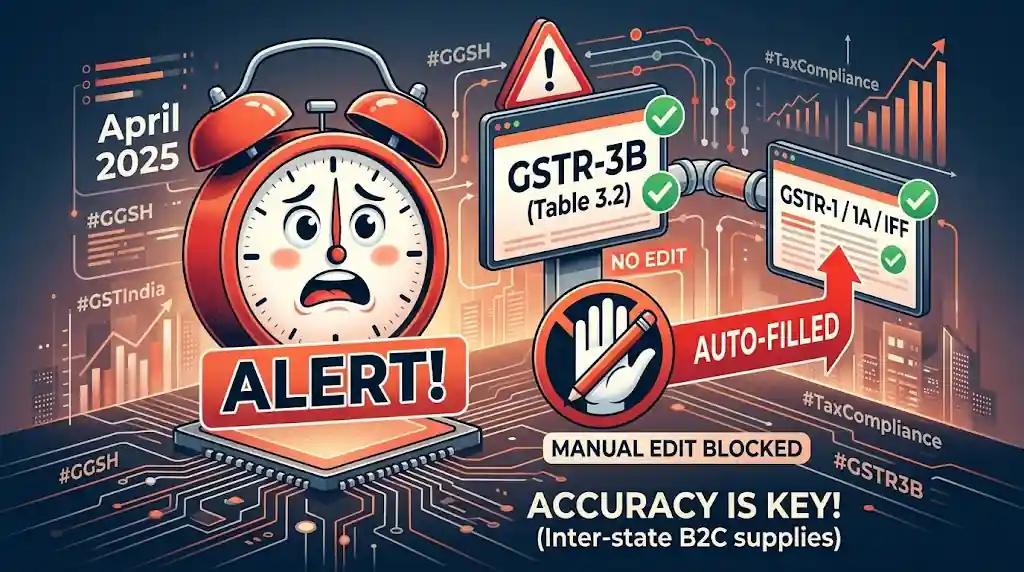
🚨 Hard-Locking of Auto-Populated Liability in GSTR-3B Deferred

The Goods and Services Tax Network (GSTN) has announced that the hard-locking of auto-populated liability in GSTR-3B, which was expected to be implemented from January 2025, has been deferred.

📢 Key Update

• The restriction on editing auto-populated liability in GSTR-3B will not be implemented from January 2025.
• The change has been postponed and will be introduced at a later date.
• Taxpayers will be notified in advance before the feature becomes effective.

📌 What this means for taxpayers

For now, taxpayers can continue editing auto-populated liability values in GSTR-3B as per the existing process. However, businesses should begin preparing their systems and reconciliations for the upcoming change.

Recommendation:
Start aligning GSTR-1 and GSTR-3B data accurately, as future implementation may restrict manual adjustments once the liability becomes hard-locked.

Stay updated and stay compliant. 🔔

⚠ Due Date Extended – GST Returns

The Goods and Services Tax Network (GSTN) has announced extension of due dates for certain GST returns for the tax period December 2024.

📅 GSTR-5 (Non-Resident Taxable Person Return)
📅 GSTR-6 (Input Service Distributor – ISD)
• Due date extended from 13.01.2025 to 15.01.2025

📅 GSTR-7 (TDS Return)
📅 GSTR-8 (TCS Return)
• Due date extended from 10.01.2025 to 12.01.2025

📌 Taxpayers are advised to utilize the extended timeline to ensure timely and accurate filing of returns to avoid late fees or compliance issues.

Stay updated. Stay compliant. ✅

Important GST Update: New Reverse Charge Mechanism (RCM) Compliance Effective from 10 October 2024

Businesses across India must take note of important GST compliance changes related to the Reverse Charge Mechanism (RCM) that became effective from 10 October 2024. These updates affect multiple transactions, including immovable property rentals, metal scrap purchases, and transportation expenses under GTA.

Understanding these changes is essential for proper GST compliance, accurate tax reporting, and timely filing of GST returns such as GSTR-3B. Failure to comply with the new rules may result in tax liabilities, penalties, and input tax credit (ITC) complications.

This article explains the key GST RCM updates applicable from October 2024 and what businesses should do before filing their returns.

Reverse Charge Mechanism (RCM) under GST

The Reverse Charge Mechanism in GST is a system where the recipient of goods or services is liable to pay GST instead of the supplier.

Normally, the supplier collects and pays GST to the government. However, under RCM:

  • The recipient pays the tax directly to the government
  • The recipient may claim Input Tax Credit (ITC) if eligible
  • Additional documentation and compliance requirements apply

RCM is commonly applied in sectors where tax leakage risks are higher or where suppliers may not be registered under GST.

Key GST RCM Changes Effective from 10 October 2024

1. RCM on Immovable Property Rental – 18% GST

A major update concerns rental expenses for immovable property.

Under the new compliance rule:

  • GST at 18% under Reverse Charge Mechanism may be payable on immovable property rental expenses
  • This applies to both residential and commercial property rentals in applicable cases

Businesses must carefully review their rental agreements, lease payments, and GST applicability to ensure proper compliance.

2. GST Compliance Changes for Metal Scrap Transactions

Another important update relates to metal scrap purchases and sales.

The GST treatment may involve:

  • RCM at 18% on metal scrap purchases, or
  • GST TDS at 2%, depending on the transaction and applicable provisions.

These changes affect businesses involved in:

  • Scrap trading
  • Manufacturing industries
  • Recycling businesses
  • Metal processing units

Companies dealing with scrap transactions must ensure that correct tax treatment, documentation, and reporting are followed.

3. RCM on GTA Transportation Including Ancillary Services

Under the updated compliance approach, Reverse Charge Mechanism for Goods Transport Agency (GTA) services must now include ancillary charges.

This means businesses must calculate RCM on the total transportation value, which may include:

  • Freight charges
  • Loading and unloading
  • Packing charges
  • Other related transportation services

This update ensures accurate tax calculation on the full value of transportation services.

Self-Invoicing Requirement for Reverse Charge Transactions

An important compliance requirement for RCM transactions is the self-invoice rule.

Under GST regulations:

  • The recipient must generate a self-invoice when the supplier is not liable to charge GST
  • The self-invoice must be issued within 30 days of receiving the goods or services
  • This documentation is necessary to claim Input Tax Credit (ITC) on RCM payments

Proper documentation is critical to avoid ITC rejection during GST scrutiny or audits.

What Businesses Should Do Before Filing October GST Returns

Before filing the October GST return in November 2024, businesses should take the following steps:

✔ Review rental expenses and property agreements for RCM applicability
✔ Check metal scrap purchases and ensure correct GST treatment
✔ Verify GTA transportation invoices including ancillary services
✔ Generate self-invoices for RCM transactions within the required timeframe
✔ Ensure proper reporting in GSTR-3B and other GST returns

Taking proactive steps now can prevent compliance issues, penalties, and mismatches in GST filings.

Conclusion

The new GST Reverse Charge Mechanism (RCM) compliance changes effective from 10 October 2024 introduce important responsibilities for businesses dealing with property rentals, metal scrap transactions, and transportation services.

With stricter documentation requirements and expanded RCM applicability, businesses must ensure accurate GST calculation, timely self-invoicing, and proper reporting in GST returns.Staying updated with GST law changes and reviewing transactions carefully will help businesses maintain smooth compliance and avoid unnecessary tax disputes.

⚠ GSTR-1 & GSTR-3B Due Dates Extended

The Goods and Services Tax Network (GSTN) has announced an extension of due dates for filing GSTR-1 and GSTR-3B.

📅 Monthly (Regular) Filers

GSTR-1: 13th January
GSTR-3B: 22nd January

📅 Quarterly Filers (QRMP Scheme)

GSTR-1: 15th January
GSTR-3B: 24th / 26th January (extended dates depending on the state)

📌 Taxpayers are advised to utilize the extended time to ensure accurate filings and avoid late fees or compliance issues.

Stay updated. Stay compliant. ✅

📢 Important GSTN Update – 29th December 2024

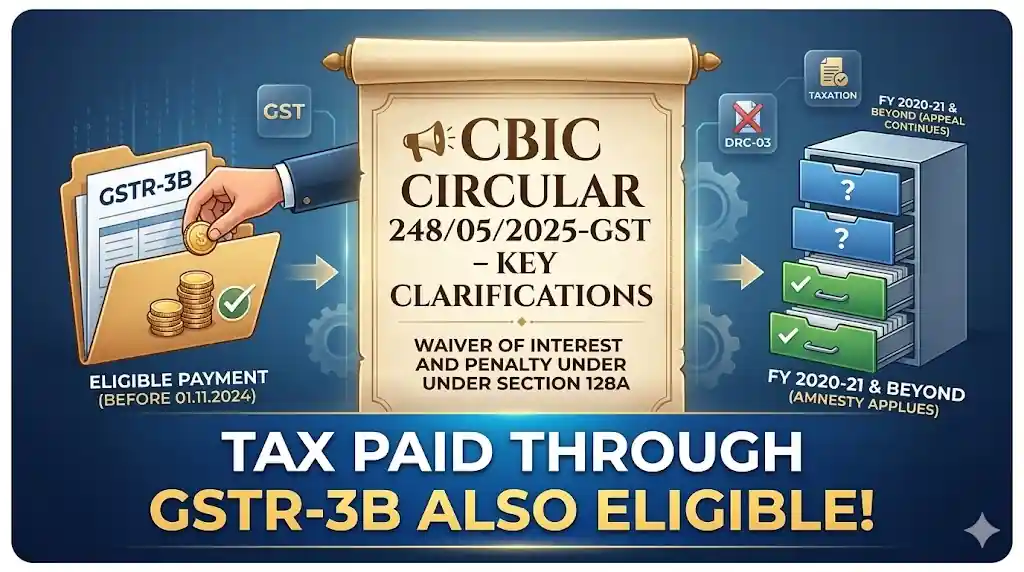
The Goods and Services Tax Network (GSTN) has issued an important update regarding the Waiver Scheme under Section 128A.

🔔 Key Update

  • Form GST SPL-02 is now available on the GST portal.
  • Form GST SPL-01 will be made available shortly on the portal.

These forms are part of the amnesty / waiver scheme introduced under Section 128A, which allows taxpayers to obtain waiver of interest and penalty subject to prescribed conditions.

Taxpayers intending to avail the scheme should monitor the GST portal for activation of Form GST SPL-01 and complete the required filings accordingly.

🔗 Reference (LinkedIn Update):
https://lnkd.in/gC_hCjPP

Stay updated and ensure timely compliance. ✅

GST Alert: Duplicate ITC Reflections in GSTR-2B for Oct 2024 – Caution for Taxpayers Filing GSTR-3B

Taxpayers filing the October 2024 GSTR-3B return should exercise extra caution while claiming Input Tax Credit (ITC) based on GSTR-2B. Several professionals have reported instances where ITC already reflected in the September 2024 GSTR-2B is again appearing in the October 2024 GSTR-2B, potentially leading to duplicate ITC claims.

This issue appears to be linked to the Invoice Management System (IMS) and the reporting timeline for QRMP suppliers and Input Service Distributor (ISD) returns.

Businesses must therefore ensure proper ITC reconciliation before filing GSTR-3B to avoid errors, notices, or future reversals.

Why Duplicate ITC Is Appearing in GSTR-2B

The duplication issue mainly arises due to the filing timelines of QRMP suppliers and ISD registrations.

Under the GST framework:

  • QRMP taxpayers file GSTR-1 quarterly
  • ISD registrations file GSTR-6
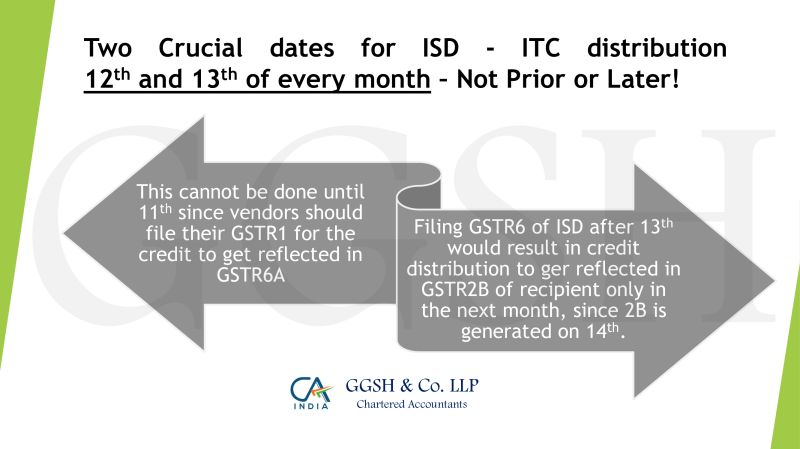
  • The cut-off date for capturing these transactions in GSTR-2B is typically the 13th of the month

If a QRMP supplier files GSTR-1 for September 2024 on 12th or 13th October, or an ISD files GSTR-6 during this window, the credit may have already appeared in the September 2024 GSTR-2B.

However, due to a possible algorithm or synchronization issue within the IMS system, the same ITC is again reflecting in the October 2024 GSTR-2B.

This creates a risk where taxpayers relying solely on GSTR-2B may accidentally claim duplicate ITC while filing GSTR-3B for October 2024.

Role of IMS in GSTR-2B Data Flow

The Invoice Management System (IMS) introduced by the Goods and Services Tax Network is designed to streamline invoice-level matching and ITC validation.

However, during the initial phase of IMS implementation, certain data synchronization and reporting challenges appear to be affecting how credits are captured in GSTR-2B.

Because GSTR-2B is now influenced by IMS data flows, any discrepancies in the system may result in incorrect or duplicated ITC values being auto-populated in GSTR-3B.

GSTN Advisory on IMS and ITC Reporting

Earlier, the Goods and Services Tax Network had issued an advisory in November explaining that if incorrect ITC or liability values appear auto-populated in GSTR-3B, taxpayers should carefully review and edit the figures before filing the return.

The advisory highlighted that such discrepancies could arise due to inadvertent actions in IMS.

However, many professionals believe that some of the current issues may also stem from system-level glitches during the early stages of IMS implementation.

Action Points for Taxpayers Filing October 2024 GSTR-3B

To avoid compliance issues or duplicate credit claims, taxpayers should follow these important steps before filing their return.

1. Do Not Claim ITC Solely Based on GSTR-2B

While GSTR-2B is an important reference document, ITC claims should not be made solely based on the auto-populated values.

2. Validate ITC with Purchase Records

Taxpayers should reconcile GSTR-2B with purchase registers, invoices, and earlier month credits to ensure accuracy.

3. Check for Duplicate Credits

Special attention should be given to credits from QRMP suppliers and ISD registrations, especially if they were filed around the 12th or 13th of October 2024.

4. Ensure Accurate ITC Calculation

Before filing GSTR-3B, verify that the ITC claimed is correct and does not include duplicate entries.

5. Raise a Grievance if Required

If duplicate credits continue to appear due to system issues, taxpayers may consider raising a grievance through the GST portal for clarification or correction.

Importance of Careful ITC Reconciliation

Claiming incorrect or excess ITC can lead to:

  • GST notices and scrutiny
  • ITC reversal with interest
  • Penalty implications

Therefore, businesses should maintain strong ITC reconciliation practices between purchase records, GSTR-2B, and GSTR-3B to ensure accurate compliance.

Conclusion

The appearance of duplicate ITC entries in October 2024 GSTR-2B, especially related to QRMP suppliers and ISD filings, highlights the importance of careful GST return verification.

With the Invoice Management System (IMS) still in its early stages, taxpayers must exercise extraordinary caution while claiming ITC in GSTR-3B.Rather than relying solely on auto-populated values, businesses should perform detailed reconciliation and validation to avoid duplicate claims and future compliance complications.