GSTR-9 & GSTR-9C for FY 2024-25: GSTN Releases FAQ as Annual Return Filing Begins

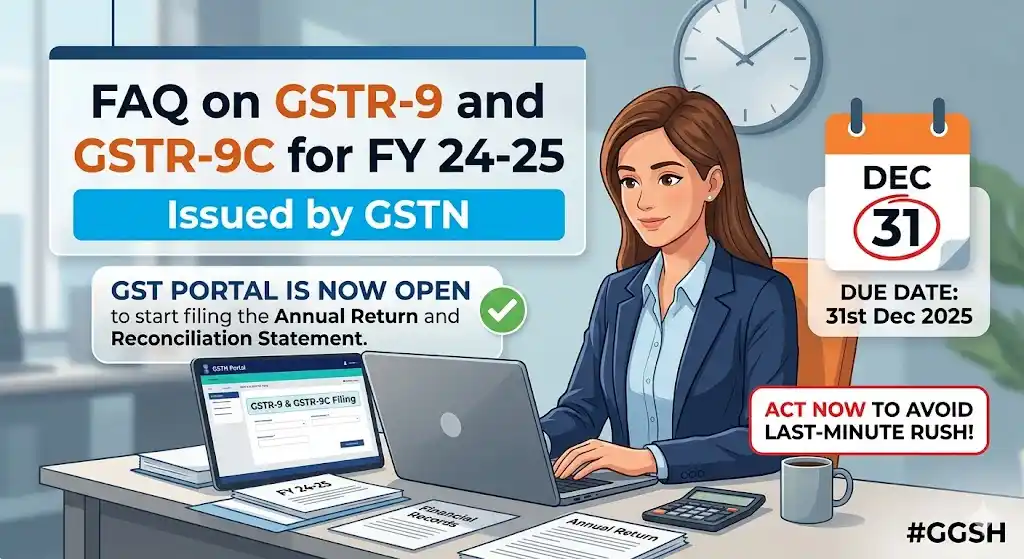
The annual GST compliance cycle has officially begun. The Goods and Services Tax Network (GSTN) has released a detailed FAQ on GSTR-9 and GSTR-9C for FY 2024-25, while simultaneously enabling the filing functionality on the GST portal.

Taxpayers and professionals can now start filing the Annual Return (GSTR-9) and Reconciliation Statement (GSTR-9C) well before the deadline.

đź“… Due Date for Filing: 31 December 2025

Early preparation can help businesses avoid last-minute filing pressure, reconciliation errors, and compliance risks.
What Is GSTR-9 Under GST?

GSTR-9 is the annual return required under the GST law, consolidating all monthly or quarterly returns filed during the financial year.

Registered taxpayers must report a comprehensive summary of their transactions, including:

  • Outward supplies (taxable and exempt)
  • Input Tax Credit (ITC) availed and reversed
  • Tax payments made during the year
  • Amendments and adjustments made through GST returns

The return essentially acts as a year-end consolidation of GST data reported in GSTR-1, GSTR-3B, and other periodic returns.

What Is GSTR-9C (GST Reconciliation Statement)?

GSTR-9C is a reconciliation statement between the taxpayer’s audited financial statements and GST returns filed during the year.

It ensures that the turnover, tax liability, and ITC reported under GST align with the financial records of the business.

Taxpayers must reconcile:

  • Gross turnover in financial statements vs GST returns
  • Input Tax Credit claimed vs eligible ITC
  • Tax payable vs tax actually paid

This reconciliation helps identify discrepancies, omissions, or adjustments that may require correction or disclosure.

Who Needs to File GSTR-9?

The following categories of taxpayers are generally required to file GSTR-9 annual return:

  • Regular taxpayers registered under GST
  • Businesses filing monthly or quarterly GST returns

However, certain categories such as composition taxpayers, input service distributors, non-resident taxable persons, and TDS/TCS deductors are required to file different forms instead.

Who Must File GSTR-9C?

Businesses whose aggregate turnover exceeds the prescribed threshold must file GSTR-9C along with the annual return.

This reconciliation statement provides greater transparency and ensures consistency between financial records and GST filings.

Key Highlights of the GSTN FAQ on GSTR-9 & GSTR-9C

The recently released FAQ by the Goods and Services Tax Network provides guidance on several practical aspects of annual return filing, including:

  • Step-by-step filing process on the GST portal
  • Clarifications on reporting turnover and adjustments
  • Guidance on ITC reconciliation and reversals
  • Instructions on handling amendments and corrections
  • Technical guidance on filing GSTR-9C reconciliation statement

The FAQ is intended to help taxpayers reduce errors and improve the accuracy of annual GST filings.

Why Businesses Should Start Filing Early

Although the deadline for filing GSTR-9 and GSTR-9C for FY 2024-25 is 31 December 2025, experts recommend starting the process early.

1. Avoid Last-Minute Filing Rush

Closer to the deadline, the GST portal often experiences heavy traffic, which can delay filings.

2. Allow Time for Reconciliation

Annual returns require detailed reconciliation of GST returns with financial statements, which may take considerable time.

3. Identify and Correct Errors

Early review allows businesses to detect mismatches in turnover, ITC claims, and tax payments before filing.

4. Reduce Risk of Notices

Accurate and well-reconciled annual returns help minimize the risk of GST scrutiny or departmental notices.

Best Practices for GSTR-9 & GSTR-9C Filing

Businesses preparing for GST annual return filing should follow these best practices:

âś” Reconcile GSTR-1, GSTR-3B, and books of accounts
âś” Validate Input Tax Credit with GSTR-2B statements
âś” Review HSN-wise summary reporting
âś” Cross-check turnover reported in financial statements
âś” Verify tax payments and adjustments

These steps help ensure accurate GST compliance and smooth filing of annual returns.

Final Thoughts

With the GST portal now open for filing GSTR-9 and GSTR-9C for FY 2024-25, businesses should begin their annual GST reconciliation and compliance review immediately.

The FAQ released by the Goods and Services Tax Network provides valuable clarity to taxpayers and professionals navigating the annual filing process.

📌 Due Date Reminder: 31 December 2025Starting early can help businesses avoid last-minute stress, ensure accurate reporting, and maintain strong GST compliance records.
ICAI Releases Updated Technical Guide on GSTR-9: Key Insights for GST Annual Return Filing

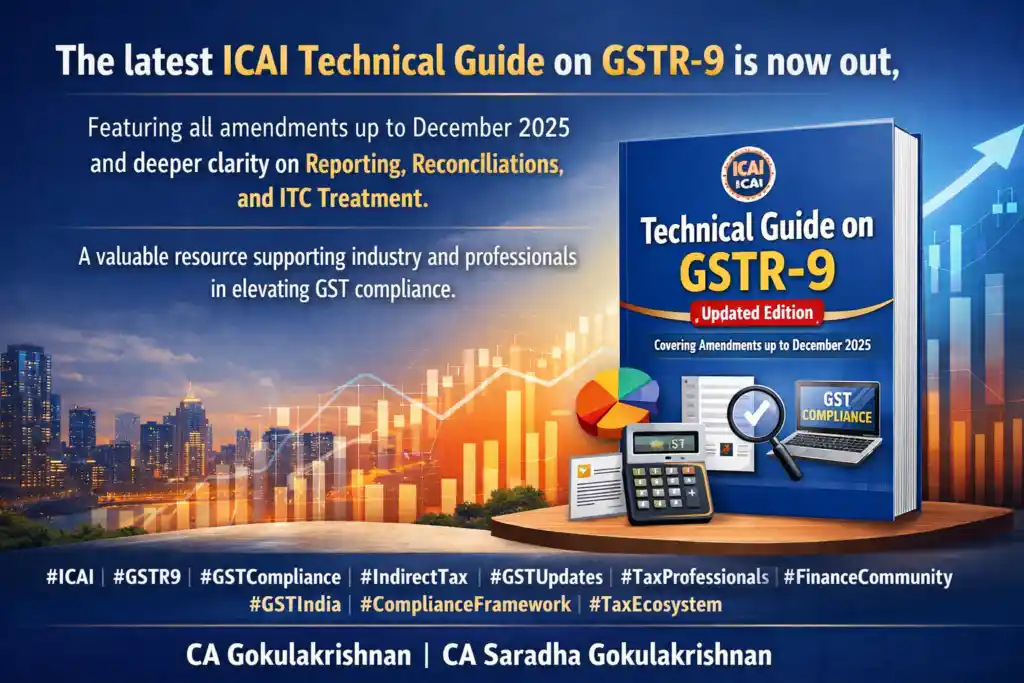
The latest technical guide on GSTR-9 has been released by the Institute of Chartered Accountants of India (ICAI), providing comprehensive guidance for taxpayers and professionals preparing the GST Annual Return.

This updated publication incorporates all amendments and regulatory updates up to December 2025, offering greater clarity on reporting requirements, reconciliation processes, and Input Tax Credit (ITC) treatment under the GST framework.

For businesses, tax consultants, and finance teams, the guide serves as a valuable reference for accurate and compliant filing of GSTR-9.

What Is GSTR-9 Under GST?

GSTR-9 is the annual return that consolidates all GST transactions reported during a financial year. It compiles information from monthly or quarterly returns such as GSTR-1 and GSTR-3B, presenting a consolidated view of:

  • Outward taxable supplies
  • Inward supplies and Input Tax Credit (ITC)
  • Tax payments and adjustments
  • Amendments made during the year

The annual return plays an important role in ensuring consistency between GST returns and financial records.

Why the Updated ICAI Technical Guide Matters

The updated technical guide issued by the Institute of Chartered Accountants of India provides detailed interpretation and practical insights on several aspects of GST annual return compliance.

The guide helps professionals understand:

  • Latest statutory amendments affecting GSTR-9
  • Reporting methodology for different tables
  • Reconciliation between GST returns and financial statements
  • Treatment and disclosure of Input Tax Credit
  • Common errors and best practices in annual return filing

By offering practical examples and explanatory notes, the guide simplifies complex compliance requirements.

Key Areas Covered in the Technical Guide

1. Detailed Reporting Guidance

The guide explains the correct approach to filling each table in GSTR-9, ensuring that taxpayers report their data accurately and consistently.

2. Reconciliation of GST Returns and Books

One of the most critical parts of annual return preparation is reconciling:

  • Turnover reported in financial statements
  • Taxable supplies reported in GSTR-1
  • Tax liability reported in GSTR-3B

The technical guide provides structured guidance for performing these reconciliations.

3. Input Tax Credit (ITC) Treatment

Proper reporting of ITC claimed, reversed, or ineligible is essential in GSTR-9.

The ICAI guide offers clarity on:

  • ITC reconciliation
  • Reversal of ineligible credits
  • Adjustments across different GST returns

4. Practical Compliance Insights

The publication also highlights common mistakes made during GSTR-9 filing and provides suggestions to avoid compliance risks.

This helps businesses improve the accuracy and reliability of their GST reporting.

Importance for Businesses and Tax Professionals

The updated technical guide is particularly useful for:

  • Chartered accountants and tax consultants
  • Corporate finance teams
  • GST compliance managers
  • Businesses preparing annual returns

Using the guide as a reference can significantly improve GST compliance quality and reduce the risk of mismatches or notices from tax authorities.

Final Thoughts

The updated GSTR-9 Technical Guide released by the Institute of Chartered Accountants of India is an important resource for the GST community.

By incorporating all amendments up to December 2025, the guide provides clarity on complex reporting requirements and strengthens the overall GST annual return filing process.For businesses and professionals aiming to maintain accurate GST compliance, referring to this technical guide can help ensure better reporting, stronger reconciliations, and improved ITC management.

GST Time Limits for Show Cause Notices: Impact of Section 74A from FY 2024–25

Time limits under the GST law play a critical role in determining whether a tax demand raised by the department is legally valid or time-barred. Over the years, one of the most debated aspects of GST litigation has been the statutory period available to the tax department for issuing a Show Cause Notice (SCN) and passing the final adjudication order.

With the introduction of Section 74A under the Central Goods and Services Tax Act, 2017, the timelines for initiating and completing proceedings are set to change significantly from Financial Year 2024–25 onwards.

Understanding these revised timelines is essential for businesses, tax professionals, and compliance teams dealing with GST disputes, demand notices, and litigation risk management.

Why GST Time Limits Matter in Litigation

In GST proceedings, time limitation is a decisive legal factor. If the tax department fails to issue an SCN or pass an order within the statutory time limits, the demand may become legally unenforceable.

These limitation periods determine whether:

  • A tax demand is valid or time-barred
  • The department has jurisdiction to proceed with the case
  • Taxpayers can challenge the validity of notices in litigation

Therefore, reviewing the timeline of a Show Cause Notice is often the first step when responding to a GST demand.

Existing Framework: Sections 73 and 74 (Up to FY 2023–24)

For tax periods up to FY 2023–24, GST demand proceedings continue to follow the existing provisions under:

  • Section 73 of the Central Goods and Services Tax Act – cases involving non-fraud or bona fide errors
  • Section 74 of the Central Goods and Services Tax Act – cases involving fraud, wilful misstatement, or suppression of facts

Section 73 – Non-Fraud Cases

In cases where the department alleges tax short payment without fraud, the time limits are relatively shorter.

Typically, the department must:

  • Issue the Show Cause Notice before the prescribed limitation period, and
  • Pass the final order within the statutory timeline.

These cases generally involve clerical errors, interpretation issues, or reconciliation mismatches.

Section 74 – Fraud or Suppression Cases

Where the department alleges fraud, wilful misstatement, or suppression of facts, the limitation period is longer.

This extended timeline allows the department additional time to investigate and pursue serious tax evasion cases.

However, even in such cases, proceedings must still comply with statutory time limits to remain legally valid.

New Provision from FY 2024–25: Section 74A

A new provision, **Section 74A of the Central Goods and Services Tax Act, applies to tax periods starting from FY 2024–25.

This section introduces a restructured timeline for issuing SCNs and passing final orders.

Key Timeline Under Section 74A

Under the new framework:

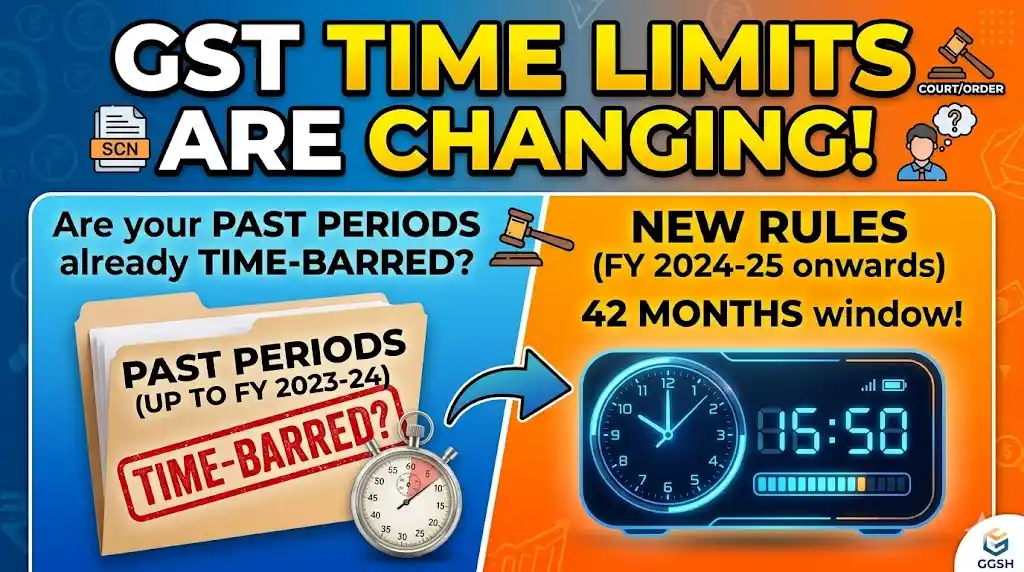
  • Show Cause Notice (SCN) must be issued within 42 months from the due date of filing the annual return for the relevant financial year.
  • After issuing the SCN, the department has 12 months to pass the final adjudication order.
  • An additional extension of up to 6 months may be granted in certain cases.

This effectively creates a new statutory litigation timeline structure under GST.

How the New Timeline Works

The revised structure ensures that GST demand proceedings are tied directly to the annual return filing timeline.

For example:

  1. The due date for the annual return (GSTR-9) becomes the reference point.
  2. From this date, the department gets 42 months to issue an SCN.
  3. Once the SCN is issued, the department must complete adjudication within the next 12 months.

This framework introduces greater clarity and predictability for both taxpayers and tax authorities.

Practical Implications for Businesses

The revised timelines under Section 74A have several practical implications for businesses.

1. Litigation Strategy

Businesses involved in GST disputes must carefully verify whether an SCN has been issued within the statutory limitation period.

If the notice is issued after the permissible period, the demand may be challenged as time-barred.

2. Closure of Historical Exposure

Once the limitation period expires, the department typically loses the legal authority to initiate proceedings for that tax period.

This allows taxpayers to close their exposure for those financial years with greater certainty.

3. Better Risk Management

Understanding statutory timelines helps finance and tax teams track potential litigation risks and maintain proper documentation for relevant years.

4. Importance of Annual Return Timelines

Since the due date of the annual return becomes the reference point for calculating limitation, accurate and timely filing of GSTR-9 becomes even more significant.

Key Compliance Tip for Taxpayers

Whenever a Show Cause Notice under GST is received, taxpayers should immediately verify:

  • The tax period involved
  • The date of SCN issuance
  • The applicable limitation provision (Section 73, 74, or 74A)
  • Whether the notice falls within the permissible statutory window

This preliminary check can significantly impact the defense strategy in GST litigation.

Final Thoughts

The introduction of Section 74A under the GST law marks an important shift in how limitation periods for GST demand proceedings will operate from FY 2024–25 onwards.

While earlier tax periods continue to follow the frameworks under Sections 73 and 74, the new structure introduces clearer timelines linked to the annual return filing cycle.

For businesses, this means that tracking statutory timelines has become more critical than ever.

Before responding to any GST demand notice, it is always advisable to review the issuance timeline carefully, as a notice issued beyond the permissible period may not sustain in legal proceedings.Understanding these timelines can help taxpayers avoid unnecessary litigation, challenge invalid demands, and manage GST compliance risks more effectively.

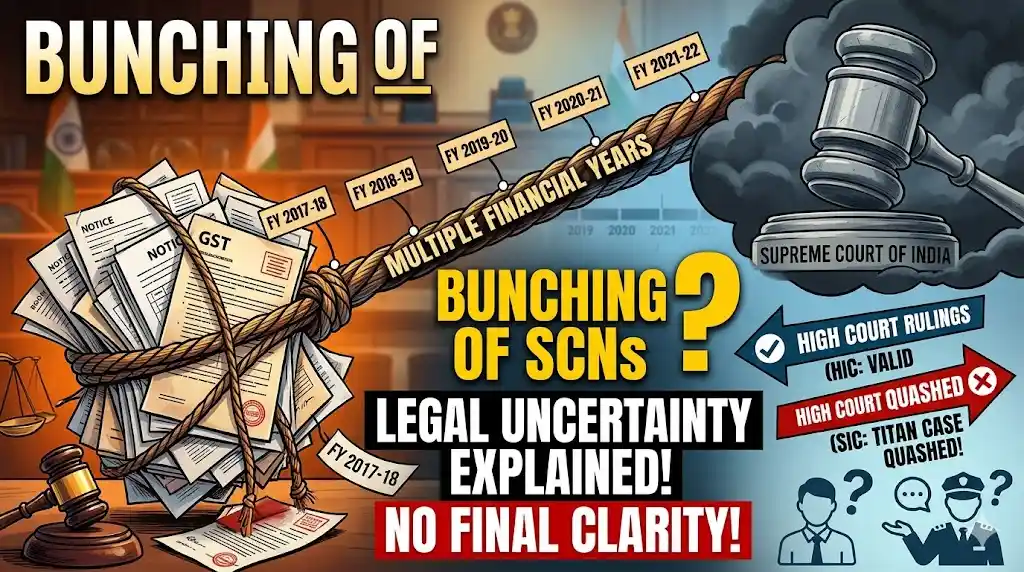
Bunching of SCNs Across Multiple Financial Years: Legal Uncertainty Under GST Explained

The issue of bunching of Show Cause Notices (SCNs) across multiple financial years (FYs) has recently become one of the most debated topics in GST litigation in India.

With divergent rulings from various High Courts, the legal position is far from settled. Businesses, tax professionals, and revenue authorities are navigating a rapidly evolving landscape where headlines often outpace clarity.

What is “Bunching of SCNs” in GST?

Bunching refers to the practice where:

  • A single SCN is issued covering multiple financial years, and
  • A common adjudication order is passed for those years

This approach is often questioned when:

  • It attempts to include time-barred periods, or
  • It conflicts with financial year-based limitation under GST law

Current Legal Position: No Final Clarity Yet

Across India, various High Courts of India have delivered conflicting rulings on this issue.

Key Reality Check:

  • ⚖️ Divergent judicial views continue
  • 📌 No ruling can yet be termed a landmark precedent
  • 🏛️ No final decision from the Supreme Court of India
  • 🔄 The issue remains open and evolving

Important Legal Insights You Must Know

1. Supreme Court Has Not Settled the Issue

  • The matter is yet to be conclusively decided by the apex court
  • Earlier references trace back to a 1965 J&K decision, but its applicability under GST is still untested

2. SLP Outcomes Can Be Misleading

Understanding Supreme Court procedures is critical:

  • ❌ SLP dismissal ≠ confirmation of High Court ruling
  • ❌ SLP withdrawal ≠ success of the opposite party

👉 These are procedural outcomes, not judgments on merits.

3. High Court Judgments Are Often Fact-Specific

  • Many rulings depend on specific facts and circumstances
  • Blind reliance on case law can be risky

👉 Always check:

  • Jurisdiction
  • Facts of your case
  • Applicability to your situation

4. Status of Appeals Matters

Before relying on any High Court decision:

  • Verify if an appeal before Division Bench is pending or decided
  • Example: The much-discussed Titan ruling from the Madras High Court was later quashed in appeal

5. CBIC Internal Communications Are Not Binding

  • A memo issued by the Central Board of Indirect Taxes and Customs (CBIC) seeking inputs:
    • Is not a circular
    • Has no binding legal force

👉 Only officially notified circulars have legal standing.

6. Sub Judice Matters: Only Courts Matter

When an issue is under litigation:

  • Only judicial pronouncements carry authority
  • Internal departmental communications do not

7. Risk Mitigation for Taxpayers

From a practical standpoint:

  • If time-barred periods are not included, risk is relatively lower
  • If separate Orders-in-Original (OIOs) are issued year-wise:
    • Exposure may be limited

8. Appeals & Pre-Deposit Remain Separate

Even in bunching scenarios:

  • Appeals must be filed year-wise
  • Pre-deposit requirements apply individually for each financial year

Practical Guidance for Businesses & Professionals

Before adopting any legal position on SCN bunching:

✔️ Do:

  • Analyze jurisdiction-specific rulings
  • Verify current status of case law
  • Evaluate facts carefully

❌ Don’t:

  • Assume uniform legal position across India
  • Rely solely on headlines or summaries
  • Ignore appeal status of judgments

👉 Always seek a professional tax opinion before taking a position.

Disclaimer & Important Note

  • This analysis is based on developments available in the public domain as of 30.11.2025
  • It is intended for informational purposes only
  • It does not constitute legal or tax advice
  • Applicability must be evaluated case-by-case

Conclusion

The issue of bunching of SCNs under GST remains a grey area in Indian tax jurisprudence.

Until the Supreme Court of India provides final clarity, stakeholders must proceed with caution, relying on fact-specific analysis and professional guidance.

Final Thoughts đź’¬

In a landscape where legal interpretations are still evolving, informed decision-making is your strongest safeguard.Do you think the Supreme Court should step in soon to settle the issue of SCN bunching once and for all?

E-Way Bill Errors Under GST: Why “Bona Fide Mistakes” May Not Always Save You

“Knowing your weakness is a strength.”

In GST compliance, this couldn’t be more relevant.

Not every court decision favors taxpayers. Not every mistake qualifies as a “minor error.” And sometimes, what truly determines the outcome is not the error itself—but how quickly and carefully you respond to it.

A recent ruling by the Madhya Pradesh High Court in Amara Raja Batteries Ltd. vs State of M.P. (Dec 2025) reinforces this principle with clarity.

Case Overview: When One Small Error Changed Everything

At first glance, the transaction seemed compliant:

  • âś… Tax properly paid
  • âś… Valid invoices available
  • âś… Genuine movement of goods

However, one critical issue arose:

👉 Incorrect destination city mentioned in the E-Way Bill

More importantly:

👉 The error was not corrected despite having time and opportunity

Court’s Observation: Conduct Matters More Than Intent

The Court took a strict view, especially considering the nature of the transaction:

🔹 Self-Consignment (Branch Transfer)

  • Movement within the same entity
  • Expectation of higher internal accuracy

The Court noted:

  • Errors in one’s own branch details are harder to justify
  • Lack of internal movement records weakens the taxpayer’s position

Key Legal Outcome

  • 100% penalty upheld under Section 129 of GST Act

This sends a strong message:

👉 Compliance failures during transit are taken seriously—even if tax is already paid.

Critical Takeaways from the Judgment

1. “Bona Fide Error” Is Not Automatic Protection

  • Intent alone is not enough
  • Authorities examine:
    • Conduct
    • Timeliness of correction
    • Supporting evidence

👉 A genuine mistake must also be promptly corrected and properly documented.

2. Minor Error Circulars Are Not a Blanket Shield

  • Circulars offering relief for minor errors:
    • Apply only in specific conditions
    • Cannot override factual negligence

👉 Misplaced reliance on circulars can backfire.

3. Delay in Correction Can Be Costly

  • The taxpayer had the opportunity to fix the mistake
  • Failure to act in time influenced the outcome

👉 In GST, delay = risk.

4. Documentation Is Your Strongest Defense

The absence of:

  • Internal movement records
  • Supporting documentation

…significantly weakened the case.

👉 Proper records are not optional—they are critical evidence.

Practical Lessons for Businesses & Professionals

✔️ Before Movement of Goods

  • Double-check:
    • Destination details
    • E-way bill entries
    • Invoice alignment

✔️ During Transit

  • Monitor shipments actively
  • Identify discrepancies early

✔️ If an Error Is Found

  • Correct it immediately
  • Maintain:
    • Correction logs
    • Internal communication records

✔️ For Branch Transfers

  • Maintain robust internal documentation
  • Ensure consistency across systems

The Bigger Message

This judgment highlights a subtle but powerful shift:

👉 GST compliance is no longer just about intent
👉 It is equally about discipline, systems, and timely action

A transaction may look compliant on paper—but a single unchecked detail can change how the law interprets it.

Conclusion

The ruling by the Madhya Pradesh High Court is a reminder that:

  • “Bona fide error” is not a guaranteed defense
  • Transit compliance requires precision and responsiveness
  • Corrective action delayed can be as risky as no action at all

Final Thought đź’¬

In GST, the question is not just:

“What went wrong?”

But also:

“What did you do once it went wrong?”

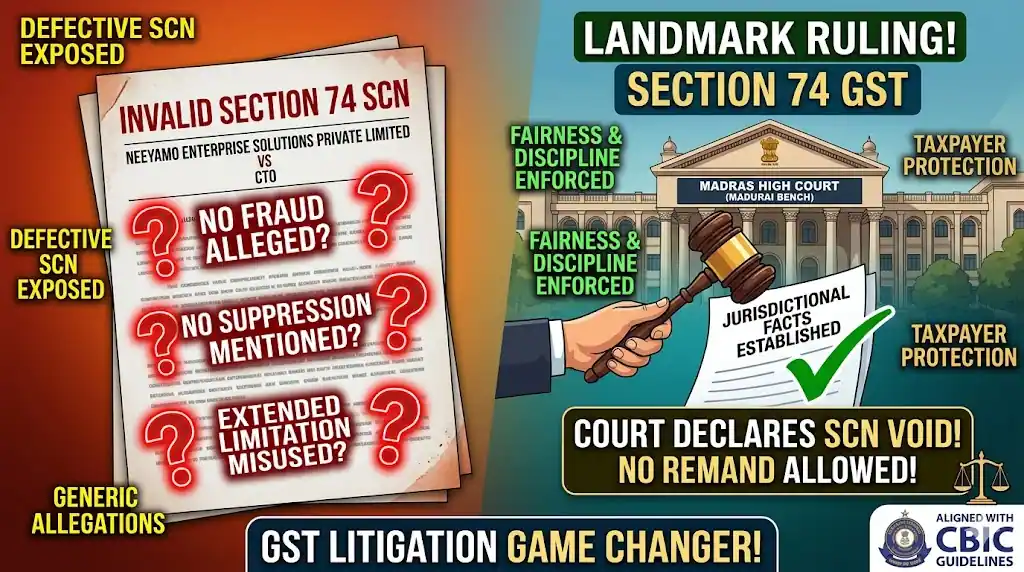
Madras High Court on Section 74 GST: SCN Must Establish Jurisdictional Facts – Landmark Ruling Explained

In a landmark ruling from the Madurai Bench of the Madras High Court, the Court has delivered a strong message on jurisdictional discipline under Section 74 of the CGST Act.

The judgment in Neeyamo Enterprise Solutions Private Limited vs Commercial Tax Officer (W.P(MD) Nos. 30453 to 30458 of 2024, dated 11.11.2025) reinforces a fundamental principle in GST litigation in India:

Section 74 cannot be invoked unless the Show Cause Notice (SCN) itself clearly establishes jurisdictional facts such as fraud, wilful misstatement, or suppression of facts.

Background: Misuse of Section 74 in GST Proceedings

In recent years, tax authorities have increasingly invoked Section 74 (fraud cases) even in situations where:

  • No clear allegation of fraud exists
  • Extended limitation is not justified
  • Section 73 (non-fraud cases) would have been more appropriate

This often occurs when:

  • Time limits under Section 73 expire
  • Authorities attempt to extend limitation by invoking Section 74

Case Overview: Neeyamo Enterprise Solutions Pvt Ltd

Key Facts:

  • A Show Cause Notice was issued following a Section 67 inspection
  • The SCN pointed out discrepancies but:
    • ❌ Did NOT allege fraud
    • ❌ Did NOT mention suppression of facts
    • ❌ Did NOT establish intent to evade tax

Despite this, proceedings were initiated under Section 74, resulting in:

  • Tax demand
  • Interest
  • Equal penalty

Key Issue Before the Court

Whether:

Section 74 proceedings are valid when the SCN does not explicitly contain jurisdictional facts required to invoke extended limitation?

Court’s Ruling: Section 74 Invocation Invalid

The Madras High Court held that:

  • Section 74 cannot be invoked without explicit allegations in the SCN
  • Jurisdictional facts must be:
    • Clearly stated
    • Properly supported
    • Form part of the foundation of the notice

👉 In the absence of these elements, the entire proceedings are:

⚠️ Void ab initio (invalid from the beginning)

Key Legal Principles from the Judgment

1. Tax Shortfall ≠ Suppression

The Court clarified:

  • A mere discrepancy or tax shortfall does not automatically mean suppression of facts
  • There must be a clear intent to evade tax

2. SCN Must “Specify” Demand, Not Pre-Decide It

  • A valid SCN should:
    • Propose allegations
    • Allow the taxpayer to respond

❌ It should NOT:

  • Read like a pre-determined order
  • Conclude guilt at the notice stage

3. Jurisdiction Cannot Be Assumed or Implied

  • Fraud, suppression, or wilful misstatement must be:
    • Explicitly stated
    • Clearly linked to the demand

👉 These cannot be inferred later during adjudication.

4. No Remand When Jurisdiction is Missing

  • If Section 74 is wrongly invoked:
    • Proceedings cannot be remanded for reconsideration under the same provision
    • The defect is fatal and irreversible

Alignment with CBIC Guidelines

The judgment also aligns with the position of the Central Board of Indirect Taxes and Customs (CBIC), which has emphasized that:

  • Section 74 should not be invoked mechanically
  • Proper application of mind is required before issuing SCNs

Impact on GST Litigation and Taxpayers

This ruling has wide implications for:

  • Businesses receiving GST notices
  • Tax professionals handling litigation
  • Authorities issuing SCNs

Key Takeaways:

  • Section 74 is an exception, not the rule
  • SCNs must be legally robust and well-founded
  • Taxpayers can challenge notices lacking jurisdictional facts
  • Proceedings based on defective SCNs are liable to be quashed

Practical Guidance for Businesses & Professionals

If you receive a GST SCN under Section 74:

✔️ Check for:

  • Allegation of fraud or suppression
  • Clear reasoning for extended limitation
  • Proper linkage between facts and demand

❌ Red Flags:

  • Generic or vague allegations
  • Absence of intent to evade
  • SCN resembling a final order

👉 Such cases may be challenged as jurisdictionally invalid.

Conclusion

The ruling in Neeyamo Enterprise Solutions Pvt Ltd vs CTO is a landmark step toward ensuring fairness and discipline in GST adjudication.

By reinforcing the importance of jurisdictional facts in SCNs, the Madras High Court has protected taxpayers from arbitrary invocation of extended limitation under Section 74.

Final Thoughts đź’¬

In GST litigation, the validity of the Show Cause Notice is everything.Do you think this judgment will curb the routine misuse of Section 74 in GST cases?

They say, “Patience pays.”

But when it comes to GST refunds, many taxpayers would agree it has often felt more like “Patience delays.”

Now, there’s finally some GOOD NEWS.

The GST refund system is becoming more automated, and nearly 90% of GST refund applications may now be processed within just 7 days.

This shift aims to create a system-driven process with minimal manual intervention.

That means:

âś” Less dependency on officers
âś” Reduced follow-ups and delays
âś” Faster working capital relief for businesses

A welcome development for businesses, exporters, and tax professionals who have long dealt with extended refund timelines.

As automation strengthens the GST ecosystem, refund processing is expected to become more transparent, predictable, and efficient.

We’ve put together a simple one-page note explaining the update and what it means in practice.

Take a moment to read it — it may change how you look at GST refunds.

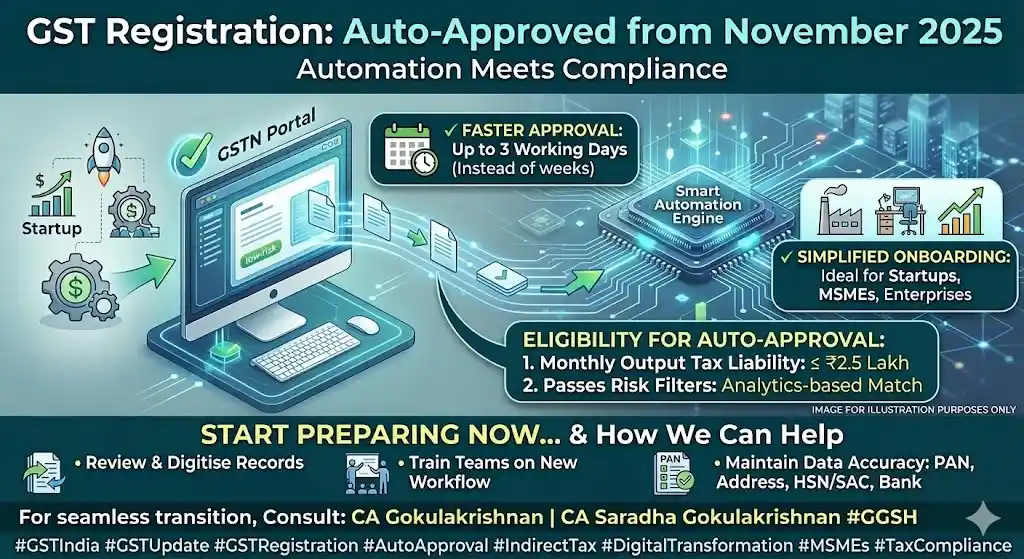
GST Registration Auto-Approval from November 2025: Faster GST Onboarding for Businesses

India’s GST ecosystem is moving toward greater automation and data-driven compliance. A major reform in the GST registration process will come into effect from 1 November 2025, enabling auto-approval of GST registration applications for low-risk taxpayers.

This initiative, introduced under the policy framework of the GST Council and implemented through the GST administration led by the Central Board of Indirect Taxes and Customs, aims to simplify business onboarding and reduce delays in registration approvals.

The new system is expected to benefit nearly 96% of GST registration applicants, particularly startups, MSMEs, and new businesses seeking to enter the formal tax ecosystem.

What Is the New GST Auto-Approval Mechanism?

Under the new reform, GST registration applications that meet predefined risk parameters will be automatically approved by the GST portal without manual officer intervention.

This automation is based on data analytics and risk-based verification systems that validate the information provided by applicants.

If the applicant’s profile satisfies the system’s risk criteria, the GST registration certificate can be issued within 3 working days.

This represents a major improvement compared to the current process, where registration approvals may take several days or even weeks depending on verification requirements.

Eligibility Criteria for Auto-Approved GST Registration

The auto-approval system will primarily apply to low-risk applicants.

A key eligibility parameter includes:

  • Declared monthly output tax liability of ₹2.5 lakh or less

Additionally, the applicant’s details must successfully pass the GST system’s risk analysis filters, which examine the consistency and authenticity of the submitted data.

Applications flagged for potential discrepancies may still undergo manual verification by tax authorities.

Benefits of Automated GST Registration

The introduction of auto-approved GST registrations brings several advantages for businesses and entrepreneurs.

1. Faster Business Onboarding

Startups and new enterprises can begin operations more quickly, as GST registration may be granted within three working days.

This helps reduce delays in invoicing, compliance registration, and business transactions.

2. Reduced Administrative Delays

The automation process minimizes manual intervention by tax officers, which historically contributed to delays in GST registration approvals.

3. Support for Startups and MSMEs

The reform particularly benefits micro, small, and medium enterprises (MSMEs) that require quick tax registration to participate in B2B transactions, supply chains, and government tenders.

4. Increased Transparency and Efficiency

By relying on data analytics and automated verification, the GST system improves transparency while maintaining compliance checks.

Preparations Businesses Should Make Before November 2025

While the new system simplifies registration, businesses must ensure that their application data is accurate and properly documented.

Companies planning to apply for GST registration should begin preparing now.

Review and Digitise Business Records

Ensure that all statutory documents are available in digital format, including identity proofs, business registration documents, and address verification.

Maintain Accurate PAN and Address Information

Any mismatch between PAN details, address records, or bank information may trigger system alerts and delay approval.

Correct HSN and SAC Classification

Businesses must accurately classify their goods or services using correct HSN or SAC codes, as incorrect classification could affect the risk assessment process.

Train Finance and Compliance Teams

Accounting and compliance teams should understand the new automated GST registration workflow to ensure smooth application submission.

Automation and the Future of GST Compliance

The introduction of auto-approved GST registrations reflects a broader trend in India’s tax administration toward technology-driven compliance systems.

Automation within the GST framework is expanding across areas such as:

  • e-invoicing systems
  • automated return reconciliation
  • risk-based audit selection
  • digital registration approvals

These developments aim to create a more efficient, transparent, and business-friendly tax environment.

Final Thoughts

The auto-approval of GST registrations from 1 November 2025 represents a significant step toward simplifying tax compliance for businesses.

By enabling faster registration for low-risk applicants, the government is encouraging entrepreneurship, startup growth, and formalisation of the economy.

However, automation works best when businesses maintain accurate data, proper documentation, and compliance readiness.Preparing early will help organizations take full advantage of the new automated GST registration framework.

GSTR-3B Due Date Extended for September 2025: CBIC Notification CT-17/2025 Explained

The GST compliance calendar for September 2025 has received an important update. The due date for filing GSTR-3B for the tax period September 2025 has been extended to 25 October 2025.

This extension has been officially announced by the Central Board of Indirect Taxes and Customs through Notification No. CT-17/2025.

The decision provides relief to businesses, tax professionals, and finance teams dealing with GST rate transitions and compliance adjustments following the 56th meeting of the GST Council.

What is GSTR-3B?

GSTR-3B is a monthly summary return under the GST framework in which registered taxpayers report:

  • Outward taxable supplies
  • Input Tax Credit (ITC) claims
  • GST liability payable
  • Tax payments made through cash or credit

The return plays a critical role in GST compliance, tax liability reporting, and ITC reconciliation.

Failure to file GSTR-3B within the due date may result in late fees, interest liability, and compliance notices.

Revised Due Date for GSTR-3B (September 2025)

According to Notification CT-17/2025 issued by the CBIC, the due date has been extended as follows:

  • Tax Period: September 2025
  • Original Due Date: 20 October 2025
  • Extended Due Date: 25 October 2025

This extension gives taxpayers additional time to complete GST return filing accurately.

Why the Extension Was Necessary

The extension comes at a time when several GST rate revisions and compliance changes are being implemented following recent GST Council recommendations.

Businesses are currently adjusting:

  • Updated GST rate structures
  • ERP and accounting system configurations
  • invoice reporting and e-invoice alignment
  • Input Tax Credit reconciliation

Providing additional time helps taxpayers ensure accurate reporting and avoid compliance mismatches.

Key Compliance Actions for Businesses

Taxpayers should use this extended timeline to complete the following tasks before filing their September 2025 GSTR-3B return:

1. Reconcile GSTR-1 and GSTR-3B Data

Ensure outward supply details reported in GSTR-1 match with GSTR-3B to avoid discrepancies.

2. Verify Input Tax Credit (ITC)

Reconcile ITC claims with purchase registers and GSTR-2B statements.

3. Update ERP and Accounting Systems

Confirm that GST rate changes and tax codes are correctly configured in accounting or ERP software.

4. Validate E-Invoice Data

Businesses covered under the e-invoicing system must verify that invoices reported in the Invoice Registration Portal (IRP) match with GST returns.

Importance of Timely GSTR-3B Filing

Even with the extended deadline, timely filing remains critical to maintain smooth GST compliance and avoid penalties.

Delays in filing GSTR-3B returns may lead to:

  • Late filing fees under GST law
  • Interest on unpaid tax liability
  • Restrictions on claiming Input Tax Credit
  • Compliance notices from tax authorities

Businesses should therefore aim to complete filings well before the revised deadline.

Final Thoughts

The extension of the GSTR-3B filing deadline for September 2025 to 25 October 2025 provides a short but valuable compliance window for businesses adjusting to recent GST updates.

Taxpayers should take advantage of this extension to ensure accurate reporting, proper ITC reconciliation, and smooth GST compliance.Staying proactive during such transitions helps businesses avoid costly corrections and maintain a strong compliance record.

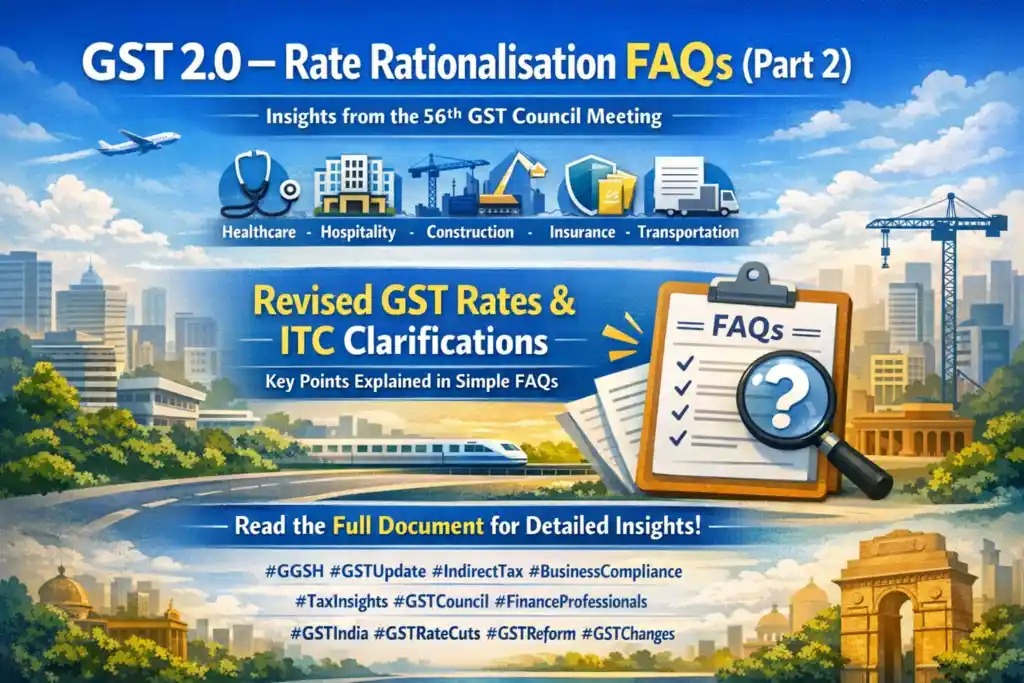
GST 2.0 Rate Rationalisation: Key FAQs from the 56th GST Council Meeting (Part 2)

India’s Goods and Services Tax (GST) framework continues to evolve as policymakers move toward a more simplified and efficient indirect tax structure. The discussions and recommendations from the 56th meeting of the GST Council have introduced significant GST rate rationalisation measures, impacting multiple sectors across the economy.

Often referred to as part of the broader “GST 2.0 reforms”, these changes aim to create a simpler tax structure, reduce classification disputes, and enhance compliance clarity for businesses.

However, with multiple updates announced simultaneously, many taxpayers, finance teams, and tax professionals are seeking clear answers regarding revised GST rates, Input Tax Credit (ITC) implications, and sector-specific changes.

To help businesses navigate these updates smoothly, the GGSH Indirect Tax Advisory Team has prepared a comprehensive FAQ note explaining the key aspects of GST rate rationalisation.

What Is GST Rate Rationalisation?

GST rate rationalisation refers to the process of restructuring existing GST tax slabs to make the system simpler, more efficient, and economically balanced.

Over time, India’s GST structure has evolved into multiple tax slabs, including:

  • 5% GST
  • 12% GST
  • 18% GST
  • 28% GST

Through rate rationalisation, the government aims to:

  • Reduce complex tax classifications
  • Improve ease of compliance for businesses
  • Align GST rates with economic realities and sectoral needs

These reforms are considered a key part of the next phase of GST policy evolution in India.

Key Sectors Impacted by GST 2.0 Rate Changes

The latest GST Council discussions have introduced changes affecting a wide range of industries.

Some of the most impacted sectors include:

Healthcare

Changes related to medical services, healthcare products, and wellness services may alter GST applicability and exemptions.

Businesses operating in this sector must carefully review tax classification and invoicing practices.

Hospitality and Tourism

The hospitality sector, including hotels, restaurants, and tourism services, may experience revised GST treatments affecting pricing structures and input tax credit eligibility.

This can impact billing systems, service charges, and tax calculations.

Construction and Real Estate

GST rationalisation also affects construction services and real estate transactions, requiring developers and contractors to evaluate:

  • tax rates on services
  • input tax credit restrictions
  • pricing strategies for ongoing projects

Insurance Sector

Changes in GST treatment for certain insurance products and services may influence premium pricing and compliance requirements.

Insurance companies and intermediaries should review their tax reporting systems and invoicing structures.

Transportation and Logistics

The transportation and logistics industry may also see revised GST implications, particularly in areas related to freight services, logistics operations, and supply chain management.

Businesses must ensure that ERP systems and billing platforms reflect updated GST rates correctly.

Clarifications on Input Tax Credit (ITC)

One of the most important aspects covered in the GST 2.0 FAQ guidance is the treatment of Input Tax Credit (ITC).

Businesses must carefully examine:

  • Whether ITC eligibility changes under revised GST rates
  • How rate rationalisation affects existing credit balances
  • Documentation requirements for proper ITC claims

Clear ITC planning is essential to ensure accurate tax reporting and avoid future disputes with tax authorities.

Why Businesses Must Review Their GST Systems

GST rate rationalisation does not affect only tax calculations; it also impacts internal business systems and compliance processes.

Companies should review the following areas:

  • ERP tax master configurations
  • accounting software GST settings
  • invoicing and billing systems
  • pricing models and contracts
  • GST return reconciliation processes

Without proper updates, businesses may face invoice mismatches, incorrect ITC claims, and compliance risks.

Importance of Understanding GST 2.0 Reforms

The evolving GST 2.0 framework represents a broader attempt to modernise India’s indirect tax system.

For businesses, understanding these changes early can help:

  • improve compliance accuracy
  • avoid costly tax disputes
  • optimize tax planning strategies
  • adapt pricing and operational structures effectively

Professional guidance and structured interpretation of these updates can significantly reduce confusion during the transition phase.

Final Thoughts

The GST rate rationalisation measures introduced after the 56th GST Council meeting represent another step toward a simpler and more transparent GST system in India.

However, businesses must stay informed and proactive to ensure they correctly interpret revised GST rates and Input Tax Credit rules.By reviewing the detailed GST 2.0 FAQ guidance, organizations can better understand the impact of these reforms and remain fully compliant with evolving tax regulations.